


Choosing between Airbnb and Booking.com is no longer as simple as asking whether you want an apartment or a hotel. In 2026, both platforms offer everything from family-run guesthouses to designer lofts and boutique hotels, and both are locked in a quiet arms race over fees, flexibility, and user experience. The right choice now depends less on the brand name and more on how you like to travel: how spontaneous you are, how much privacy you want, what kind of neighborhoods you prefer, and how comfortable you feel navigating house rules versus hotel policies.
Get the latest updates straight to your inbox!
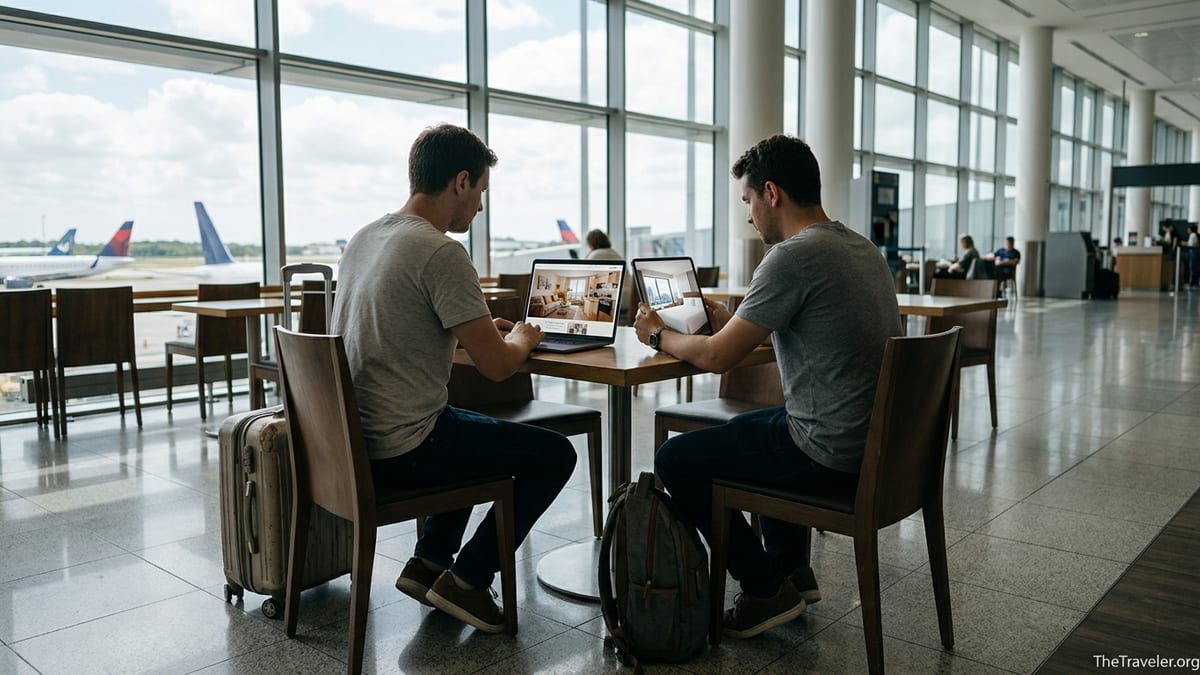
How Airbnb and Booking.com Actually Differ in 2026
Airbnb still leans toward “living like a local”: entire apartments, quirky studios, cabins, and rural cottages where you are effectively a short-term resident. Booking.com, originally built around hotels, now lists millions of vacation rentals and apartments alongside major brands like Marriott, Accor, and local chains. For a long weekend in Lisbon, for example, you might find a tiled, 19th-century apartment with a tiny balcony on Airbnb next to a modern business hotel and a serviced apartment building on Booking.com offering weekly cleaning and a 24-hour front desk.
The business models shape how you experience each platform. Airbnb sits in the middle of almost every interaction: payments, messaging, dispute resolution, and reviews are tightly channeled through its app. Booking.com behaves more like a giant directory that processes your reservation; once you book, the hotel or apartment operator often takes over. That can mean a smooth, hotel-style check-in at a chain property in New York or, at the other extreme, a late-night WhatsApp call with a small guesthouse in Athens asking when you will arrive.
Inventory also differs by destination. In some smaller European towns, Booking.com may have dozens of family-run hotels and pensions where Airbnb only offers a handful of private rooms. In contrast, U.S. cities like Austin or Nashville often show a deep bench of Airbnb lofts, bungalows, and suburban houses with yards, while Booking.com’s options skew more toward downtown hotels and a limited number of managed apartments.
For travelers, this means your decision often starts with the kind of stay you want. If having a kitchen, a washing machine, and a residential address matters most, Airbnb usually offers more character. If you want the predictability of a hotel, staffed reception, and simple policies, Booking.com tends to feel more straightforward, even when you are booking an apartment through the platform.
Price, Fees, and “Sticker Shock” in the Real World
Price comparison between Airbnb and Booking.com is rarely one-to-one because their fee structures look different at checkout. Airbnb historically separated host payouts from guest service fees and cleaning fees. Today it is moving more of the service fee into the host side in many markets, while still allowing hosts to charge cleaning and other extra fees. Guests often see an apparently low nightly rate that jumps once cleaning and service fees are added at the final step. By contrast, Booking.com bundles platform commissions into the rate the property sets, so you usually see a price that is closer to the final total, with only taxes or local tourism fees added at the end.
Imagine a three-night city break in Chicago for two people in mid-season. On Airbnb, you might find a stylish one-bedroom loft in West Loop advertised at around 150 dollars per night. Once you proceed to checkout, there could be a 100 dollar cleaning fee and a platform fee embedded in the total, pushing the stay to something like 600 to 650 dollars all in, plus taxes. On Booking.com, a mid-range hotel in River North could show at 190 dollars per night including breakfast, with taxes and perhaps a small city fee added at the end, landing in a similar final range. The difference is psychological: Airbnb spreads cost across line items, while Booking.com usually presents a more consolidated figure.
Cleaning fees are the most visible flashpoint for Airbnb. Many U.S. travelers report frustration when a two-night stay in a small studio comes with a cleaning fee that rivals a full night’s rate. In response, Airbnb has pushed more price transparency and encouraged hosts to bake cleaning into the nightly price instead of using a large added fee, but practices still vary widely. In cities where regulations or competition are tougher, hosts often respond by lowering or eliminating cleaning fees, while in resort towns or ski destinations you still see substantial add-ons to cover laundry, hot tub maintenance, and deep cleans between groups.
Booking.com properties can also add costs, but they typically appear as more traditional hotel-style extras: parking fees, resort fees, or charges for breakfast. A beachfront hotel in Miami booked through Booking.com, for instance, might advertise an attractive nightly rate but add a mandatory daily resort fee covering pool towels, Wi-Fi, and beach loungers. The structure feels more familiar to hotel travelers, even if the effect on the total price is similar to Airbnb’s cleaning and service charges.
Flexibility, Cancellations, and Risk Tolerance
How far in advance you like to book and how firm your plans are play a big role in choosing between Airbnb and Booking.com. On Booking.com, flexible rates are standard for hotels: free cancellation up to a certain time before arrival is widely available, often until the day prior. You will usually pay a bit more for these flexible rates compared with nonrefundable options, but frequent travelers appreciate the ability to change plans without penalty. For example, a hotel room in Rome might cost 130 dollars per night on a nonrefundable rate and 150 dollars on a flexible one, with cancellation allowed until 24 or 48 hours before check-in.
Airbnb operates on host-selected cancellation policies, which range from very strict to relatively flexible. A cabin in Colorado might allow a full refund up to 30 days before check-in, then only a partial or no refund after that. Another host in the same region might offer a moderate policy with free cancellation up to five days before arrival. Because these rules are set per listing rather than standardized by category, travelers must read them closely. If you book a popular summer lake house months in advance on a strict policy and your plans change, you could lose most of the total amount.
In practice, this means risk-averse travelers, business travelers, or those juggling uncertain schedules often gravitate to Booking.com or to Airbnb listings that explicitly state flexible policies. Families planning a fixed summer holiday, on the other hand, might accept stricter Airbnb terms in exchange for securing a special property like a large farmhouse with a pool in Tuscany or a beachfront cottage on Cape Cod that would be hard to replace last minute.
Both platforms offer some level of support if your host or property cancels, but the experience differs. If an Airbnb host cancels close to arrival, the platform usually attempts to rebook you at a comparable property or issues a refund. On Booking.com, a last-minute cancellation from a small guesthouse can mean a scramble between you, the property, and Booking.com support to find alternatives, particularly during major events or festivals when rooms sell out.
Experience, Personality, and How Much Interaction You Want
Perhaps the most personal part of the decision is how you like to experience a destination. Airbnb is designed for nuanced, host-driven stays. You might check into a converted warehouse loft in Berlin where the host leaves local craft beer in the fridge and a handwritten guide to neighborhood coffee shops, or a family apartment in Kyoto where you remove your shoes at the door and follow house rules about quiet hours. Communication is often direct and conversational: hosts might ask your arrival time, suggest local bakeries, or send detailed self-check-in instructions with photos of the gate and lockbox.
On Booking.com, the tone is usually more impersonal and hotel-like, particularly when you book established hotels or professionally managed apartments. You may receive automated emails about check-in times, a front desk address, or parking options. The upside is predictability: if you arrive late at a chain hotel in Amsterdam after a delayed flight, you know there will be someone at the desk and a clear process to check in, with no need to coordinate keys with an individual host.
Not all Airbnb stays are warm and personal, and not all Booking.com properties are anonymous. Many small guesthouses in Croatia or family-run B&Bs in Ireland listed on Booking.com are intensely personal experiences, with home-cooked breakfasts and host recommendations. Likewise, many Airbnb listings are now managed by property companies that operate multiple units with hotel-style cleaning schedules and automated entry codes. The key question is whether you enjoy navigating unique house rules and occasional quirks in exchange for character, or whether you prefer the frictionless routine of hotel stays.
Solo travelers and digital nomads often appreciate Airbnb’s lived-in feel and kitchen access, particularly for longer stays. Someone working remotely in Mexico City for a month might choose an Airbnb apartment in Roma Norte with a proper desk, strong Wi-Fi reviews, and a washing machine. By contrast, a couple on a quick three-night theater trip to London might prefer a centrally located hotel on Booking.com that guarantees daily housekeeping, luggage storage, and an easy walk to public transport.
Destination, Trip Type, and Matching Platform to Purpose
Your itinerary often dictates which platform will serve you better. For complex, multi-stop itineraries that mix big cities with rural areas, using both can make sense. For example, a two-week trip through Spain might start with a hotel in Barcelona’s Eixample booked on Booking.com for a late-night arrival, followed by an Airbnb farmhouse in the Girona countryside where you cook your own meals, then finish with a business-style hotel in Madrid near the train station for an early departure.
City breaks and one-night stays often favor Booking.com. Hotels and guesthouses are designed for short stays with efficient check-in, storage for your bags, and less sensitivity to cleaning turnover. If you are road-tripping across Germany and stopping in a different town every night, Booking.com’s filter for “free cancellation” and “breakfast included” can streamline planning. You can book a series of chain hotels along the route, with the option to cancel a night if you decide to linger longer elsewhere.
Longer stays, family trips, and group holidays tend to favor Airbnb. A week-long ski trip in Colorado, a three-generation family reunion on the Oregon coast, or a month-long sabbatical in Lisbon usually benefits from a full kitchen, laundry, and shared living space that hotels struggle to provide affordably. While Booking.com lists many apartments and vacation rentals now, Airbnb still tends to offer a deeper pool of entire homes with personality, from A-frame cabins in the Pacific Northwest to traditional stone houses in Greek islands.
Regulations also play a quiet role. In cities with tight rules on short-term rentals, like parts of Amsterdam or Barcelona, you may find that Airbnb listings have dwindled or shifted toward licensed units and private rooms, while Booking.com features more licensed hotels and aparthotels. Travelers who want to avoid contributing to local tensions around housing may prefer to choose legal, registered properties and can look for license numbers or official registration notes in the listing descriptions on both platforms.
User Experience, Reviews, and Avoiding Surprises
Both platforms rely heavily on reviews, but how you interpret them differs slightly. Airbnb reviews tend to read like personal stories: guests mention how responsive the host was, whether the place felt like the photos, and what the neighborhood vibe was like. Because both guests and hosts review each other, interactions can feel more relational. If you are booking a small studio in Paris, a detailed Airbnb review might describe exactly how small the shower is or how many flights of stairs you must climb, which can save you from surprises.
Booking.com reviews often focus on standardized categories like cleanliness, comfort, location, and staff, with an overall score out of ten. Guests assign sub-scores for things like Wi-Fi or breakfast, and these are averaged into the property’s rating. For a hotel in Tokyo, for example, you might see an 8.7 score with consistent praise for cleanliness but some complaints about room size. This numerical structure helps travelers quickly compare multiple hotels in the same neighborhood and price category.
The photos and descriptions on Airbnb can be more creative, which is both a strength and a risk. A “cozy” cabin might turn out to be charmingly snug or uncomfortably cramped. “Urban loft” can mean anything from a sunlit designer space to a basic studio with concrete floors. Booking.com listings, especially for hotels, tend to follow brand standards, with repeated room types and similar photo angles. It may be less inspiring, but you generally know what you are getting when you book a standard double room at a mid-range chain.
To avoid disappointment on either platform, cross-check key details. On Airbnb, scan for mentions of noise, temperature control, and check-out chores like taking out trash or starting laundry. On Booking.com, pay attention to whether air conditioning is available in the specific room type, whether the bathroom is private or shared, and whether the bed described as “double” is closer to a full or a queen by local standards. Real-world reviews are your best defense against glossy photos that hide a nightclub downstairs or a steep hill you must climb every evening.
When It Makes Sense to Mix Platforms
For many travelers, the smartest approach is not choosing a single winner but matching each platform to each leg of the trip. A common pattern is to use Booking.com for the “logistical” nights at the beginning and end of a journey, and Airbnb for the immersive middle stretch. For instance, you might fly into Tokyo and stay one night at an airport hotel booked on Booking.com to recover from jet lag, then move into an Airbnb apartment in a residential neighborhood like Shimokitazawa for a week, then finish with a business hotel near Tokyo Station before an early bullet train.
This mix-and-match strategy also helps manage risk. By using Booking.com for nights that are hard to miss, such as a pre-cruise stay in Miami or a night before a major conference, you gain the reliability of hotel infrastructure. You can then use Airbnb for more flexible segments, like a few days in the Florida Keys where a waterfront cottage or bungalow will elevate the experience but is not as time-critical if something goes wrong and you need to rebook.
Budget travelers can also take advantage of each platform’s sweet spots. In some destinations, basic guesthouses on Booking.com undercut entry-level Airbnb rooms, particularly where labor is cheaper and hotels absorb cleaning into their nightly rate. In others, an off-season Airbnb with a weekly discount can be significantly cheaper than hotels, such as a Lisbon apartment in November that offers 20 percent off for stays of seven nights or more compared with centrally located hotels catering to business travelers.
Finally, frequent travelers often develop a personal rule of thumb. Some default to Booking.com for any stay under three nights and Airbnb for anything longer. Others use Airbnb only when a full kitchen and separate living room are mission-critical, such as traveling with small children or staying somewhere for more than a week. The point is not brand loyalty but aligning your choice with your own tolerance for uncertainty, desire for local flavor, and willingness to handle a little extra logistics.
The Takeaway
Airbnb and Booking.com are increasingly overlapping in what they offer, yet they still cater to different travel styles. Airbnb excels when you want to inhabit a place rather than just stay there: cooking in a neighborhood apartment in Barcelona, spending a week in a converted barn in the English countryside, or taking a month to work remotely from a light-filled flat in Buenos Aires. You trade some predictability for space, character, and often better value on longer stays.
Booking.com shines when you prioritize simplicity, flexibility, and standardized service: quick city breaks, business trips with shifting meeting schedules, one-night stopovers during road trips, and any stay where a 24-hour front desk and daily housekeeping outweigh the charm of exposed brick and vintage furniture. Its abundance of hotels and professionalized rentals makes it easier to change or cancel without friction.
Instead of asking which platform is universally better, ask how you like to travel on this specific trip. If you hate surprise fees, lean toward properties that clearly show total prices early in the search and avoid listings with high cleaning or resort fees, regardless of platform. If you crave local immersion and do not mind reading fine print, Airbnb will often reward you. If you value backup options and simple policies above all else, Booking.com is often the safer bet.
Used thoughtfully, both platforms can become tools rather than logos you are loyal to. Look at your destination, trip length, and personal travel habits, then pick the platform that makes that particular journey smoother, more enjoyable, and more aligned with how you actually like to be on the road.
FAQ
Q1. Is Airbnb usually cheaper than Booking.com?
Not always. For short city stays, Booking.com hotels can match or beat Airbnb once cleaning and service fees are included, while Airbnb often becomes more cost effective for longer stays or larger groups.
Q2. Which is better for last-minute bookings?
Booking.com is generally better for last-minute stays because hotels keep rooms available until the day of arrival and often offer flexible or same-day cancellation, making it easier to adjust plans on the fly.
Q3. Which platform is safer to use?
Both platforms offer secure payment systems and customer support. Booking.com’s reliance on established hotels can feel safer to some, while Airbnb’s review culture and ID verification give others confidence, especially when booking highly rated superhosts.
Q4. Where should I book for a week-long family vacation?
For a week or more with kids or extended family, Airbnb often works better because you can book entire homes with kitchens, multiple bedrooms, and outdoor space, though Booking.com also lists vacation rentals in many resort areas.
Q5. Which platform offers better customer service if something goes wrong?
Airbnb tends to mediate more actively between guest and host, especially in disputes over cleanliness or misrepresentation. On Booking.com, resolution often depends on the property itself, with the platform stepping in more when bookings are cancelled or overbooked.
Q6. Are cleaning fees only an Airbnb issue?
Cleaning fees are most visible on Airbnb because they are often listed as a separate line item. On Booking.com, cleaning costs are usually built into the nightly rate or hidden in resort or service fees, so they feel less explicit but still affect the total price.
Q7. Which platform is better for business travel?
Booking.com typically suits business travel better, thanks to standardized hotels, loyalty programs, invoices that are easy to submit to employers, and flexible rates that accommodate changing meeting schedules.
Q8. Can I find the same property on both Airbnb and Booking.com?
Yes, many professional hosts and property managers list the same apartment or villa on both platforms. Prices, fees, and cancellation policies can differ, so it is worth comparing details before you decide where to book.
Q9. What if I want a very local, residential neighborhood experience?
Airbnb usually offers deeper access to residential neighborhoods, with lived-in apartments, backyard cottages, and unique homes that place you among locals rather than in typical hotel districts.
Q10. Is it okay to mix Airbnb and Booking.com on the same trip?
Absolutely. Many travelers use Booking.com for one-night or high-stakes stays, like pre-flight airport nights, and Airbnb for longer, more immersive segments where space and a kitchen matter more than hotel-style services.