


Used well, Airbnb can unlock neighborhoods and homes you would never find through traditional hotels. Used badly, it can leave you arguing over cleaning fees at midnight or standing on a sidewalk with your suitcase and nowhere to sleep. Most bad stays are not just “bad luck” but the result of avoidable traveler mistakes. Understanding those patterns, and how Airbnb really works in 2026, will save you money, time, and stress on your next trip.
Get the latest updates straight to your inbox!
Relying on Photos and Star Ratings Without Reading the Fine Print
Many travelers still book on Airbnb the way they browse hotel sites: scan the photos, glance at the star rating, and hit “Reserve.” That is a fast track to disappointment. Unlike a standard room at a chain hotel, every Airbnb is unique. A listing with dreamy photos and a 4.8 rating in Lisbon may still have a steep walk up four flights of stairs, a washing machine you are not allowed to use, and a quiet note in the description that says “no air conditioning.” If you skip the text and house rules, you only discover those details after you arrive in August heat.
Real-world complaints often come down to information that was technically disclosed but easy to miss. Guests write furious reviews because a Paris studio was “smaller than expected,” when the listing clearly said 18 square meters, or because “there was construction noise,” even though the host noted a renovation in the building. The photos are curated; they will not show the view of a brick wall from the bedroom or the busy bar downstairs.
Before you book, read every word of the listing: the “About this space” section, the amenities list, the house rules, and especially the cancellation and refund policy. Look for practical markers: exact bed sizes, whether there is a desk if you will work remotely, and if air conditioning or heating is explicitly listed. If there is no mention of Wi-Fi speed and you are planning Zoom calls, message the host and ask for a screenshot from their router app. Five minutes of due diligence can save you from a week of frustration in a place that looked perfect in the gallery.
Pay close attention to the review text as well as the star score. A 4.7 average with dozens of comments that say “exactly as described” or “even better than the photos” is less risky than a 4.9 with multiple hints that “the neighborhood may not be for everyone” or “bring earplugs.” Those phrases often signal nightlife noise, thin walls, or a long uphill walk that will matter a lot more than the marble countertops once you arrive with luggage.
Underestimating Total Cost: Cleaning Fees, Service Fees, and Local Rules
Another common mistake is focusing only on the nightly rate and ignoring the full price breakdown until checkout. Travelers still rant online about “a 99 dollar nightly rate that became 180 dollars a night” once cleaning fees and service fees appeared. In some U.S. cities, it is common to see cleaning fees of 150 to 250 dollars on a three- or four-bedroom house with a pool for a single night stay. Guests feel cheated not because the fee exists, but because they did not look closely before committing.
Since Airbnb rolled out fee transparency tools, you can usually toggle to see the total price including cleaning and service fees before you book, yet many travelers still skip that step and are surprised later. The frustration grows when hosts also leave long chore lists: stripping beds, starting laundry, taking out trash, and sometimes mowing through instructions longer than the house manual. Online forums are filled with guests asking why they pay a 200 dollar cleaning fee and are still expected to load and run the dishwasher and take out all the garbage.
To avoid this, always view prices in “total before taxes” mode when comparing options. If you are staying just one or two nights, an apartment with a slightly higher nightly rate but a modest 40 dollar cleaning fee may be far cheaper per night than a low nightly rate with a 150 dollar fee attached. For a week-long stay, the same 150 dollar fee is spread out and may be reasonable. Do the math rather than trusting the first number you see on the search results page.
Travelers also forget to factor in local regulations and taxes. Some cities, such as New York and parts of California, have tightened short-term rental rules. Bookings can be cancelled at short notice if a host runs afoul of local permits or caps, leaving you scrambling for last-minute accommodation at peak prices. When you see a surprisingly cheap entire apartment in a tightly regulated market, consider whether it might be unregistered. You can protect yourself by messaging the host to confirm they have any required license numbers visible on the listing, and by favoring hosts with a long track record of reviews in that city rather than brand-new profiles that popped up last week.
Going Off-Platform for Payment or Communication
One of the most expensive mistakes travelers still make is agreeing to pay or communicate outside Airbnb’s platform because a host asks them to. Scammers know that once you leave the platform, you also leave behind Airbnb’s AirCover protections. Guests report being told things like “If you pay by bank transfer I can remove the service fee” or “Message me on WhatsApp so we can finalize details.” The result can be anything from a fake listing that vanishes after you send money, to a real property where the host later denies your booking ever existed.
There are numerous real examples of travelers landing in cities like London or New York only to discover that the address they were given is a regular residential building where no one has heard of the host. Because the payment happened via wire transfer or a third-party app, Airbnb support has no record of a reservation and cannot help. The traveler ends up booking a last-minute hotel at walk-in rates and eating the loss.
Even with legitimate hosts, moving conversations off the platform removes your paper trail. If the host later claims you violated house rules or damaged property, Airbnb will review the message history to understand what was agreed. Instructions sent through text messages or email are harder to prove. Similarly, if a host tries to pressure you for extra cash on arrival for a “late check-in fee” you never saw on the listing, you are in a much stronger position if you insist on handling it through Airbnb’s Resolution Center rather than handing over cash.
The rule is simple: keep all payments and communication on Airbnb. If a host asks you to do anything different, treat it as a red flag and walk away, even if the offer seems to save you 10 or 15 percent. In most real-world horror stories, the small savings up front are dwarfed by the cost and stress when something goes wrong.
Ignoring Red Flags in Reviews and Host Behavior
Travelers often underestimate how much you can learn from review patterns and host communication. A listing with just a handful of reviews may be new and perfectly fine, but you want those early reviews to be detailed and consistent. When you see multiple reviews that mention “miscommunication,” “surprise fees,” or “it was fine but not what we expected,” slow down. In one widely shared case in Barcelona, a guest booked a “quiet” apartment, only to arrive and find a nightclub in the same building. Several older reviews hinted at noise, but the traveler never scrolled far enough back to notice.
Host behavior before you book is another crucial signal. If a host replies with one-line answers, refuses to clarify house rules, or avoids direct questions about things like parking or early check-in, consider whether you want to rely on that responsiveness if there is a real problem. By contrast, hosts who answer questions clearly, provide extra local context, and acknowledge any limitations of the property tend to deliver a more predictable experience, even if the place is modest.
Another overlooked mistake is ignoring host cancellations in the review history. Airbnb now shows when a host has cancelled reservations in the past. A charming cabin in the mountains might look perfect until you notice three last-minute cancellations mentioned in reviews, sometimes with guests arriving to find the place double-booked. In real examples, people headed to weddings or festivals have found themselves without accommodation at the last moment because a host decided to accept a higher-paying booking.
Before you commit, scroll down to the “About the host” section to see how long they have been hosting, how many reviews they have, and their response rate. A long-established host with dozens or hundreds of reviews and no pattern of cancellations is a safer bet than a new host offering a deep discount but showing no track record. It is the difference between betting your vacation on a known quantity versus a complete unknown.
Treating an Airbnb Like a Full-Service Hotel
Some of the most common tensions between guests and hosts happen when travelers expect hotel-style service from a platform that is, at its core, a network of individual homes. Many guests are surprised when there is no daily housekeeping, no 24-hour front desk, and no one to bring extra towels at 2 a.m. In a cottage on the Oregon coast, a guest might complain that “the host did not replace coffee or toiletries every day,” while the listing clearly indicates a starter supply only.
Unlike hotels that are staffed and regulated daily, Airbnbs vary heavily in how professionally they are managed. In some cities, property management companies handle everything and provide nearly hotel-like standards, including contactless check-in, professional cleaning, and maintenance teams on call. In others, you may be renting a spare room in someone’s home where the host works full-time and cannot respond instantly. Misaligned expectations lead to frustration on both sides and often result in harsh reviews.
Another mistake is assuming you can host gatherings or small parties just because you booked an entire home. Since Airbnb made its party ban permanent, hosts and neighbors have become much more sensitive to extra guests, loud music, and unregistered visitors. In real neighborhoods from Nashville to Phoenix, neighbors now use Airbnb’s community disturbance tools to report suspected party houses, and guests have had bookings terminated mid-stay when the platform detects party-like behavior.
To avoid trouble, read the house rules as if you were signing a rental agreement, because you are. If quiet hours start at 10 p.m., that means no backyard music around the fire pit at midnight. If visitors are not allowed, you cannot assume you can invite local friends over “just for dinner.” If you want a hotel experience with flexible visitors and daily cleaning, it may be better to book an actual hotel, especially for short city breaks.
Being Vague About Group Size, Purpose of Stay, and House Rules
Misrepresenting or downplaying your group and your plans is another classic traveler mistake that leads to conflict. Some guests still book a one-bedroom listing for two people and then show up with four, assuming that “it will be fine because there is a sofa.” Others tell hosts they are “a couple on a quiet weekend away” and then invite additional friends once they arrive, triggering neighbor complaints or security camera footage that shows far more guests than the reservation.
Real-world disputes often involve hosts discovering extra guests through noise, car counts, or smart locks that record every entry. Once that happens, the host may involve Airbnb, and the platform can cancel the stay, apply extra guest fees, or even ban repeat offenders. For the traveler, that means searching for new accommodation under pressure, often at a much higher rate than the original booking.
Similarly, travelers sometimes conceal the nature of their trip. A listing that does not allow events is not the right place for a bachelor party, kids’ birthday, or reunion, even if you plan to “keep it low-key.” In cities where short-term rentals are under scrutiny, hosts are particularly wary of anything that could trigger neighbor complaints or city inspections. They are much more likely to say no if you ask honestly, but that is still better than plunging your group into a crisis mid-weekend.
The safest approach is to be transparent. If you are traveling with kids, say so. If you are bringing a dog, confirm the pet policy and any extra cleaning fee in writing. If the stay coincides with New Year’s Eve or a big local festival, reassure the host about your plans. Honest communication upfront allows both sides to decide whether the fit is right. If a host reacts badly to reasonable questions, that is useful information too and a sign you should keep looking.
Skipping Arrival Logistics and Local Practicalities
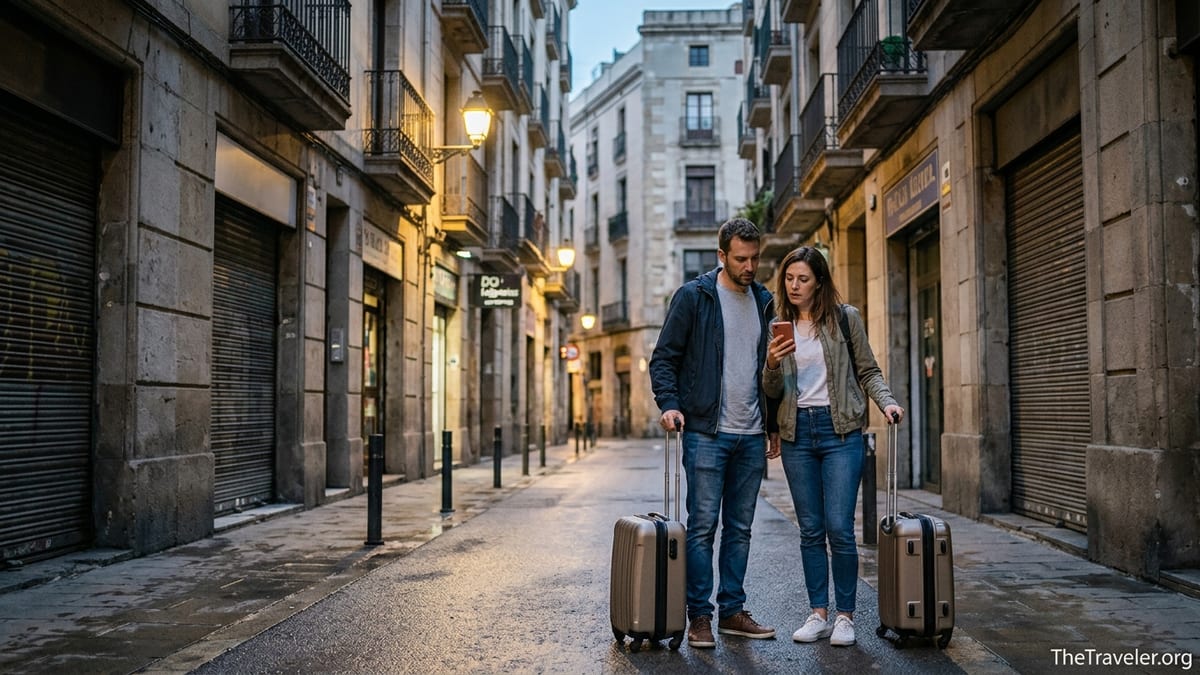
Airbnb listings often assume a level of independence from guests that hotels do not. A frequent mistake is booking a “self check-in” place and only skimming the instructions, then arriving late at night when your phone battery is low and roaming is patchy. In real cases, guests have stood outside buildings in Rome or Mexico City for an hour trying to figure out which unmarked gate is theirs, only to discover later that the host sent a photo of the door in the check-in guide they never opened.
Travelers also underestimate local practicalities like parking, public transport, and neighborhood safety at night. A charming loft in Los Angeles might be a 20-minute walk from the nearest bus stop along unlit streets, or a rural cabin in Colorado may require a 4x4 vehicle in winter that was mentioned briefly in the listing. If you arrive in a compact rental car during a snowstorm because you did not read that note, you could find yourself stuck or searching for an emergency motel.
Before you travel, download the Airbnb app, offline maps of the area, and the check-in guide while you still have reliable Wi-Fi. Double-check whether the host uses a lockbox, smart lock, or in-person key handoff, and confirm the exact time window. If your flight lands at midnight and check-in ends at 9 p.m., you need to coordinate in advance or choose a different place. It is also worth looking at a map to understand where the listing sits relative to grocery stores, transit lines, and the areas you plan to visit, rather than relying on the vague “great location” claim in the description.
Once you arrive, take a few minutes to photograph the property before you unpack, especially any pre-existing damage or wear. Many hosts now do the same between stays. Those photos are valuable if there is later a dispute over a scratched table, a stained rug, or a missing glass. It is an extra step that most hotel guests never think about, but on a peer-to-peer platform it can prevent arguments about deposits and extra charges.
Assuming Airbnb Will Automatically Fix Every Problem
Travelers often assume that if something goes wrong, Airbnb will automatically side with them and refund the stay. In practice, dispute resolution is slower and more nuanced. Guests report mixed outcomes when complaining about cleanliness, inaccurate listings, or noise. Some receive partial refunds; others do not, especially if they stayed for most of the reservation before raising an issue or failed to provide clear evidence.
A typical scenario goes like this: you arrive at a coastal condo, find sand on the floor and a musty smell, but decide to stay anyway because you are tired. You do not message the host until checkout, when you request a 50 percent refund for “uncleanliness.” The host responds with their own set of photos taken by a cleaner, and Airbnb sees that you never gave the host a chance to fix the problem during your stay. In many such cases, the platform rules that no significant refund is owed.
To protect yourself, report serious issues immediately through the app, not just by text. If the place is clearly not as described, take timestamped photos and videos as soon as you arrive. Give the host a specific window to respond, for example, two hours to send a cleaner or provide an alternative solution. If the host refuses or ignores you, escalate to Airbnb support while you are still at the property. You are much more likely to receive help relocating or a meaningful refund if you act quickly and document everything.
At the same time, reserve complaints for genuine problems that materially affect your stay. A single missing wineglass or a slow toaster is not the same as a broken lock, non-functioning heating in winter, or a hidden camera. Learning to distinguish between minor annoyances and major breaches of trust helps keep the review system useful and supports the hosts who are genuinely trying to provide good experiences.
The Takeaway
Airbnb remains a powerful tool for travelers who want kitchens, space, and local neighborhoods instead of standard hotel corridors. The platform has also grown more complex, with detailed fees, stricter rules, and a wide gap between the best and worst hosts. Most of the frustration guests report in 2026 comes back to a few recurring mistakes: not reading listings carefully, underestimating true costs, ignoring red flags, expecting hotel-style service, and treating Airbnb’s protections as automatic rather than something you must actively use.
If you approach Airbnb as a peer-to-peer rental marketplace instead of a hotel booking site, you shift how you plan. You read the fine print, cross-check reviews, and make sure your group and your plans fit a particular home’s rules and neighborhood. You keep conversations and payments on-platform, document issues quickly, and prioritize hosts with proven track records over rock-bottom prices.
Used this way, Airbnb can still deliver an oceanfront family house in North Carolina for less than two adjoining hotel rooms, or a compact but well-run apartment in Tokyo with a washing machine and a small balcony that becomes your favorite spot in the city. The difference between a story you tell with a smile and one you share as a warning is rarely random. It is usually decided in the minutes you spend reading, asking questions, and booking with your eyes open.
FAQ
Q1. How far in advance should I book an Airbnb to avoid problems?
For popular destinations and peak seasons, aim to book 2 to 3 months ahead. This gives you more choice of highly reviewed listings and reduces the risk of last-minute price spikes or settling for poorly reviewed options.
Q2. Is it safe to stay in a place with no reviews?
It can be, but it is riskier. If you choose a new listing, look for a host with previous reviews on other properties, very clear communication, and a fully verified profile. Consider limiting new hosts to shorter, less critical stays rather than a once-in-a-lifetime trip.
Q3. What should I do if the Airbnb is dirty when I arrive?
Document the problem immediately with photos and video, then message the host through the app explaining what you found and what you want fixed. Give them a reasonable chance to send a cleaner or offer a solution, and contact Airbnb support right away if they do not respond or refuse to help.
Q4. Can a host charge extra cleaning fees after I check out?
Hosts can request additional money through the Resolution Center for things like damage or excessive mess, but you do not have to accept if you disagree. Provide your own photos and explanation, and ask Airbnb to review the case. Clear check-out photos often make the difference in these disputes.
Q5. Is it okay to invite extra guests over if they are not staying the night?
Only if the house rules allow visitors and you have cleared it with the host in writing. Many hosts and buildings restrict any unregistered guests because of security, insurance, or local regulations. Ignoring this can lead to complaints, extra fees, or even cancellation of your stay.
Q6. How do I know if an Airbnb listing is in a safe neighborhood?
Airbnb does not label areas as safe or unsafe, so you need to research. Look up the general area on maps, read reviews for mentions of noise or safety, and search the neighborhood name with terms like “walkable at night.” If you are unsure, ask the host specific questions about walking after dark or public transport.
Q7. What happens if my host cancels right before my trip?
If a host cancels, Airbnb usually helps you find alternative accommodation and may provide a refund or credit, especially for last-minute cancellations. However, options can be limited and prices higher close to your dates, so this is another reason to choose hosts with strong histories and no pattern of cancellations.
Q8. Should I buy separate travel insurance for an Airbnb stay?
It is often a good idea, especially for expensive trips or international travel. Travel insurance can cover things like trip interruption, medical emergencies, or situations where a dispute with a host leaves you needing new accommodation and extra transport.
Q9. How strict are Airbnb’s rules about parties?
Airbnb’s party ban is now permanent, and both the platform and many cities take it seriously. Even small gatherings that create noise or attract neighbor complaints can be treated as violations. If you plan anything beyond a quiet dinner with registered guests, an Airbnb is usually not the right venue.
Q10. What is the best way to compare an Airbnb against a hotel?
Calculate the full Airbnb cost including cleaning and service fees, then compare it to hotels in the same area with similar amenities. Factor in things like parking, kitchen access, and extra space. For one or two nights in a city center, a hotel may be better value, while week-long family trips often favor Airbnb for space and cooking facilities.