


More news on this day
Airbus is reporting a steady order book for new jets despite a sharp rise in fuel costs and mounting route disruptions, signaling that airlines remain committed to long term fleet renewal plans even as operating pressures intensify.
Get the latest news straight to your inbox!
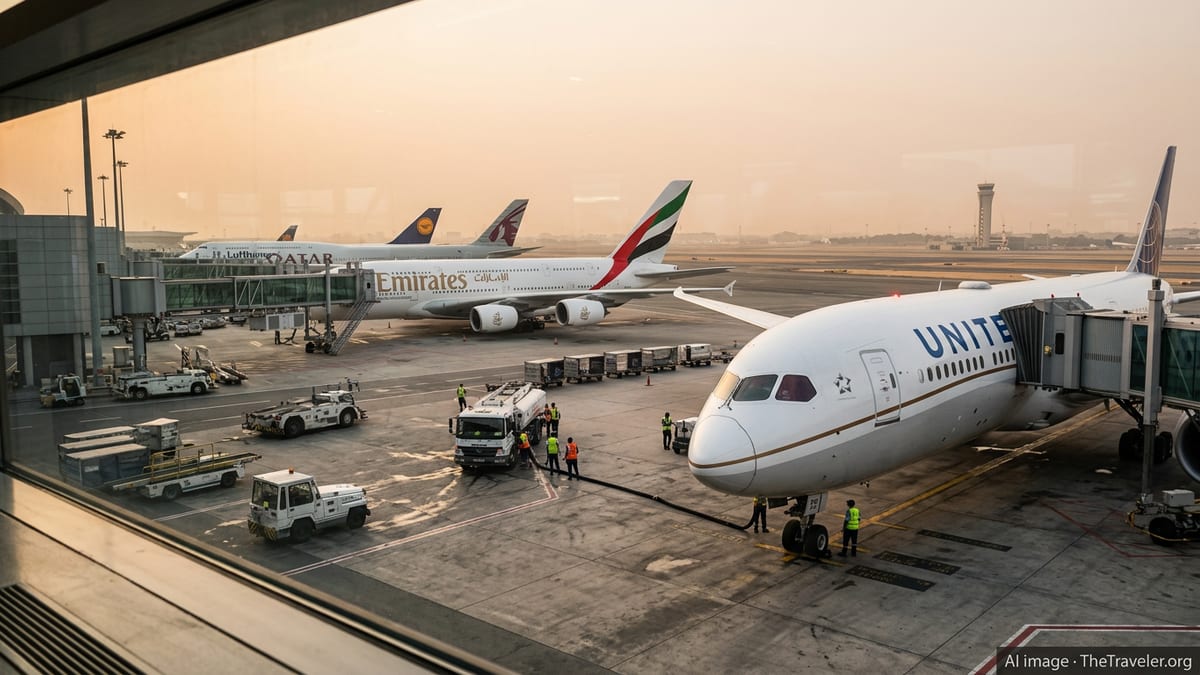
Fuel Pressures Test Airline Economics
Published coverage from Berlin indicates that global carriers are contending with a spike in jet fuel prices driven in part by conflict in the Middle East, which has constrained supplies and forced airlines onto longer, more fuel hungry routes. The combination is eroding profit margins and prompting capacity adjustments on some networks.
Reports suggest that reroutings around affected airspace have added time and cost to key long haul corridors between Europe, Asia and the Gulf. For airlines, fuel typically represents one of the largest single line items in their cost base, so sustained increases can quickly reshape route economics and demand careful capacity planning.
Industry analysis points out that airlines have already responded with a mix of fare increases, fuel surcharges and selective schedule trimming on thinner routes. Yet despite those moves, the current squeeze has not yet produced a broad retrenchment in long term fleet strategies, particularly among carriers with strong balance sheets or government backing.
For travelers, the near term impact is being felt more in higher fares and occasional schedule consolidation than in a collapse of connectivity. The stability of manufacturers’ backlogs suggests that airlines are still betting on robust medium term demand for air travel once the current fuel shock is absorbed.
Airbus Signals Resilient Demand
According to recent reporting on remarks made at an aviation summit in Berlin on June 9, Airbus leadership described no meaningful wave of cancellations or deferrals across its commercial jet programs. Publicly available information points to a record or near record backlog that already stretches delivery slots several years into the future.
The manufacturer’s order book has been bolstered in recent cycles by large commitments from low cost carriers in Asia, major European network airlines and a series of widebody deals tied to long haul expansion and replacement of older, less efficient fleets. Those contracts typically envisage delivery schedules that run well into the next decade, giving airlines time to ride out short term volatility in fuel markets.
Recent company disclosures on orders and deliveries show net orders continuing to outpace cancellations, with only limited adjustments linked to individual airline restructurings or fleet reshaping. While such fine tuning is standard in the industry, the absence of a broader cancellation trend is being interpreted as a sign of confidence in underlying passenger demand.
For Airbus, the current environment underscores the value of maintaining a diversified customer base across regions and business models. The mix of low cost, leisure focused airlines, full service network carriers and cargo operators provides some protection if any single segment comes under pressure from fuel prices or economic slowdown.
Why Carriers Are Holding Their Nerve
A key reason airlines appear reluctant to walk away from Airbus orders is the growing scarcity of near term delivery slots for new generation jets. Analysts note that both major manufacturers have order backlogs running to many years, making it difficult for carriers that cancel today to secure comparable capacity later at similar terms.
Modern aircraft families such as the A320neo and A350 are significantly more fuel efficient than many of the older models they are replacing. Public data on fuel burn indicates that each new generation narrowbody or widebody can cut fuel consumption and emissions by double digit percentages compared with legacy fleets, a saving that becomes even more valuable when fuel prices spike.
For network planners, this efficiency gain can offset at least part of the cost shock from higher fuel, particularly on long haul routes where fuel accounts for a substantial share of operating expenses. As a result, continuing with fleet renewal can be seen as a medium term hedge against turbulent energy markets rather than an optional luxury.
In addition, airlines that have invested heavily in marketing newer, quieter and more sustainable aircraft are wary of slowing deliveries and falling behind competitors on product appeal. Cabin upgrades, improved reliability and better cargo capability all feed into revenue potential over the lifetime of an aircraft, reinforcing the business case for staying in the queue.
Broader Industry Implications for Travel
The apparent firmness of Airbus’s order book comes at a time when parts of the airline industry are openly warning about cost pressures, with some carriers trimming schedules, revisiting marginal routes or slowing hiring in response to higher fuel bills. Even so, analysts highlight that these measures have so far been tactical rather than a sign of structural contraction.
For travelers, sustained investment in new aircraft suggests that airlines still expect passenger volumes to grow over the medium term, particularly in fast developing markets across Asia, the Middle East and parts of Africa. New jets are being earmarked for route launches to secondary cities, fleet densification and replacement of older aircraft that are more vulnerable to fuel price swings.
The durability of demand at Airbus also has implications for airport planners and tourism authorities. A stable pipeline of aircraft deliveries points to continued growth in seat capacity over time, even if near term schedules fluctuate. That, in turn, underpins investment in terminals, runways and tourism infrastructure designed to capture future flows of visitors.
However, the current fuel crunch is a reminder that route networks can change quickly when costs spike or airspace is disrupted. Travelers booking long haul trips over the coming seasons may see more schedule adjustments, longer routings and differentiated pricing as airlines seek to balance demand with profitability.
Outlook: Watching Fuel and Backlogs
Market observers are now focused on whether jet fuel prices stabilize or continue to climb in the second half of 2026. A prolonged period of elevated costs could eventually push more airlines to renegotiate delivery timelines, particularly those with weaker finances or heavy exposure to long thin routes.
For the moment, though, publicly available data and recent commentary suggest that Airbus is benefiting from structural tailwinds, including rising middle class travel in emerging markets, ongoing replacement of aging fleets and heightened scrutiny of emissions that favors newer, more efficient jets.
Travel industry stakeholders will be watching both the fuel curve and manufacturer backlogs closely. If Airbus continues to report minimal cancellations while fuel remains high, it would reinforce the view that the post pandemic recovery has entered a new phase in which airlines are willing to manage short term pain to secure long term growth.
For passengers, that could translate into a landscape of higher average fares but also newer aircraft, expanded route maps over time and gradual improvements in efficiency that may help temper the impact of future fuel shocks on ticket prices.