


More news on this day
A morning fire involving a Manhattan subway train on Tuesday left 14 people injured and forced major service disruptions, causing widespread delays for commuters and visitors moving through the city’s busiest transit corridors.
Get the latest news straight to your inbox!
Fire halts trains and triggers emergency response
Reports indicate that the incident began during the height of the morning rush, when a train moving through a Manhattan station was brought to an abrupt stop amid smoke and fire conditions on or near the tracks. Emergency crews were dispatched to the scene and evacuated passengers from the affected cars and platforms while power was cut to nearby sections of track.
According to publicly available information, at least 14 people sustained injuries linked to the incident, ranging from smoke inhalation to minor trauma associated with the hurried evacuation. No fatalities were immediately reported. Several of the injured were transported to nearby hospitals for further evaluation, while others were treated at the scene.
Initial assessments suggest that the fire may have started in or beneath one of the train cars, though a full investigation into the exact cause is expected to take time. Officials are reviewing surveillance footage, equipment logs, and maintenance records to determine whether an equipment fault, debris on the tracks, or another factor played a role.
While the blaze was brought under control, crews remained in the area to ventilate smoke-filled sections of tunnel and to conduct safety checks before any trains were allowed back through the affected stretch of track.
Significant delays ripple across Manhattan subway lines
The localized fire quickly turned into a systemwide headache for riders as trains were rerouted, held at stations, or taken out of service entirely. Public transit alerts issued throughout the morning described Manhattan-bound trains experiencing extensive delays, crowding, and shifting stopping patterns, with some services running express through parts of the island and others terminating early.
Service patterns on adjacent lines were also affected as dispatchers attempted to move trains around the blocked area, resulting in knock-on delays that extended well beyond the immediate incident zone. Riders reported packed platforms and trains at key transfer hubs, including major Midtown and downtown stations where commuters converge from across the five boroughs.
Publicly posted service updates showed that recovery was gradual, with partial service restored before full normal operations could resume. Even after trains began moving through Manhattan again, residual delays and uneven headways remained a concern into late morning, as equipment and crews were repositioned and out-of-place trains were cycled back into regular schedules.
For many New Yorkers, the disruptions served as a reminder of how a single incident on a core Manhattan corridor can reverberate across the entire subway network, affecting travelers well beyond the immediate location of the emergency.
Impact on commuters, tourists, and regional travel
The timing and location of the fire created particular challenges for workers and travelers who rely on Manhattan’s subway lines as a primary connection into and through the city’s commercial districts. Morning riders reported extended travel times, missed connections with commuter rail services, and delays reaching offices, schools, and appointments.
Tourists staying in Midtown and downtown hotels were also affected, as popular routes to landmarks, museums, and waterfront areas became less predictable. Travelers heading for intercity buses and airport connections faced added uncertainty, with some opting for taxis or ride-hail services as trains remained delayed or rerouted.
For regional travel, the incident underscored the central role of the Manhattan subway spine in linking outer-borough neighborhoods with major commuter rail stations and bus terminals. When that spine is disrupted, travelers from New Jersey, Long Island, and upstate connections can experience cascading delays as they attempt to transfer between modes.
Local businesses located near the affected stations reported slower morning foot traffic as commuters arrived late or diverted to alternative routes. Some offices and institutions urged patience for late arrivals, acknowledging the unusual severity of the delays.
Ongoing investigation and safety considerations for riders
According to published coverage, a formal investigation into the cause of the fire is underway, with attention likely to focus on the condition of train equipment, signal and power systems, and any reported debris or obstructions on the tracks. Past reviews of subway incidents in New York City have often highlighted the interplay between aging infrastructure, high ridership levels, and maintenance demands.
Transportation safety analysts note that while fires and smoke conditions on trains remain relatively rare compared with the total number of daily trips, they pose particular risks in enclosed tunnel environments where evacuation can be complex. As a result, investigators typically examine how quickly trains were stopped, how communications were handled, and how efficiently passengers were moved to safe areas.
For riders, available guidance regularly emphasizes staying calm during emergencies, following instructions over the public address system, and avoiding opening doors or walking along tracks unless directed by trained personnel. The Manhattan incident is likely to renew calls for clear and timely communication inside trains and on platforms, as well as for visible safety signage highlighting evacuation routes and procedures.
Publicly accessible performance reports from New York transit agencies have in recent years tracked the number of fires and smoke conditions, along with the delays they cause, in an effort to better understand patterns and prioritize preventive work. The outcome of the latest investigation may influence future spending on car overhauls, track cleaning, and power system upgrades.
Advice for travelers navigating the city in the aftermath
In the hours following the fire, transit alerts encouraged riders to allow extra travel time, especially for trips that relied on Manhattan trunk lines and major transfer points. Travelers were advised to check real-time service information before leaving home or hotels and to be prepared for changing train patterns as service was gradually restored.
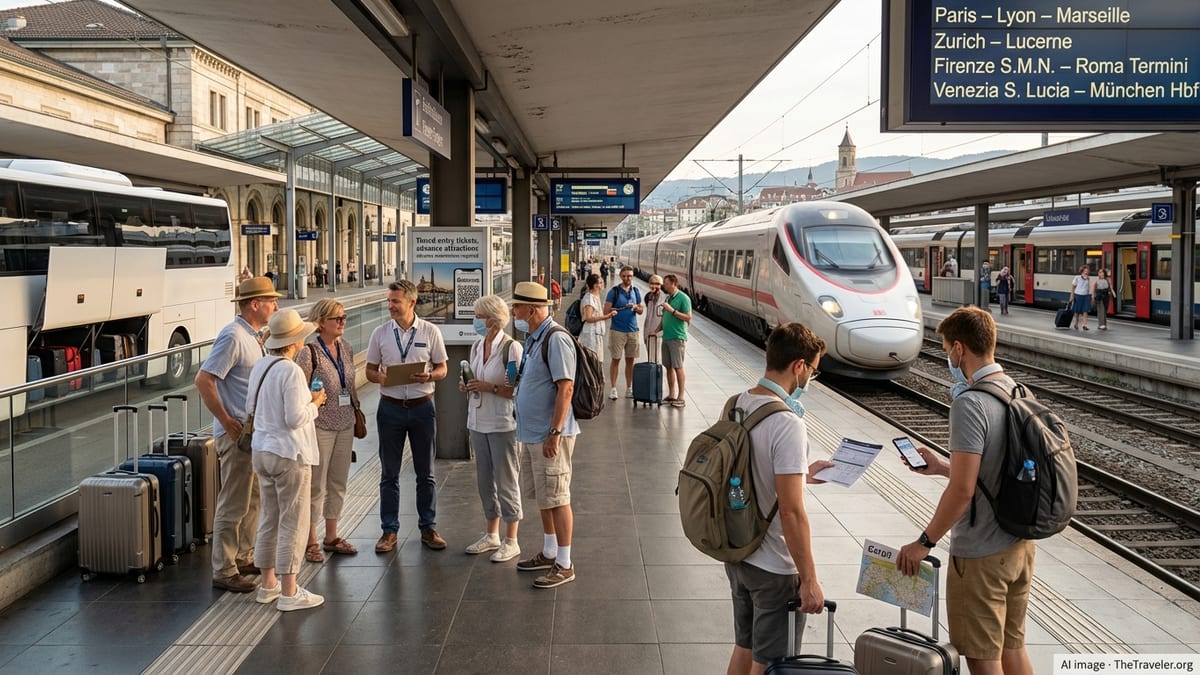
For visitors with fixed schedules, such as timed entries at museums or departure times at airports, transportation planners often recommend building in additional buffer time during periods of disruption and considering alternate routes that combine subway, bus, and, where practical, walking segments through central Manhattan.
Travelers unfamiliar with the system may find it helpful to use station signage and staffed information booths to confirm whether trains are running local or express and whether certain stations are being bypassed while incident-related inspections continue. When conditions permit, walking between nearby Midtown or downtown stations can sometimes be faster than waiting on crowded platforms for delayed trains.
As service normalizes, regular visitors and commuters are likely to return quickly to their usual patterns. Nonetheless, Tuesday’s fire highlights how sudden disruptions can reshape a day’s travel plans across New York City, reinforcing the value of flexible itineraries and up-to-date service information for anyone moving through Manhattan by train.