


More news on this day
Dubai’s role as one of the world’s busiest aviation hubs is under renewed strain as at least 16 international airlines suspend or sharply curtail flights to the city, creating widespread disruption for summer travelers and raising fresh questions about the resilience of global air networks in the Gulf.
Get the latest news straight to your inbox!
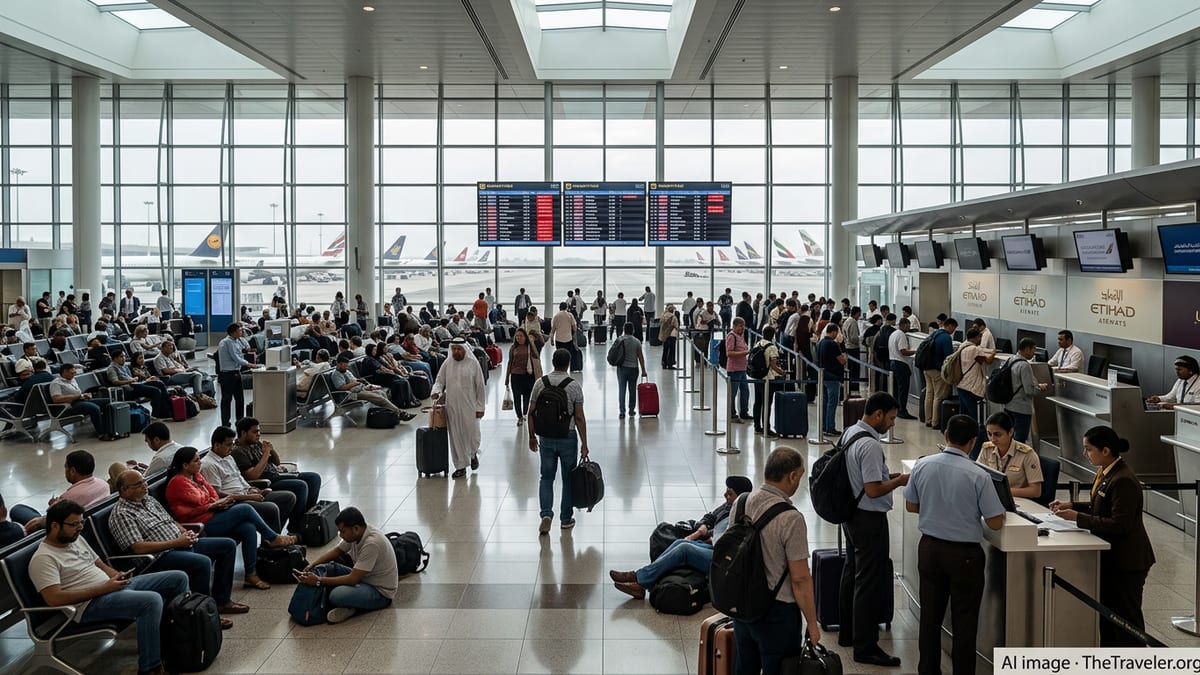
Multiple carriers extend suspensions into late summer
Publicly available schedules and industry summaries indicate that a cluster of mostly European and Asian airlines have paused their Dubai operations through at least part of the northern summer season. The pattern reflects a mix of outright route suspensions and sharply reduced frequencies after months of turbulence across Gulf airspace.
Unofficial tallies circulating among travel advisories and passenger forums list 16 affected airlines, including names such as Aegean Airlines, Air Canada, Air France, British Airways, Cathay Pacific, Finnair, KLM, Korean Air, Lufthansa, Singapore Airlines, SunExpress, Wizz Air and several regional and leisure operators. Many of these carriers have set provisional restart dates that fall between late June and late October, though they stress that schedules remain subject to change.
Some airlines have framed the cuts as temporary network adjustments in response to operational and safety constraints, while others are treating them as seasonal withdrawals that may be reassessed as conditions evolve. For passengers, the practical effect is the same: far fewer non-Emirati options to reach Dubai directly over the coming weeks.
The suspensions follow a period in March when airspace closures and missile and drone activity around the Gulf led to a wave of cancellations and diversions affecting Dubai International Airport and other regional hubs. While core operations have since resumed, many foreign airlines have been slow to return at full strength, preferring to monitor the security and fuel-supply backdrop before committing additional capacity.
Conflict, fuel constraints and airspace risks reshape routes
The latest disruption cannot be separated from the broader conflict dynamics in the Middle East and their knock-on effects on aviation. Reports on the 2026 Iran conflict and related Iranian strikes on Gulf infrastructure describe temporary damage to facilities in Dubai and other hubs, followed by rolling airspace closures that forced airlines to reroute or suspend services altogether.
Analysts note that concerns are not limited to direct security threats. Restrictions and congestion in key flight corridors have extended flying times and increased fuel burn on many long-haul routes. At the same time, European refiners have faced tighter aviation fuel supplies, prompting airlines to take a cautious stance on marginal routes, particularly those requiring long detours around sensitive airspace.
Network planners are also reacting to the compound risk of sudden airspace shutdowns. Experience from earlier crises showed that even short-lived closures can strand aircraft and crews in the wrong locations, triggering multi-day knock-on delays. In this context, suspending certain Dubai rotations for an entire season is being treated by some carriers as a safer option than running a fragile schedule that could collapse under renewed disruption.
Industry briefings on supply-chain conditions in the Middle East highlight that while Dubai and Abu Dhabi airports are operational, airlines and cargo operators continue to adjust routings, often adding time and complexity to what were once routine connections. This has made Dubai less straightforward to serve for carriers that do not have a large local base or strong feed on both ends of the route.
Travelers face cancellations, rerouting and longer journeys
For passengers, the immediate impact of the 16-airline suspension cluster is a sharp reduction in one-stop and non-stop choices to and from Dubai, especially on European and transpacific itineraries. Travelers who had booked months in advance for summer trips are reporting waves of cancellation notices, often accompanied by offers of refunds, vouchers or rebooking on later dates.
Where airlines are unable or unwilling to operate their own flights into Dubai, they are increasingly rebooking customers onto partner carriers that still maintain service into the United Arab Emirates, particularly Emirates and flydubai. This can mean longer connections through alternative hubs, overnight layovers or shifts to different arrival airports such as Abu Dhabi, Doha or regional points in Saudi Arabia.
Capacity constraints have also pushed fares higher on the routes that remain. With many foreign competitors scaled back, Emirates and a small group of regional carriers command a greater share of the available seats, particularly on high-demand corridors linking Dubai to major European capitals and Asian gateways. Published fare data and traveler reports indicate that tickets for peak July and August dates have risen sharply compared with the same period a year earlier.
Travel guidance from airlines, airports and consular advisories consistently urges passengers to monitor their booking status up until departure, use official airline apps for real-time updates and consider flexible or refundable fares where possible. Those with complex itineraries involving Dubai are being encouraged to build in longer connection windows or to route through hubs that currently show more stable schedules.
Dubai’s hub model under pressure but still functioning
Despite the breadth of the suspensions, Dubai International Airport continues to operate and remains heavily used as a transfer point, especially by Emirates, which is based at the hub and has resumed the majority of its long-haul network. Official data on overall traffic for 2026 is still emerging, but early indications from airport and industry assessments suggest that passenger numbers, while lower than originally forecast, remain substantial.
Dubai’s aviation model is highly dependent on connecting flows that link Europe, Asia, Africa and the Americas through a single mega-hub. When a cluster of foreign airlines steps back, that model becomes more concentrated around local operators, which can pose challenges for competition, pricing and resilience. However, it also gives home carriers an incentive to add capacity where operationally feasible, in order to capture displaced demand.
Analysts tracking the regional aviation market argue that Dubai’s long-term appeal as a hub is unlikely to fade quickly, given its geographic position, existing infrastructure and strong local carrier. At the same time, the 2026 shocks have exposed how vulnerable even the largest gateways can be to geopolitical risk and energy-market volatility.
Some industry commentators suggest that global airlines may in future diversify their Middle East stopovers more evenly among Dubai, Abu Dhabi, Doha and other emerging hubs, reducing reliance on any single airport. Others note that passengers themselves are already experimenting with new routings, often prioritizing perceived stability and flexibility over the shortest theoretical journey time.
What passengers should watch in the weeks ahead
For now, travelers with plans involving Dubai in July, August and early autumn should assume that the list of airlines suspending or altering services may continue to evolve. Carriers review their schedules frequently and can either bring forward restart dates if conditions improve or extend suspensions if security or fuel uncertainties persist.
Observers will be watching several indicators: published timetable updates by major European and Asian airlines, any fresh advisories about airspace in the Gulf region, and signals from fuel markets that might ease cost pressures on long detours. Changes in these areas are likely to show up quickly in revised booking options and prices.
Travel specialists recommend that passengers avoid assuming that a flight is operating simply because it appears in a booking engine. Instead, they advise checking flight-status tools in the final 24 to 48 hours before departure and being prepared with backup plans, such as alternative routings or travel dates, particularly for time-sensitive journeys.
While Dubai’s aviation sector has weathered shocks before, the current wave of suspensions by 16 international airlines underscores how interlinked global travel has become with geopolitical stability. For many travelers this summer, the experience of flying through the Gulf will be shaped less by airport marketing slogans and more by evolving risk calculations made in airline operation centers far from the departure gate.