


More news on this day
A sudden spike in jet fuel costs linked to the conflict involving the United States and Iran is reverberating across global aviation, lifting summer airfares and exposing weaker airlines to renewed bankruptcy risk just as peak travel season begins.
Get the latest news straight to your inbox!
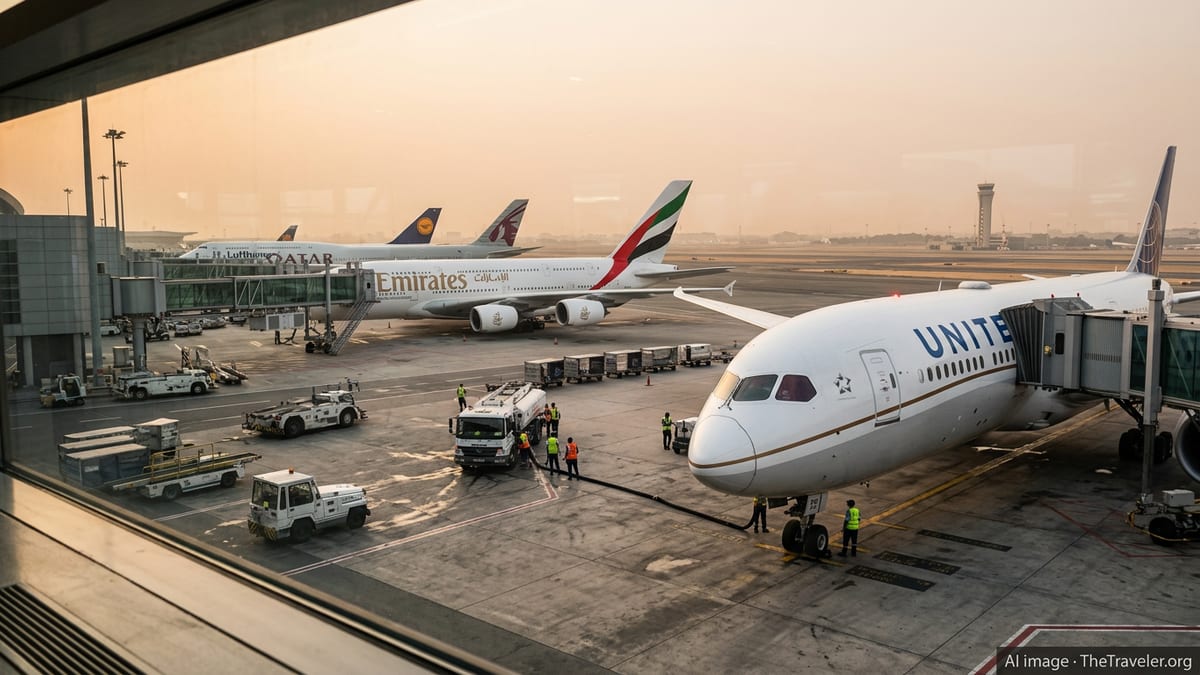
War, Oil and a Tight Jet Fuel Market
The latest fuel shock is unfolding against the backdrop of the United States–Iran war and disruptions around the Strait of Hormuz, a critical corridor for Gulf oil exports that supply refineries worldwide. Research from industry analysts indicates that closures and intermittent bottlenecks in Gulf shipping lanes have driven benchmark oil prices sharply higher in recent months, with refined jet fuel prices rising even faster than crude as refiners capture wider margins and scramble to secure supply.
Global aviation data compiled by the International Air Transport Association and other research groups shows that fuel already accounted for roughly a quarter of airline operating costs going into 2026. Projections for this year point to fuel bills in the hundreds of billions of dollars, even before the latest escalation in the Middle East fully feeds through to forward contracts. That leaves airlines heavily exposed to each additional dollar on a barrel of oil, particularly on long-haul routes where fuel is the single largest cost line.
At the same time, the industry is still grappling with an aging fleet, delayed aircraft deliveries and maintenance bottlenecks that force carriers to fly less efficient planes. Sector briefings released this spring describe a global order backlog measured in more than a decade of current production, keeping some airlines locked into older, more fuel-hungry models just as prices spike. The combined effect is a sharp squeeze on margins worldwide, even as overall passenger demand remains robust.
United States: Rising Fares and Fragile Balance Sheets
In the United States, federal transportation data shows that airlines remained profitable in 2025, but the financial picture has deteriorated quickly as fuel costs surged this year. Recent government statistics on March fuel spending indicate that U.S. carriers paid more than half again as much for jet fuel as they did a year earlier, adding well over a billion dollars in monthly costs. Sector-wide, that kind of increase can erase margins within a single quarter unless offset by higher fares or capacity cuts.
The most vulnerable operators are ultra-low-cost and regional carriers that depend on tight cost control and high utilization. Industry coverage in recent weeks has highlighted the collapse of Spirit Airlines, which ceased operations in early May after repeated bankruptcy filings. Analysts widely link the final blow to the jump in energy prices following the Iran conflict and shipping disruptions in the Gulf, which left the airline unable to absorb higher fuel bills on its discounted fares.
For travelers in the United States, the immediate impacts are visible in higher ticket prices, especially on domestic leisure routes and transatlantic services where demand remains strong. Analytical work on fare dynamics suggests that low-cost and ultra-low-cost carriers tend to pass a larger share of fuel increases into base fares and ancillary fees, while also trimming frequencies on marginal routes. Flyers are likely to see fewer sale fares, more blackout dates and tighter capacity on peak departures through the summer.
Policy debate in Washington has intensified as carriers warn of further instability if fuel remains elevated. Public reporting indicates that a group of low-cost airlines recently requested a multibillion-dollar support package to cope with the spike in fuel costs. While federal officials have so far resisted large-scale interventions, the discussion underscores concerns that a prolonged energy shock could trigger additional failures or consolidation in the U.S. market.
Middle East and Gulf Hubs Under Pressure
Across the Middle East, aviation markets are being pulled in two directions at once: strategic importance and acute exposure. Iran itself is dealing with overlapping energy and economic crises, including previous moves to sharply increase subsidized aviation fuel prices and ongoing shortages tied to sanctions and infrastructure constraints. Publicly available figures from Iranian aviation authorities show jet fuel consumption rising in recent years even as the broader economy struggles, leaving the sector sensitive to both domestic pricing reforms and international supply disruptions.
Israel’s aviation sector has been buffeted by regional instability, airspace restrictions and demand swings since the latest round of conflict. While major Israeli carriers have so far maintained operations, industry commentary points to higher insurance and security-related costs on top of more expensive fuel. The result is a more volatile operating environment, with airlines adjusting schedules and capacity to match fluctuating demand and changing risk assessments.
In the Gulf, the United Arab Emirates and Qatar host some of the world’s largest long-haul transfer hubs, which depend heavily on affordable, reliable jet fuel. Airline and airport disclosures indicate that these carriers hedge a significant portion of their fuel needs and benefit from proximity to production, but they are not immune to global price spikes. When crude prices surge and refining spreads widen, even well-hedged Gulf airlines confront higher replacement costs and pressure on future ticket pricing.
Reports from European and regional outlets suggest that concerns are mounting over potential supply tightness later in the summer if disruptions around the Strait of Hormuz continue. Any extended limitation on Gulf exports could force refiners in Europe and Asia to compete more aggressively for alternative crude and middle distillates, potentially pushing jet fuel prices even higher. For connecting passengers using hubs in Dubai, Abu Dhabi or Doha, that could translate into more volatile fares and changes in routing options.
Brazil and Emerging Markets Face Capacity Risks
Far from the Gulf, Brazil and other major emerging markets are absorbing the shock in different ways. Brazil’s aviation sector entered 2026 with solid demand and a gradual recovery from earlier downturns, but it relies heavily on imported fuel priced in U.S. dollars. As global benchmarks rise, Brazilian airlines contend not only with higher dollar-denominated fuel costs but also with currency fluctuations that can magnify the impact when converted into local terms.
Brazilian carriers have recent experience with energy-related turbulence. Several years of volatile fuel prices and macroeconomic stress contributed to bankruptcies and restructurings among local airlines, leaving the domestic market more concentrated. Current analyst commentary warns that another extended period of elevated jet fuel could again test balance sheets, particularly for smaller operators serving secondary cities and remote regions.
Similar patterns are apparent in other emerging markets across Latin America, Africa and parts of Asia, where airlines often operate older fleets and have limited access to sophisticated hedging instruments. Industry studies note that in such markets, rapid fuel price increases are frequently passed through to travelers via abrupt fare hikes, route suspensions or reductions in frequencies. That can disproportionately affect price-sensitive leisure travelers and those in regions with few alternative transport options.
For international travelers connecting through hubs in São Paulo or Rio de Janeiro, the knock-on effects may include higher fares on long-haul services to North America and Europe, as well as thinner schedules on regional routes. Tour operators and corporate travel managers are already flagging the potential for last-minute schedule changes if carriers move to protect profitability by pruning underperforming flights.
What Travelers Should Watch Next
Travelers planning trips in the second half of 2026 face a landscape shaped by fuel prices, geopolitical risk and airline financial resilience. Aviation economists emphasize that when fuel costs remain elevated for an extended period, airlines respond through a mix of higher fares, ancillary charges and capacity adjustments rather than short-lived surcharges. Consumers are therefore likely to experience more persistent price pressure rather than a brief spike.
Several signposts will help gauge whether conditions are stabilizing. Market watchers highlight benchmark oil and jet fuel prices, as well as indicators of shipping flows through the Strait of Hormuz and other key chokepoints, as critical variables. Industry forecasts from major airline associations and consultancies, including updated profit outlooks and capacity plans, also offer clues about whether carriers expect to restore growth or brace for deeper cuts.
Travel experts advise that, in this environment, passengers may benefit from booking earlier on key summer and holiday dates, being flexible on routing, and monitoring airline announcements for schedule changes. With some carriers already under stress, there is renewed attention to the financial health of smaller airlines, particularly ultra-low-cost operators in the United States and regional players in markets such as Brazil, where previous fuel shocks have preceded bankruptcies.
The trajectory of the conflict involving the United States and Iran, and any further impact on Gulf oil flows, will be decisive. If a durable easing of tensions allows energy markets to normalize, the industry could gradually reverse some of the steepest fare increases and rebuild capacity. If disruptions persist, however, the current fuel crisis may mark the start of a more prolonged period of higher-cost air travel, reshaping how and where people fly.