


More news on this day
Soaring fuel prices and airspace closures linked to the Iran war are testing the resilience of United Arab Emirates carriers, even as recent financial results suggest they are better positioned than many rivals to withstand the latest Middle East shock to global aviation.
Get the latest news straight to your inbox!
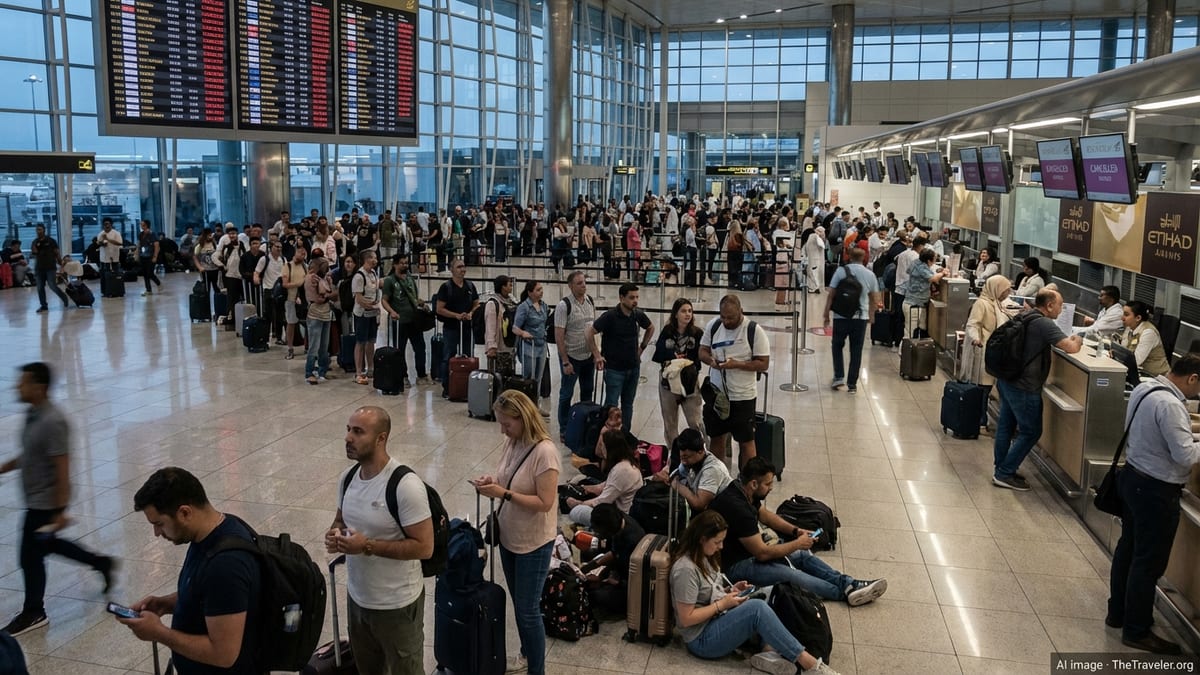
Conflict Disruptions Hit a Key Global Aviation Hub
The current Middle East conflict has sharply reduced the amount of usable airspace across the region, forcing airlines on Europe to Asia and Africa to Asia routes into longer, more fuel-intensive paths that avoid Iranian and neighboring flight information regions. Industry data shows that temporary closures affecting airports in the Gulf, including Dubai and Abu Dhabi, have disrupted a hub-and-spoke ecosystem that previously handled a significant share of global long-haul transit traffic.
Analysis from aviation consultancies and financial ratings firms indicates that the closures and rerouting have raised operating costs for airlines worldwide while eroding the time-saving advantage that made the Gulf hubs so attractive for connecting journeys. Longer flight times, additional technical stops and more complex crew scheduling are all adding cost and operational risk at a moment when demand remains sensitive to price.
Reports focused on the economic impact of the Iran war note that several major Middle Eastern airports collectively handle a double-digit share of global air traffic. As airspace restrictions and security concerns persist, that share is at risk, with some long-haul passengers now opting for itineraries that bypass the region entirely, either through nonstop transpacific and transatlantic services or via alternative hubs in Turkey and Europe.
For the UAE, whose economic model has leaned heavily on connecting traffic through Dubai International and Abu Dhabi’s Zayed International, the interruption is more than a short-term operational issue. It raises strategic questions about how much exposure its flagship airlines should maintain to transit flows that depend on geopolitical stability beyond their control.
Jet Fuel Spike Reignites Old Fears of Airline Insolvency
The conflict has also intensified volatility in global energy markets, driving a sharp rise in jet fuel costs that is reverberating across balance sheets. Research from credit analysts and aviation advisers describes fuel as once again the dominant variable cost for airlines, with even a relatively small percentage increase in fuel prices capable of wiping out thin profit margins.
Commentary from aviation-focused analysts points out that fuel has historically represented roughly one fifth to one third of airline operating expenses. In the current environment, where hedging programs do not fully insulate carriers from sudden spikes and demand cannot always absorb fare increases, that share can climb rapidly. The result is renewed concern that weaker airlines could be pushed toward restructuring or bankruptcy if elevated prices persist.
Some disclosure statements in ongoing airline restructurings outside the Middle East already highlight conflict-related fuel price spikes as a material risk to their business outlook. Sector observers note that similar pressures apply across the industry, including in the Gulf, and warn that sustained high fuel prices combined with softer consumer demand could accelerate consolidation or force state owners to reassess financial support.
For UAE carriers that expanded aggressively over the past two decades, the current fuel shock is a reminder of past downturns when global traffic slumped and credit markets tightened. While their recent financials are robust, the structural vulnerability of a model built on long-haul connectivity means that a prolonged conflict and fuel squeeze could again test liquidity and capital-raising options.
UAE Carriers Look Resilient but Not Immune
Publicly available financial statements suggest that leading UAE airlines entered the latest crisis from a position of strength rather than distress. Emirates Group reported record profits for its 2023 to 2024 financial year, with operating costs rising but profitability boosted by strong demand for international travel and the scale of its global network. The carrier has also disclosed extensive use of jet fuel hedging instruments, indicating active management of exposure to price swings.
Etihad Airways has likewise reported improving performance after a multi-year restructuring, highlighting a return to profitability and reductions in unit costs excluding fuel. Analysts describe both carriers as better capitalized and more disciplined than during earlier expansion phases, with more conservative fleet and network plans and a greater emphasis on yields over raw capacity growth.
However, even strong balance sheets have limits in the face of overlapping shocks. Recent industry analysis suggests that Gulf hub carriers are contending not only with higher fuel bills and airspace rerouting but also with the potential loss of premium connecting traffic as corporate travel managers prioritize routes that avoid conflict-adjacent skies. That combination of rising costs and shifting demand patterns could narrow profit margins over the coming year.
There are also broader macroeconomic headwinds. Higher global inflation and borrowing costs, as well as uncertainty around energy prices, threaten to dampen discretionary travel. For the UAE, where aviation is deeply integrated into tourism, trade and logistics strategies, any sustained downturn in airline earnings could have spillover effects on airports, hospitality and associated service sectors.
Global Airlines Turn to Mergers and Alliances as Pressures Mount
Outside the Gulf, airlines are increasingly responding to conflict-related disruptions and fuel volatility by pursuing mergers, equity tie-ups and deeper alliance structures. Recent years have already seen high-profile combinations such as the consolidation of Korean Air and Asiana and the acquisition of Hawaiian Airlines by a larger U.S. carrier, as companies seek scale, network complementarities and cost efficiencies.
Dealmakers and aviation consultants describe this as part of a broader consolidation cycle in which carriers with stronger balance sheets absorb weaker rivals or enter joint ventures to share revenue and capacity on critical long-haul corridors. The latest Middle East crisis appears to be reinforcing this trend by exposing the vulnerabilities of mid-sized airlines that lack diversified networks or robust hedging strategies.
Industry commentary suggests that more cross-border mergers and joint ventures are likely, particularly on routes linking Asia, Europe and North America, where rerouting around closed airspace has eroded traditional route economics. In some cases, strategic alliances may be a defensive move to preserve connectivity when direct services are no longer commercially viable on a standalone basis.
For UAE carriers, which have historically preferred high-profile equity stakes and partnership deals over full-scale mergers, the changing landscape could open both opportunities and risks. They may find new chances to deepen code-sharing or revenue-sharing relationships with airlines that want access to Gulf hubs without expanding their own exposure to the region. At the same time, a wave of consolidation elsewhere could strengthen competing hub systems, from Istanbul to major European and U.S. gateways.
Bankruptcy Risk Narrative Meets Strategic Reality in the Gulf
Speculation about potential airline bankruptcies tends to spike during every global aviation crisis, and the current Middle East conflict is no exception. Comment threads and sector commentary already cite smaller carriers facing mounting jet fuel costs and rerouting expenses as prospective candidates for formal restructuring or liquidation if conditions deteriorate.
In the case of the UAE, however, the immediate risk of insolvency for its flagship airlines appears limited by strong recent profitability, access to state support and the strategic importance of aviation to the national economy. Public filings and annual reports depict Emirates and Etihad as focused not on survival, but on recalibrating networks, managing fuel exposure and preserving key traffic flows amid heightened geopolitical risk.
At the same time, the crisis is sharpening debate over the long-term sustainability of Gulf hub strategies. Some analysts argue that recurrent conflicts and airspace closures could gradually shift growth toward more geographically insulated hubs or nonstop long-range services that bypass traditional connection points. Others contend that once immediate security concerns abate, the geographic advantage and infrastructure investments in the UAE will again draw traffic back.
For now, the picture is one of resilience under pressure rather than imminent collapse. UAE airlines are navigating the same fuel and conflict headwinds pushing other carriers toward consolidation, but from a position that allows them to consider selective partnerships rather than defensive mergers. How long that advantage lasts will depend on the trajectory of the conflict, the path of fuel prices and the willingness of travelers to keep crossing a region whose skies have become a frontline in global geopolitics.