


More news on this day
British holidaymakers heading to France this summer are being urged to review the latest government guidance, after the UK Foreign Office updated its travel advice to highlight heightened security concerns, ongoing protests and the risk of sudden transport disruption across the country.
Get the latest news straight to your inbox!
Security alert level and terrorism risk under scrutiny
The UK Foreign, Commonwealth and Development Office (FCDO) continues to flag the risk of terrorism in France, stressing that attacks could occur in public places popular with visitors, including transport hubs, major attractions and busy urban centres. The current alert reflects a broader European security environment shaped by the war in the Middle East and recent global warnings issued by allied governments.
According to publicly available government advisories, France remains under a reinforced security posture, with additional patrols and spot checks in cities such as Paris, Lyon and Marseille. Travellers are being advised to remain aware of their surroundings, follow local instructions at transport hubs and be prepared for visible policing, including bag searches at stations, shopping centres and event venues.
The Foreign Office guidance does not advise against travel to France, but it does underline the need for what it describes as “increased caution” in crowded spaces and at large events. Travellers are encouraged to monitor official announcements during their stay and to be prepared for temporary closures or evacuations if security operations are launched in response to a perceived threat.
Analysts note that the updated advice aligns closely with separate alerts from the United States and other European countries, which also cite the possibility of opportunistic or copycat attacks targeting public gatherings.
Protests, strikes and disruption to transport
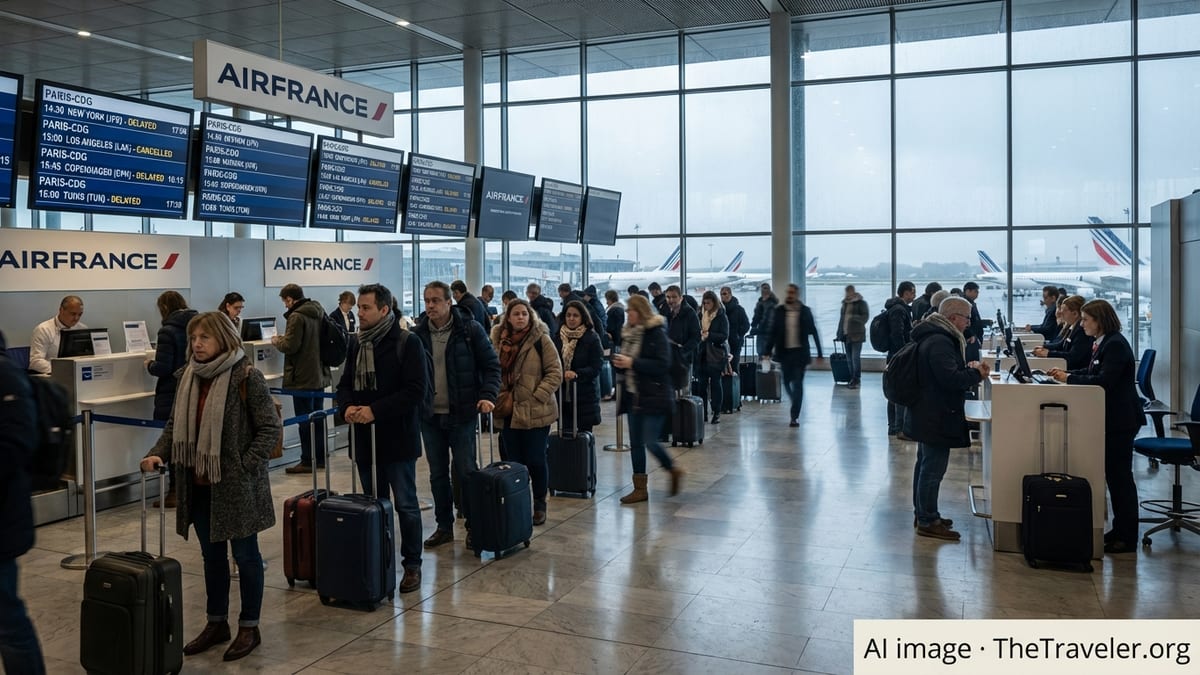
The FCDO’s latest notice places fresh emphasis on the impact of industrial action and demonstrations on travel plans, warning that both planned and short‑notice strikes can affect flights, rail services, ports and local public transport. Travellers heading for cross‑Channel routes, including Eurostar and ferry crossings, are being urged to check schedules regularly and build extra time into journeys.
In recent months, French unions and professional groups have repeatedly called protests over pay, pensions and sector‑specific reforms, some of which have spilled into key tourist areas in major cities. Publicly available reports indicate that while most gatherings are peaceful, they can lead to road closures, diversions and crowding around central squares and government buildings.
The Foreign Office guidance highlights that demonstrations may be accompanied by a heavy police presence and, in some cases, clashes at the margins of otherwise peaceful marches. Visitors are being advised to avoid large crowds where possible, move away immediately if a gathering appears tense and follow local announcements about traffic diversions or suspended tram and bus services.
Travel insurers and consumer groups have also drawn attention to the potential knock‑on effect of disruption, warning that missed connections caused by strikes or blocked roads may not always be covered under basic policies. Holidaymakers are urged to check the small print of their insurance and to keep receipts if they incur additional accommodation or transport costs.
Heightened checks at borders and on the roads
Border and identity checks feature prominently in the revised FCDO advice, reflecting a period of tighter controls at France’s internal and external frontiers. Travellers arriving by air, sea or rail may encounter longer queues at passport control, particularly during peak weekend travel and late‑summer holiday dates.
French authorities have also continued periodic roadside checks on main routes, including those linking Channel ports with Paris and the south of France. Drivers can be asked to show passports, vehicle documents and proof of insurance, and to comply with regulations on high‑visibility vests and warning triangles. The update encourages motorists from the UK to familiarise themselves with French road rules in advance and to allow for possible delays when planning long‑distance drives.
The Foreign Office note reiterates that French police can issue on‑the‑spot fines for traffic offences, and that vehicles may be impounded if documentation is incomplete or if serious violations are suspected. Car‑hire customers are advised to confirm that rental companies provide the mandatory safety equipment and that they understand procedures in the event of an accident or breakdown.
Travel commentators point out that the combination of tighter border checks and seasonal traffic can extend journey times significantly on busy weekends, particularly on routes serving northern beaches, Alpine resorts and Mediterranean destinations.
Localised risks: crime, scams and coastal safety
Alongside wider security concerns, the Foreign Office warning draws attention to more routine risks faced by visitors in popular French destinations. Petty crime, including pickpocketing and bag snatching, is reported as a persistent problem in tourist hotspots such as central Paris, coastal resorts and crowded public transport.
Recent advisories reference recurring scams at major landmarks, including distraction techniques, fake petitions and unauthorised “ticket helpers” near metro stations and ticket machines. Travellers are encouraged to keep valuables out of sight, use hotel safes where available and be cautious of unsolicited offers of assistance with luggage, cashpoints or ticket purchases.
On the coasts and in lakeside resorts, local authorities have underlined the importance of observing lifeguard flags and warnings about rip currents, sudden weather changes and prohibited swimming zones. The FCDO guidance points out that conditions can deteriorate quickly, particularly along the Atlantic seaboard, and that visitors should heed signage about dangerous cliffs, unpatrolled beaches and restricted water‑sports areas.
Families travelling with children are being urged to agree meeting points at busy beaches and amusement parks and to ensure that younger travellers carry key contact details, especially in large venues where public address announcements may only be made in French.
Practical steps for British travellers before departure
In its latest update, the Foreign Office stresses the importance of basic preparation ahead of trips to France. Travellers are advised to register emergency contact information with their airline or tour operator, make digital copies of key documents and keep the details of their travel insurer easily accessible.
Publicly available guidance also recommends that visitors check the expiry date of passports and, where applicable, ensure that any required residence permits or visas are valid for the full length of their stay. Motorists are reminded that the UK’s post‑Brexit arrangements require specific attention to vehicle documentation, including proof of ownership, insurance and, in some cases, a green card from insurers.
Health‑related advice highlights the value of comprehensive travel insurance that covers medical treatment and repatriation, as well as familiarity with local emergency numbers. Travellers are encouraged to pack any regular medication in original packaging and carry copies of prescriptions, as well as to check, before departure, whether any medicines are subject to specific controls in France.
While the latest Foreign Office notice underscores a range of risks, it stops short of discouraging travel. Instead, the message to holidaymakers is to stay informed, allow extra time for journeys and to follow local safety guidance in what is expected to be one of the busiest travel seasons to France since before the pandemic.