


More news on this day
Transatlantic airfares are entering a new phase of volatility in 2026, as aggressive discounting by airlines and ticket brokers begins to push some Europe flights below the once unthinkable threshold of 2,000 dollars for lie flat and other premium seats.
Get the latest news straight to your inbox!
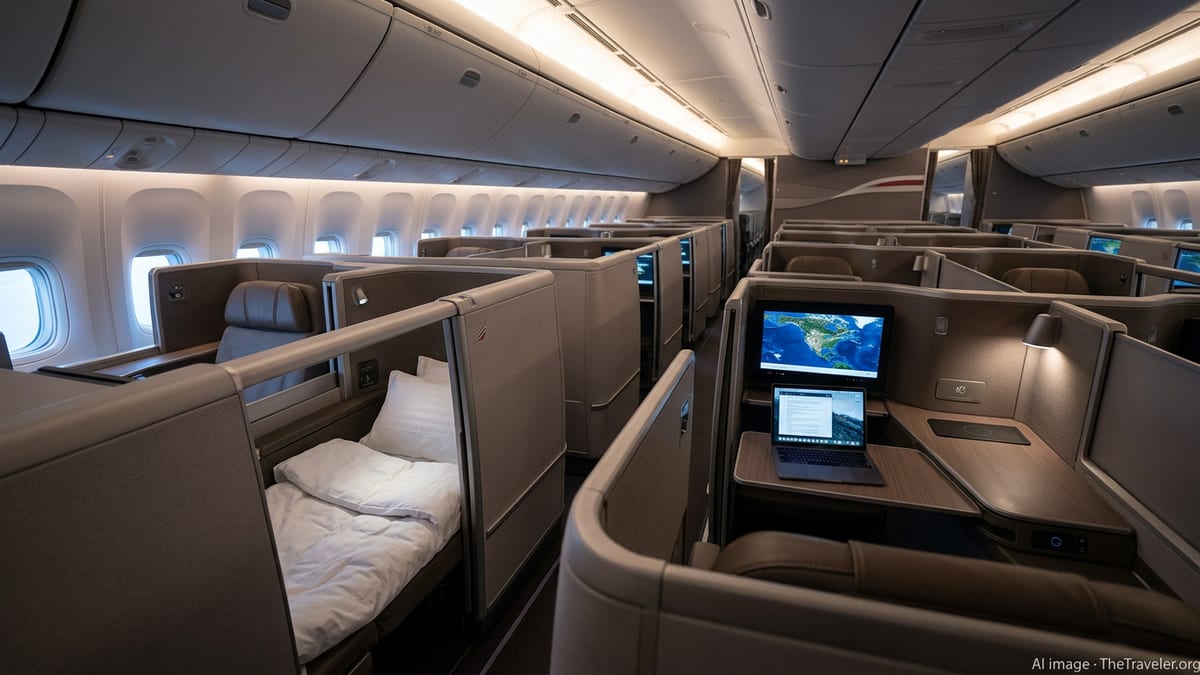
New benchmarks for what counts as a deal
Recent fare tracking across the North Atlantic indicates that sub-2,000 dollar round trip business class to Europe, long considered a rare flash sale, is becoming a reference point for what many analysts now describe as an “excellent” deal. One widely cited data set of thousands of fares logged in 2026 and 2027 categorizes any round trip business class ticket to Europe under 2,300 dollars as good value and anything under 2,000 dollars as an outstanding price from North America.
This new benchmark reflects not only isolated flash promotions but also a broader reset in expectations following several years of sharp post-pandemic price increases. While many nonstop business class fares on marquee routes such as New York to London or Los Angeles to Paris still sit well above 4,000 dollars in peak periods, published coverage shows that itineraries with one stop, shoulder-season departures, or departures from lower-cost hubs are increasingly dipping below 2,000 dollars, at least for limited windows.
Analysts caution that these prices are not yet representative of the entire market. Instead, they appear as pockets of value driven by specific competitive pressures, consolidator contracts, and dynamic revenue management tools that release small batches of discounted seats when demand softens.
Where the price war is most visible
The clearest evidence of a developing price war comes on routes where full service carriers, low cost long haul operators, and specialist agencies compete head to head. Deal-monitoring platforms that scan dozens of airlines report business class and premium cabin fares to Europe discounted by 30 to 60 percent compared with typical published prices, with some headline offers starting in the high 1,600 to 1,800 dollar range for off peak departures.
Specialist business class brokers highlight nonstop or one stop itineraries to major European gateways such as London, Paris, Madrid, and Frankfurt starting around 1,685 dollars when booked under contracted fares, well below many airlines’ own public listings. These agencies are leveraging private inventories and negotiated corporate style rates, then marketing them to individual leisure travelers who are willing to accept more restrictive conditions in exchange for lower prices.
At the same time, low cost and hybrid carriers in Europe continue to advertise cut price sales in economy, which indirectly influence premium pricing. Low base fares pressure legacy airlines to create sharper differentials between economy, premium economy, and business, particularly on secondary routes where demand is more elastic. In several recent sales, promotional business class prices to Europe from U.S. and Canadian gateways fell close to, and occasionally just under, the 2,000 dollar mark when converted from local currencies.
Why prices are dropping despite higher costs
The drop in some premium fares is unfolding against a backdrop of elevated fuel prices and lingering capacity disruptions tied to geopolitical tensions, especially conflict in the Middle East. Industry outlook reports for 2026 describe a market where airlines have raised forward prices on many Europe Asia and long haul leisure routes, yet are simultaneously forced to discount selectively on transatlantic sectors when demand softens or corporate travel budgets tighten.
Part of the explanation lies in how revenue management systems react to uneven demand. Airlines regularly hold back business class inventory at high price points, then release lower fare buckets when advance bookings fall short of targets. In the current environment, where many travelers remain price sensitive, this can result in sudden, sharp drops in premium fares a few weeks to a few months before departure, particularly outside peak summer.
Another driver is the emergence of premium economy as a strong middle product. Research on 2026 pricing shows that premium economy typically commands a 30 to 85 percent surcharge over base fares. When premium economy prices creep closer to 3,000 dollars on popular dates, airlines face pressure to either justify the gap to business class or narrow it through targeted discounts. That dynamic can pull some business fares downward toward the 2,000 dollar line, especially when cabins are not full.
How travelers are finding sub-$2,000 Europe seats
The most aggressive deals are rarely visible through a simple search on a single airline’s website. Instead, travelers are relying on a mix of tools: fare alert services that track drops across multiple airlines, business class consolidators that publish indicative deal ranges, and flexible date searches that expose weaker demand days such as midweek outbound and Sunday or Monday returns.
Monitoring platforms that focus specifically on business class pricing report that off peak windows and shoulder seasons are especially fertile. From major hubs like New York, Chicago, and Toronto, round trip business class fares to Europe in April, May, September, and October are often 20 to 30 percent lower than in July and August. Travelers who can avoid Friday and Saturday returns, or who are willing to route through a European hub before reaching their final destination, are more likely to see fares dip below 2,000 dollars on select dates.
In parallel, some travelers are turning to creative routing to bring total costs down. This can include booking cheaper business class segments starting in Europe, using one way award tickets in one direction and paid fares in the other, or combining economy flights to a cheaper gateway with a separate premium ticket onward. Publicly available fare examples show that starting an itinerary in Ireland, Spain, or other lower cost markets can sometimes reduce the business class portion well below prices quoted from North American origins.
What this means for summer and beyond
For the peak summer 2026 travel period, most reports still describe historically high economy fares to marquee cities such as Paris, Rome, and London, commonly in the 1,700 to 2,100 dollar range from many U.S. airports. Budget flight clubs tracking more than 60 departure points note that while core Western European capitals remain expensive, smaller cities and secondary hubs retain sub-600 dollar economy fares, a stark contrast that underscores how uneven the market remains.
Against that backdrop, sub-2,000 dollar business and premium fares stand out as relative bright spots rather than a wholesale reset of the market. Analysts view the current skirmish over premium pricing as an early stage price war that could intensify if fuel prices stabilize and airlines are forced to stimulate demand for higher margin cabins. For now, the opportunities are time bound and highly route specific, rewarding travelers who are both flexible and proactive.
Looking toward late 2026 and 2027, several forecasting reports suggest that competitive pressure on transatlantic premium cabins is likely to persist as new aircraft are delivered, alliance joint ventures deepen, and loyalty programs push more frequent flyers into business class. If those trends continue, the notion of Europe in lie flat comfort for under 2,000 dollars may shift from a headline grabbing exception to a regular, if still limited, feature of the long haul market.