

More news on this day
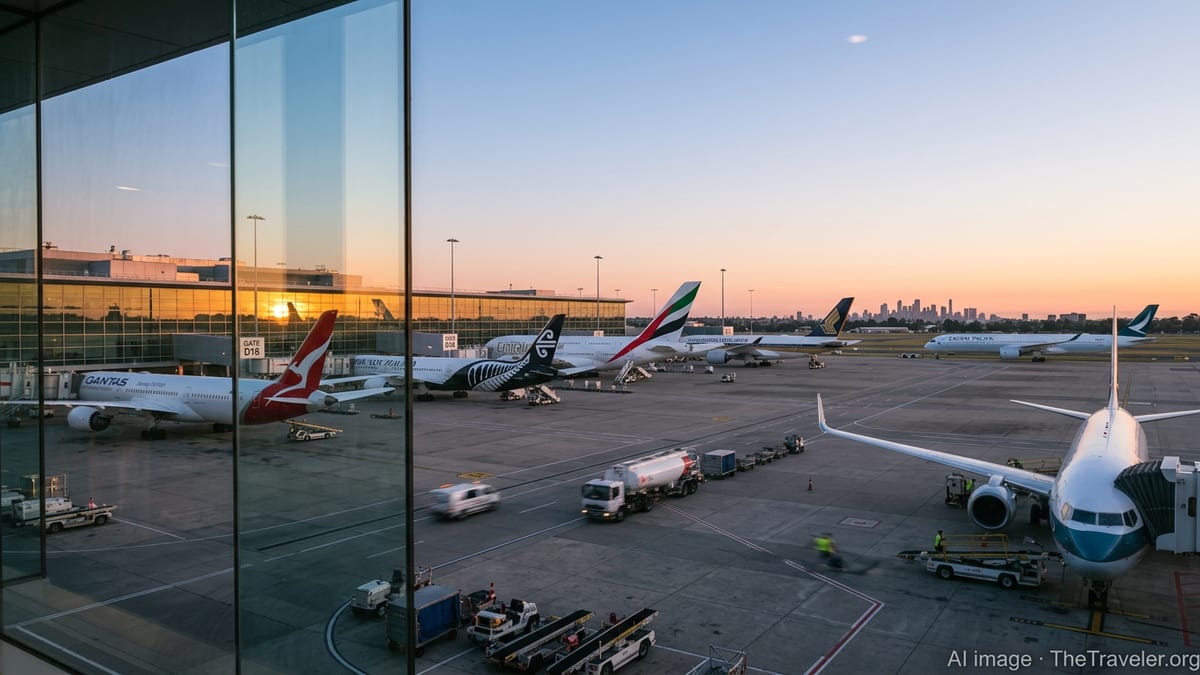
Melbourne’s record breaking Formula 1 Australian Grand Prix has set off a new race in the skies, with Air New Zealand joining Qantas, Emirates, Singapore Airlines, United and Cathay Pacific in ramping up flights into Victoria’s capital as demand for seats and hotel rooms surges across Australia’s rebounding hospitality sector.
Grand Prix Sell Out Turns Melbourne Into Peak Demand Hotspot
The Australian Grand Prix has transformed from season opener curiosity to one of global motorsport’s hottest tickets, with recent editions at Melbourne’s Albert Park circuit selling out in hours and setting fresh attendance benchmarks. The 2025 race weekend drew more than 450,000 spectators and marked the latest in a run of near total sell outs across all four days of on track action, solidifying the event’s status as the biggest crowd magnet on Australia’s sporting calendar.
This year’s race build up is continuing that trajectory. Organisers have reported record demand across all ticket categories, including general admission and corporate hospitality, with Thursday crowds alone surpassing previous full day records. Travel agents and online forums flag Grand Prix week in mid March as one of the hardest times of the year to secure central city accommodation, with many hotels posting “no vacancy” notices months in advance.
Tourism officials say the Grand Prix has become a cornerstone of Victoria’s visitor economy strategy, driving both domestic and international travel and providing a showcase for Melbourne’s dining, nightlife and cultural scene. The combination of global TV exposure and high spending visitors is now directly feeding into airline network decisions across the Tasman and wider Asia Pacific region.
Air New Zealand Joins Capacity Surge Into Victoria
Air New Zealand is the latest carrier to lean into the Grand Prix effect, boosting its trans Tasman schedule into Melbourne ahead of the race and the broader southern autumn events season. The airline has gradually rebuilt and then expanded capacity on key New Zealand to Melbourne routes over the past two years, adding frequencies from Auckland, Wellington and Christchurch and restoring pre pandemic seat numbers more quickly than forecast.
Industry filings and airport planning documents show Air New Zealand increasing services on the busy Auckland Melbourne corridor, while also lifting capacity from secondary gateways such as Wellington and Christchurch during peak travel periods. Seasonal flights and upgauged aircraft are being timed to coincide with major events, with the Grand Prix, Melbourne International Comedy Festival and footy season all helping to underpin forward bookings.
The move places Air New Zealand alongside Qantas, Emirates, Singapore Airlines, United and Cathay Pacific in a renewed scramble for Melbourne bound traffic. For travellers, the result is a denser schedule of departures on trans Tasman and long haul routes, providing more options for same day connections into Victoria’s capital during one of the most congested weeks of the year.
Global Carriers Stack Seats for Melbourne’s Big Week
Australia’s flag carrier Qantas has steadily restored international capacity into Melbourne, reactivating aircraft and adding back routes as demand rebounds. The airline has highlighted strong performance on US and Asian services, where connecting traffic feeds directly into Grand Prix and wider leisure travel. Its low cost arm Jetstar has also been adding flights from New Zealand and regional Australia, supporting a sharp uptick in long weekend and short break visits tied to the race.
Middle Eastern and Asian network airlines are following a similar playbook. Emirates has rebuilt its double daily services into Melbourne, funnelling fans from Europe and the Middle East through its Dubai hub onto Grand Prix week arrivals. Singapore Airlines is leaning on its Changi hub to aggregate demand from Europe, India and Southeast Asia, positioning Melbourne as a key stop on multi city itineraries that pair the race with wider Australia or New Zealand touring.
From North America, United Airlines has expanded its presence on the US Australia corridor, using nonstop flights to Melbourne to capture both sports tourism and corporate travel aligned with the event. Cathay Pacific is rebuilding its Melbourne schedule as Hong Kong reasserts its role as a North Asia hub, offering racegoers additional one stop options from the United Kingdom, continental Europe and mainland China.
Aviation analysts say Melbourne’s ability to consistently sell out its Grand Prix, combined with Victoria’s broader events calendar, has given airlines the confidence to schedule larger aircraft and tighter rotations, knowing premium cabins and high yield economy seats are likely to be filled.
Hotels, Restaurants and Venues Ride Hospitality Boom
The spike in airline capacity is both cause and effect of a wider hospitality boom radiating from Melbourne’s event precinct. State budget papers and tourism reports show visitor spending in Victoria climbing to record levels, with major events such as the Grand Prix contributing significantly to hotel occupancy, average daily rates and restaurant revenue.
Central business district and Southbank hotels commonly report occupancy approaching 100 percent across Grand Prix week, with spillover demand pushing visitors into inner suburbs and regional centres connected by rail. Short term rental platforms track sharp price increases and early sell outs for properties around Albert Park, St Kilda and the bayside suburbs, reflecting the willingness of international visitors to pay a premium for proximity to the circuit.
Melbourne’s famed dining scene is another winner. Top restaurants and wine bars book out weeks in advance for Grand Prix dinners and sponsor events, while laneway cafes, rooftop venues and casual eateries see some of their biggest takings of the year. Corporate hospitality suites at the circuit itself command five figure package prices, yet still sell out as global brands compete for trackside visibility and client entertainment opportunities.
Local tourism operators, from Yarra Valley wineries to Great Ocean Road tour companies, benefit from pre and post race extensions as visitors tack on extra days to explore Victoria. Combined with rising domestic travel and strong international arrivals, the Grand Prix has become a key pillar of the state’s push toward a larger, year round visitor economy.
Melbourne Airport Expansion Paves the Way for Further Growth
Behind the scenes, Melbourne Airport is preparing for an even larger wave of travellers. A multibillion dollar expansion program is underway, including terminal upgrades, expanded international processing capacity and airfield works designed to accommodate more widebody aircraft at peak times. The project aims to future proof the airport as airlines restore networks and consider additional long haul routes into Victoria.
Airport executives have pointed to sustained growth in international passengers, particularly from Asia, North America and New Zealand, as justification for the investment. Grand Prix week has become a stress test for the precinct’s ability to move large numbers of people quickly and reliably, informing design decisions around security screening, baggage handling and ground transport links.
For airlines, the expanded infrastructure offers greater flexibility to schedule extra sectors and charters around headline events without compromising their regular operations. For passengers, the benefits are emerging in the form of more frequent services, shorter connection times and a wider choice of carriers and cabin products when planning a Melbourne trip.
With the Australian Grand Prix locked into the city’s calendar for years to come and international demand for motorsport travel at all time highs, industry observers expect the capacity race into Melbourne to continue. For now, Air New Zealand’s decision to join the likes of Qantas, Emirates, Singapore Airlines, United and Cathay Pacific in dialling up flights underscores a broader trend: Melbourne’s biggest race is increasingly being won long before the lights go out on the grid, in airline schedule boards and hotel booking systems around the world.