


More news on this day
Fourth of July travel is ramping up across the United States, with aviation and transportation data pointing to one of the busiest Independence Day periods in years and raising the risk of delayed flights, packed terminals and clogged highways in key regions.
Get the latest news straight to your inbox!
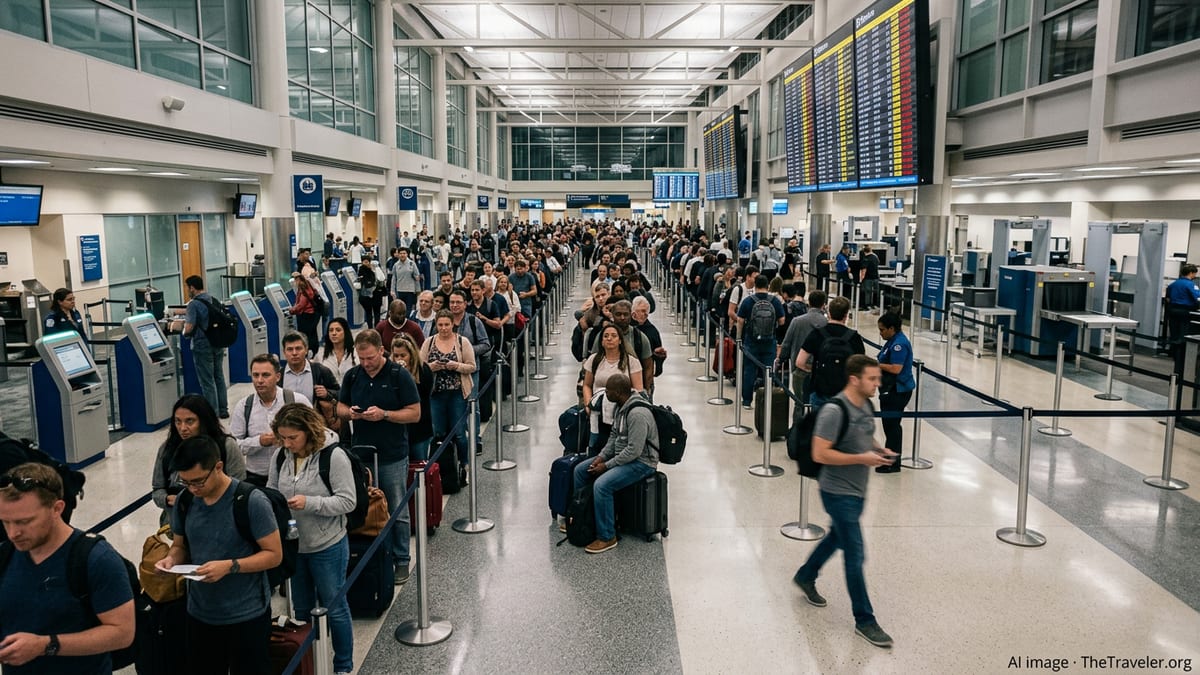
Record air travel strains major U.S. airports
Travel industry forecasts indicate that air traffic for the 2026 Independence Day period will be at or near record levels, with millions of passengers expected to pass through security checkpoints between late June and early July. Transportation data compiled by AAA and aviation groups show holiday passenger volumes outpacing recent years as Americans take advantage of the longer July 4 travel window.
Denver International Airport has projected more than 844,000 passengers moving through security from June 25 to July 6, underscoring how large hubs are preparing for sustained peak crowds rather than a single surge day. Airport bulletins advise travelers to arrive earlier than usual, particularly for morning and late afternoon departures, when banks of flights are scheduled closely together.
Nationally, AAA estimates that roughly 6 million travelers will fly during the Independence Day travel period, a figure that adds pressure to airlines and the federal air traffic system just as summer thunderstorms and heat can disrupt operations. Aviation outlooks from federal authorities also suggest that domestic leisure demand around U.S. holidays remains strong, even as international patterns shift.
With more aircraft operating at or near capacity, travel analysts warn that seemingly minor disruptions at busy hubs can cascade throughout airline networks, increasing the likelihood of missed connections and rolling delays on some of the heaviest travel days.
Reagan National closure and event-related airspace limits
In the Washington region, a scheduled shutdown of Ronald Reagan Washington National Airport on July 4 is expected to concentrate disruption into the heart of the holiday afternoon. According to published coverage of the regional airport authority’s plans, operations at Reagan National are set to halt around midday on Saturday to accommodate 250th anniversary commemorations and a military flyover.
Airlines serving the airport have already reduced their afternoon schedules in anticipation of the airspace restrictions, leaving fewer available seats and increasing the possibility of long lines and congestion at nearby Washington Dulles International Airport and Baltimore/Washington International Thurgood Marshall Airport. Public schedules show that many carriers are attempting to shift passengers to morning or evening departures to work around the midafternoon closure window.
Travel advisers say passengers transiting through the Washington region should monitor airline notifications closely, as prolonged airspace closures or weather complications could prompt further adjustments. Even travelers with no plans to fly to or from the District could feel the impact if aircraft and crews are delayed in repositioning for later segments in the national network.
Industry observers note that planned airspace closures tied to large public events increasingly shape holiday travel planning, forcing carriers to front-load early departures and leaving less flexibility when unexpected storms or technical issues arise.
Highway congestion compounded by selective closures
On the roads, state transportation departments across the country are warning of heavy congestion, particularly from the afternoon of Thursday, July 2, through Sunday, July 5. Forecasts from INRIX, a transportation data firm that works with AAA, indicate that the worst traffic on many interstates will begin building on Thursday as drivers combine early holiday departures with routine commuter flows.
Some states are suspending most construction-related lane closures to keep traffic moving. Agencies in Alabama, Tennessee, Colorado, Virginia and Wisconsin are among those publicly announcing that temporary lane restrictions on many interstates will be lifted for part or all of the holiday period to maximize capacity. Even so, officials caution that work zones will remain in place in some long term projects, with reduced speed limits and narrower lanes likely to slow traffic at peak times.
In parts of the Upper Midwest and Northeast, highway departments are urging drivers to build in additional time for congestion around popular lake, beach and mountain destinations. Massachusetts transportation planners, for example, are flagging higher than normal traffic volumes on major routes leading to coastal communities and advising travelers to avoid midday departures when possible.
Transportation agencies also continue to emphasize safety as a concern alongside congestion, pointing to past Independence Day weekends with elevated crash numbers. Messaging campaigns across several states are focusing on speed limits, impaired driving and the dangers of stopping along busy shoulders during gridlock.
Local road closures for fireworks and major gatherings
Beyond routine congestion, a patchwork of local closures for fireworks displays and large gatherings is expected to disrupt travel in several metropolitan areas on July 4. In the San Francisco Bay Area, Caltrans has announced a full closure of the Golden Gate Bridge to vehicles during a prime evening window for a planned fireworks display, along with ramp closures on nearby stretches of U.S. 101 and State Route 1.
The Golden Gate closure is set to affect both northbound and southbound traffic as crews secure the span and surrounding approaches for the event, forcing drivers onto detours through other crossings and surface streets. Officials advise those heading to or from Marin County to plan around the temporary shutdown and expect residual backups even after the bridge reopens.
Elsewhere, state and local transportation departments are preparing for intermittent closures of downtown streets, riverfront parkways and beach access roads to support fireworks shows and large public celebrations. These localized restrictions may not be reflected in long range travel forecasts but can significantly slow movement within city centers on the night of July 4.
Drivers are being encouraged to check regional traffic services and navigation tools on the day of travel to confirm whether favorite routes to viewing areas or city centers are open, and to consider public transportation where special holiday service is available.
Construction hotspots and regional trouble spots
Even as some states lift lane closures, several notable construction zones remain in place that could catch holiday travelers off guard. On Idaho’s Interstate 90, work on the long running project over Fourth of July Pass is continuing this season, with lane shifts and narrowed shoulders reducing capacity on a route that is central to regional holiday traffic.
In the Detroit area, major freeway reconstruction on segments of I 696 and I 94 near Detroit Metropolitan Wayne County Airport is not being fully suspended, meaning drivers can still expect orange barrels and altered traffic patterns in some of the region’s busiest corridors. Local reports indicate that Michigan’s transportation department is lifting restrictions at many short term work zones but cannot safely remove barrels at the largest projects.
Farther east, advisories from the Massachusetts and Wisconsin transportation departments highlight active work areas where construction cannot be completely paused, including tunnels, bridges and long span resurfacing projects. While additional lanes may be opened temporarily, lingering changes to alignments and signage can slow unfamiliar drivers or contribute to sudden braking in heavy traffic.
Travel planners warn that these choke points, when combined with high holiday volumes and any collision or breakdown, can quickly trigger extended delays that ripple along interstate corridors during peak hours.
How travelers can mitigate delays this holiday
With airports and highways both stretched, transportation analysts are recommending that travelers build generous buffers into their plans and stay flexible. For air passengers, that means allowing extra time for check in and security, monitoring flight status throughout the day and considering earlier departures when possible to reduce exposure to cascading evening delays.
On the roads, data from AAA and INRIX suggest that early morning or late evening departures on the days immediately surrounding July 4 can significantly reduce time spent in stop and go conditions. Drivers are also being urged to account for local event closures and to have alternate routes in mind for key bridges, tunnels and urban cores where fireworks or parades may limit access.
Publicly available advisories from state transportation departments emphasize the value of checking real time traffic information before departure and again en route, particularly for those crossing state lines or heading toward mountain passes and coastal bottlenecks. For many travelers, small adjustments in departure time and routing could make the difference between a smooth holiday outing and hours spent waiting in airport queues or inching along packed interstates.