


More news on this day
European airport bosses are warning that the European Union’s new biometric border regime has reached a “crisis point,” with industry groups cautioning that the Schengen Entry/Exit System could trigger hours-long queues at airports as the main summer getaway begins.
Get the latest news straight to your inbox!
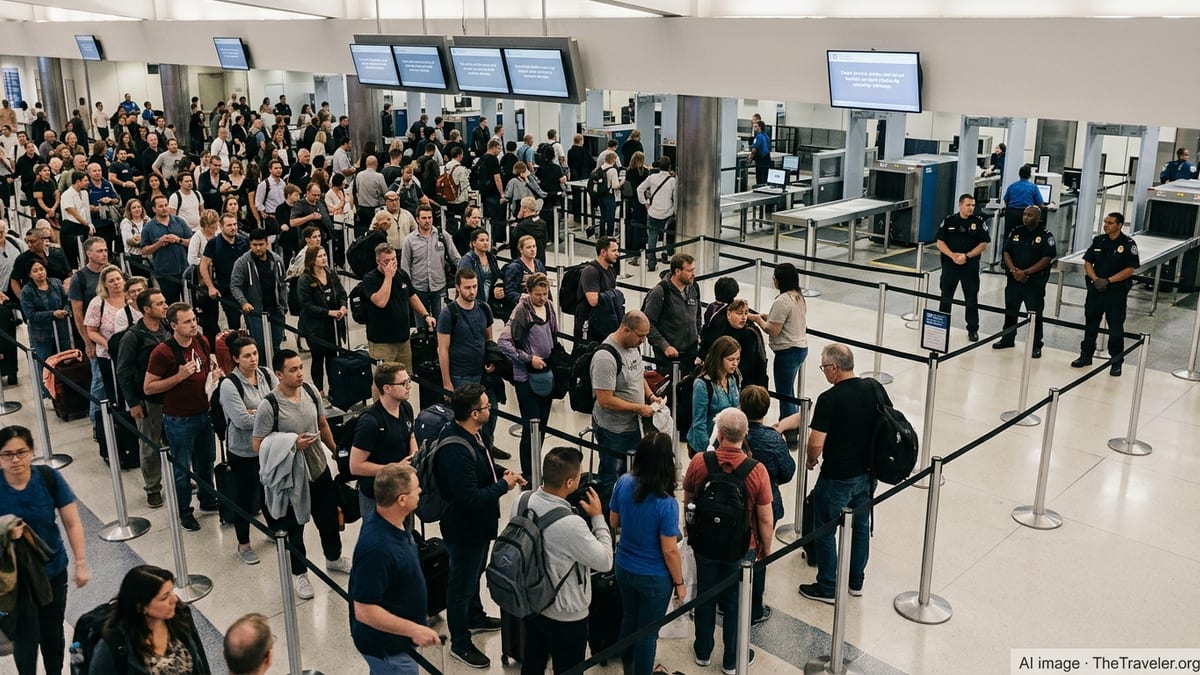
Mounting pressure over EES ahead of peak holiday traffic
According to recent industry coverage, aviation trade bodies representing Europe’s major airports and airlines have escalated their warnings over the Schengen Entry/Exit System, known as EES, just as schools break up and peak summer travel ramps up. The digital border scheme, which records biometric and passport data of non-EU nationals entering and exiting the Schengen area, is reported to be generating persistent delays at frontline border checkpoints.
Reports from European aviation media indicate that organisations including ACI Europe, Airlines for Europe and the International Air Transport Association have repeatedly urged the European Commission to introduce greater flexibility in how EES is applied. Data gathered from airports since the phased rollout began shows waiting times that regularly stretch to two hours at busy periods, even though only a proportion of eligible travellers are currently being enrolled.
In an open letter highlighted by specialist airport publications, these groups now warn that the system’s full application during July and August could see queues lengthen dramatically. Some analyses suggest that, without intervention, waits for passport control at the most affected hubs could reach four to five hours, while certain local reports reference warnings of up to six hours at extreme pinch points.
From early delays to a “crisis point”
Concerns about EES have been building since the system’s transition phase, but industry reporting suggests the situation has deteriorated as more travellers are captured by the rules. Earlier correspondence between aviation bodies and EU policymakers, covered by European trade press in February and March, already pointed to what were described as “significant delays” for passengers and “persistent excessive waiting times” at border control.
Those early warnings focused on the requirement that around 35 percent of third-country nationals be registered under EES during the initial stages. Even at that level, airports documented queues of up to two hours, with some terminals reporting longer lines during holiday peaks. As the obligation has broadened, airport managers interviewed by travel industry outlets now describe EES as their single biggest operational concern for the summer season.
Recent coverage from European travel media recounts how airport chiefs have spoken of being kept awake at night by the pressures created by the new checks. They point to a gap between the EU institutions’ assessment that the system is broadly working and on-the-ground experiences of non-EU passengers facing lengthy waits, missed flights and bottlenecks at key gateways.
Staff shortages, tech issues and uneven preparation
Publicly available briefings from airport and airline associations identify several structural weaknesses behind the current disruption. Chronic staffing shortages at border control points are cited as a primary factor, with many airports reportedly lacking sufficient officers to process the more time-consuming biometric checks when traffic surges.
Technology has also emerged as a major pain point. Industry-focused outlets report that automated border gates and EES hardware are still prone to glitches, leading to a greater reliance on manual processing at exactly the moments when capacity is most constrained. Where self-service systems have been deployed, some border posts still face teething problems that slow down enrolment and verification.
Another concern is the limited deployment of the Frontex-backed pre-registration tools that were intended to ease pressure at airports. According to specialist border technology coverage, only a minority of Schengen states have fully embraced pre-registration options, meaning many travellers arrive at departure or arrival halls still needing to complete their first full EES enrolment.
Calls for temporary suspension and regulatory flexibility
With the main holiday getaway under way, airport and airline groups are now urging EU institutions to allow more room to dial back EES checks when border queues become unmanageable. Aviation news outlets report that sector associations are asking Brussels to confirm that member states will be able to partially or fully suspend EES operations during peak months if processing times threaten to overwhelm terminals.
Under the current legal framework, flexibility that allowed member states to suspend or scale down EES during the transition phase is due to be sharply curtailed. Trade bodies argue that removing this safety valve just as full registration kicks in risks compounding the strain on airports and undermining recent efforts to stabilise post-pandemic travel.
Some national markets are already testing the limits of what is possible. Regional reporting from Italy and Spain describes how individual airports and port authorities have temporarily relaxed biometric procedures at moments of extreme congestion, while continuing to comply with existing border security rules. Industry leaders are pressing for a clearer, EU-wide mechanism that would make such steps transparent, consistent and legally robust.
What travellers can expect this summer
For passengers, the emerging picture is of a summer in which experiences will vary widely by airport, time of day and nationality, but where longer queues at key Schengen entry points are a realistic prospect. Media reports from hubs in countries such as Germany, Spain and Italy already describe hours-long lines at peak times, with some travellers missing onward connections despite arriving at the airport well in advance.
Travel trade publications advise that non-EU citizens, including UK visitors, could be particularly exposed to EES-related delays because they must enrol their biometric and passport data on first entry. Those who have already completed enrolment should pass more quickly on subsequent trips, but initial processing still requires additional time compared with the previous passport-stamping model.
While there is still hope within the industry that late regulatory adjustments or pragmatic decisions by national authorities could ease the worst bottlenecks, airport leaders are signalling that disruption cannot be ruled out. With aviation bodies publicly describing the situation as being at a “critical” or “crisis” point, the debate over how quickly the EU can adapt its border technology to real-world peak demand is likely to remain central to Europe’s summer travel narrative.