


More news on this day
Morning commuters across the Philadelphia region faced major disruptions on Wednesday after a SEPTA Regional Rail train derailed near a key junction in North Philadelphia, suspending three lines outright and causing delays and overcrowding on several others.
Get the latest news straight to your inbox!
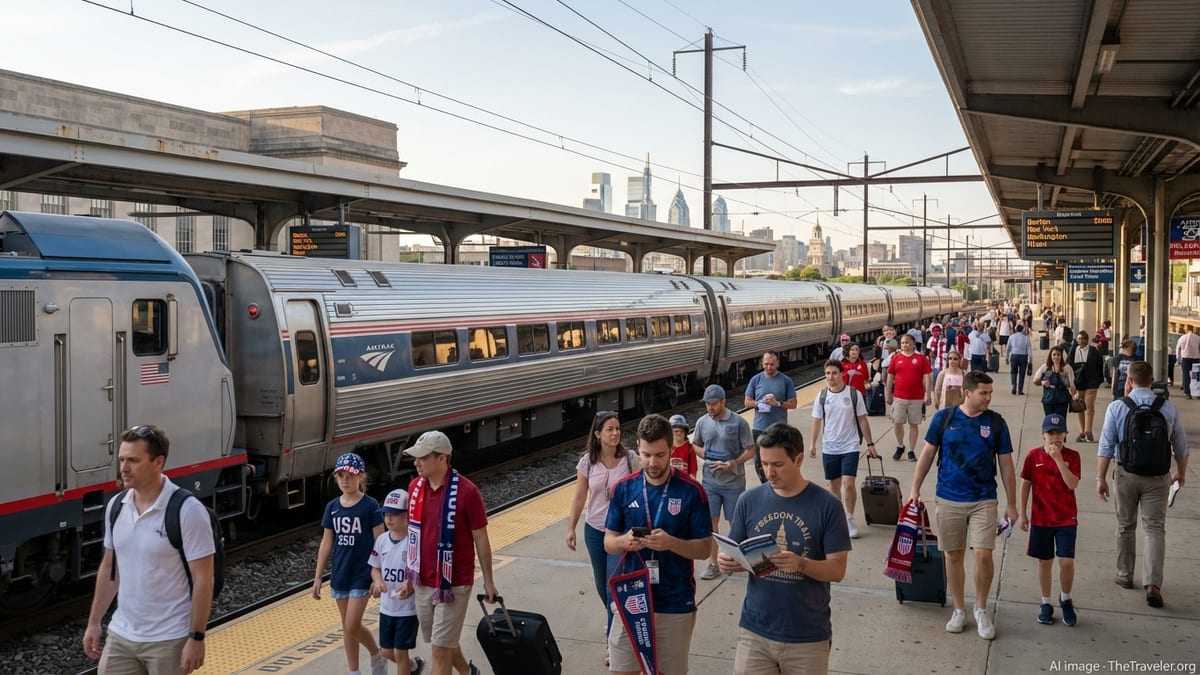
Derailment near North Philadelphia junction halts multiple lines
Published reports indicate that the derailment occurred shortly before the height of the Wednesday morning rush near a critical stretch of track in North Philadelphia, where several SEPTA Regional Rail lines converge on the approach to Center City. Images shared by local broadcasters and on social media show passenger cars off the rails but upright, with emergency personnel surrounding the scene.
According to early coverage from local news outlets, the incident prompted an immediate suspension of service on at least three Regional Rail lines that rely on the affected junction. Trains already inbound toward Center City were held at outlying stations or turned back short of their usual terminals, creating significant gaps in service for communities that depend on rail access into Philadelphia’s core.
Initial reports did not indicate any serious injuries, but the derailment effectively removed a vital section of track from service during one of the busiest travel periods of the day. Rail traffic that normally funnels through the junction was forced to stop or seek alternate routings, with dispatchers and operations staff working to untangle the resulting backlog.
Publicly available information from SEPTA’s real-time status tools and rider alerts showed a widespread pattern of suspensions, significant delays and residual crowding throughout the morning as crews moved equipment and assessed the damage to infrastructure.
Three Regional Rail lines suspended, others curtailed or delayed
Based on service alerts and network maps, the derailment led to the full suspension of three Regional Rail routes that rely most heavily on the affected tracks. Riders on those lines were advised to use the Market-Frankford and Broad Street subway lines, as well as select bus routes, to reach Center City and connect with other rail or trolley services where possible.
Other lines that normally traverse the North Philadelphia area continued to operate with substantial adjustments. Several services were reported to be turning around at intermediate stations such as Fern Rock Transportation Center or Temple University rather than continuing through the congested junction into the central city. Trains that did operate through the area were frequently delayed, with arrivals pushed back by 20 minutes or more.
Passengers traveling to and from Philadelphia’s western and northern suburbs reported crowding on trains that remained in service, as commuters from suspended lines shifted to any available alternatives. Social media posts from riders described packed cars, skipped stops and confusion over which trains were still running through the morning rush.
Information from SEPTA’s main customer information channels suggested that the disruptions were likely to continue into the midday period while crews worked at the derailment scene and operations staff rebalanced train and crew assignments across the Regional Rail network.
System already under strain from inspections and extreme heat
The derailment comes at a challenging moment for SEPTA’s Regional Rail system, which has already been managing reduced capacity due to ongoing safety inspections of older railcars and infrastructure work ahead of new schedules planned for early July. Previous reporting has documented temporary train cancellations, shorter consists and selected skipped stops in recent months as the agency cycles equipment through inspections and maintenance programs.
At the same time, a prolonged early-summer heat wave has been affecting rail operations across the region. Public service updates from SEPTA have recently warned of speed restrictions on multiple lines during the hottest parts of the day, with trains required to slow down on exposed track to reduce the risk of heat-related track issues. Those precautionary slow orders have contributed to modest delays even on days without major incidents.
Observers noted that those existing strains may have amplified the impact of Wednesday’s derailment. With spare equipment limited and schedules already tightened to account for inspections and weather precautions, disruptions at a single junction can ripple across the web of interlined services that define Regional Rail operations through Center City.
Separate coverage this week has also highlighted the suspension of SEPTA’s West Trenton Line following a freight train derailment in Bensalem, underscoring how closely intertwined passenger and freight rail activity can be in the region’s shared corridors.
Travelers urged to seek subway and bus alternatives
Publicly available guidance from SEPTA and local transportation reports emphasized that Regional Rail travelers should expect prolonged disruptions and consider subway and bus routes as primary alternatives for the remainder of Wednesday. The Broad Street Line and Market-Frankford Line, which operate in separate corridors from the North Philadelphia junction, continued to run with normal or near-normal service and were highlighted as the most reliable options into Center City.
Commuters from suburban stations on suspended lines were advised to drive or take local buses to park-and-ride hubs or subway terminals, where they could connect to the core rapid transit network. In some cases, riders were also directed to nearby stations on unaffected Regional Rail lines, though parking and capacity constraints limited the practicality of that option for many.
Travel advisories urged passengers who must use Regional Rail to build in extra time for their journeys, monitor real-time status pages for line-specific updates, and pay careful attention to station and onboard announcements about altered stopping patterns. Riders with flexible schedules were encouraged to delay nonessential trips until later in the day or shift to remote work where possible.
Philadelphia visitors arriving for holiday week events and summer tourism were likewise cautioned to verify their routes before departing for the airport, major attractions or regional destinations, as typical one-seat rides on Regional Rail may not be available while repairs and recovery operations continue.
Investigation and recovery efforts expected to extend through the day
As of late morning on Wednesday, detailed information about the cause of the derailment remained limited. Published coverage noted that rail and safety investigators would need to examine the tracks, switches and equipment involved before any portion of the damaged infrastructure could be cleared for normal operations.
Standard post-incident procedures are expected to include inspections of rails and ties, verification of signal and switch performance, and examination of the affected train’s wheels, axles and braking systems. Depending on the level of damage, crews may need to conduct track repairs or replace components before the line can fully reopen.
Transit observers noted that recovering from a derailment at a major junction is often a multi-step process, with interim measures such as single-tracking, speed restrictions or temporary turnbacks put in place before full service can resume. Given the central location of the incident within the Regional Rail network, even partial closures could continue to limit capacity into and through Center City for several service periods.
Riders were advised to continue checking for updates throughout the day as SEPTA restored service in phases, with expectations that some delays and altered routings could persist into the evening commute and potentially into subsequent days, depending on the outcome of inspections and repairs.