


More news on this day
Beijing Capital International Airport has plunged into a fresh wave of disruption, with a new round of cancellations and delays across key regional routes leaving passengers bound for Japan and South Korea facing extended waits, missed connections and an increasingly uncertain start to the peak summer travel period.
Get the latest news straight to your inbox!
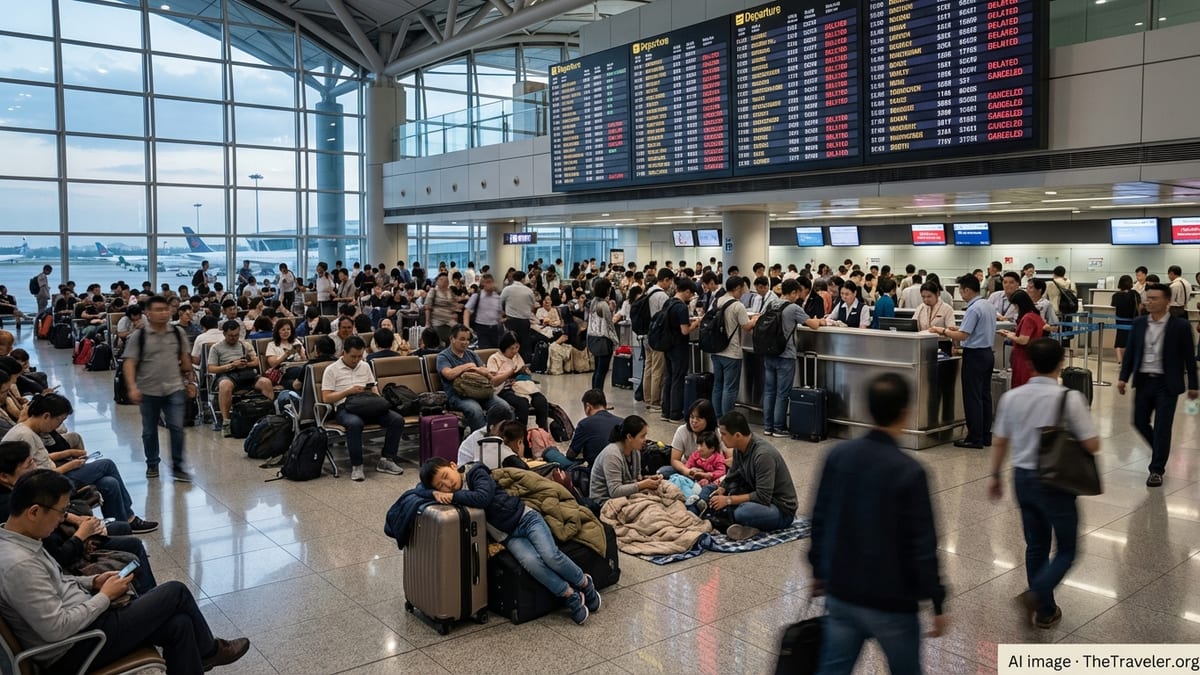
Wave of Cancellations and Delays at Beijing Hub
Publicly available flight status boards on Wednesday indicate that Beijing Capital International Airport is again grappling with operational strain, as a cluster of flights operated by Chinese carriers is withdrawn or heavily delayed. Air China and Hainan Airlines feature prominently among affected operators, with a series of scrapped departures and services running significantly behind schedule.
Monitoring of live schedules shows a pattern of early-morning and mid-morning cancellations from the capital to major Asian gateways, alongside knock-on delays to later departures. While the overall number of daily movements at the vast hub remains high, the volume of disrupted services is large enough to materially affect passenger flows and connection banks.
The latest disruption comes at a time when demand on short-haul regional routes is climbing, fueled by summer bookings and continued recovery in business and leisure travel across Northeast Asia. The timing amplifies the impact on travelers who rely on tightly timed itineraries through Beijing to reach onward destinations.
Airport information screens and flight-tracking platforms suggest that the imbalance is not confined to a single terminal or time window, pointing instead to a broader operational challenge rather than an isolated technical issue on one aircraft or route.
Air China and Hainan Airlines at the Center of Disruption
Within the disrupted schedule, Air China and Hainan Airlines stand out as the carriers with the most visible concentration of issues on Wednesday. A combination of outright cancellations and late departures has reduced the number of available seats on several key links and created waves of stranded and rebooked passengers across the network.
Flight status services show multiple Air China services from Beijing Capital experiencing schedule changes or significant departure delays, compounding pressure on the carrier’s domestic and regional connection structure. At the same time, Hainan Airlines has withdrawn or delayed several departures, including flights from the capital to other major Asian cities, tightening capacity at short notice.
These adjustments align with a broader pattern reported in recent months, in which Chinese airlines have periodically consolidated frequencies or trimmed lightly booked services amid fluctuating demand, air traffic control constraints and weather-related challenges at busy hubs. The result for travelers is a landscape in which nominally daily or frequent services can in practice be less predictable than timetables suggest.
Passengers on affected Air China and Hainan Airlines flights are being moved to later departures where seats permit, but the sheer number of schedule changes at peak times heightens the risk that travelers will miss onward connections, especially on complex multi-sector journeys.
Regional Routes to Japan and South Korea Under Pressure
The disruption is particularly visible on routes linking Beijing with major Japanese and South Korean gateways, which have been central to the post-pandemic rebuild of regional air travel. Services between Beijing and cities such as Tokyo, Osaka and Seoul have seen rising demand, but also higher sensitivity to any operational issues at connecting hubs.
Recent schedule data and live flight boards show that carriers including Air China and Hainan Airlines have been adjusting timings and frequencies on these corridors throughout the first half of the year, responding to changing passenger flows and occasionally tight aircraft availability. When a fresh round of cancellations and extended delays hits at short notice, those adjustments can quickly translate into bottlenecks for travelers attempting to move between China, Japan and South Korea in a single travel day.
For passengers originating in Japan or South Korea and connecting in Beijing onto long-haul services to Europe, North America or Southeast Asia, the impact can be especially acute. Even a modest delay on an inbound regional sector may be enough to break a connection window, leading to overnight stays, rerouting or reissuance of tickets at crowded service counters.
Airports across the region have generally reported strong summer schedules, yet the reliance on a limited set of trunk routes means any concentrated disruption at Beijing Capital can have immediate repercussions at downline airports, including late-night arrivals and compressed turnaround times.
Stranded Passengers Confront Long Queues and Uncertainty
Travelers caught in the latest round of disruption at Beijing Capital International Airport are again confronting a familiar set of challenges: long queues at airline desks, limited same-day rebooking options and uncertainty over compensation and care policies. Social media posts and traveler forums on Wednesday reference extended waits at customer service counters following clusters of cancellations on busy morning banks.
Airline conditions of carriage published by carriers such as Hainan Airlines highlight the distinction between disruptions caused by factors like weather or air traffic control, and those arising from internal operational reasons. In practice, passengers often struggle in real time to establish which rules apply to their specific situation, especially when they are in transit between third countries.
For some, the stakes extend beyond inconvenience. Missed connections on Beijing-centered itineraries can jeopardize tours, cruise departures, visa time limits or important business meetings. With summer capacity on many routes already tight, last-minute rebooking for entire families or groups can prove difficult, pushing some travelers to pay out of pocket for alternative routings on different carriers.
Observers note that while the situation at Beijing Capital on Wednesday appears to reflect a spike in disruptions rather than a complete breakdown of operations, the clustering of cancellations and delays is significant enough that many passengers are likely to face overnight stays or multi-day itinerary changes before reaching their final destinations.
What Travelers Can Do if Their Flight Is Affected
Publicly available guidance from airlines, regulators and passenger advocacy groups suggests several steps for travelers navigating the current disruptions at Beijing Capital. Passengers are generally encouraged to monitor flight status closely through airline apps and independent tracking platforms rather than relying solely on printed boarding passes or earlier confirmations.
When cancellations occur, many carriers now enable self-service rebooking through digital channels, which can be faster than waiting in physical queues. However, connecting passengers whose onward flights are operated by partner airlines or on separate tickets may still need to seek in-person assistance to protect complex itineraries or baggage transfers.
Travel experts regularly recommend that passengers build extra buffer time into itineraries involving a change of planes at congested hubs such as Beijing, particularly when traveling during peak holiday periods or monsoon-influenced weather seasons. Flexible booking options, including tickets that allow same-day changes at reduced cost, can also provide a measure of insurance against cascading delays.
As the latest episode at Beijing Capital International Airport unfolds, attention is likely to remain focused on how quickly Air China, Hainan Airlines and other carriers can restore more stable operations on the crucial links between China, Japan and South Korea, and on the degree to which further schedule adjustments may be required over the coming weeks.