


More news on this day
Europe’s flagship biometric border project, the Entry/Exit System, is under mounting fire from airport leaders who argue the EU must stop insisting the rollout is going smoothly as reports of long queues, missed flights and confused travellers continue to pile up.
Get the latest news straight to your inbox!
Industry leader warns against “pretending” EES is fine
At the annual congress of airports body ACI Europe in Prague, the organisation’s president Stefan Schulte used a keynote address to issue one of the sharpest critiques yet of the Schengen Entry/Exit System, or EES. According to published coverage of the event, Schulte said European institutions “must stop pretending the situation is manageable and that the EES is working just fine,” arguing that the new regime is creating serious operational disruption at border checkpoints.
Schulte, who also heads Frankfurt Airport operator Fraport, stressed that airports support the goal of modernising border management and improving security, but warned that the current configuration of EES is straining frontline capacity. He called for “full flexibility” for border control authorities to suspend or scale back use of the system to avoid further chaos during peak travel periods.
The intervention reflects growing frustration within the aviation sector as the EU seeks to digitise the processing of non EU nationals entering and leaving the Schengen area. While Brussels has repeatedly presented EES as a tool to speed up checks and strengthen security, airport operators argue that the reality at many terminals is a patchwork of unready infrastructure, patchy staffing and cumbersome procedures.
Long queues, missed flights and “systemic failure” claims
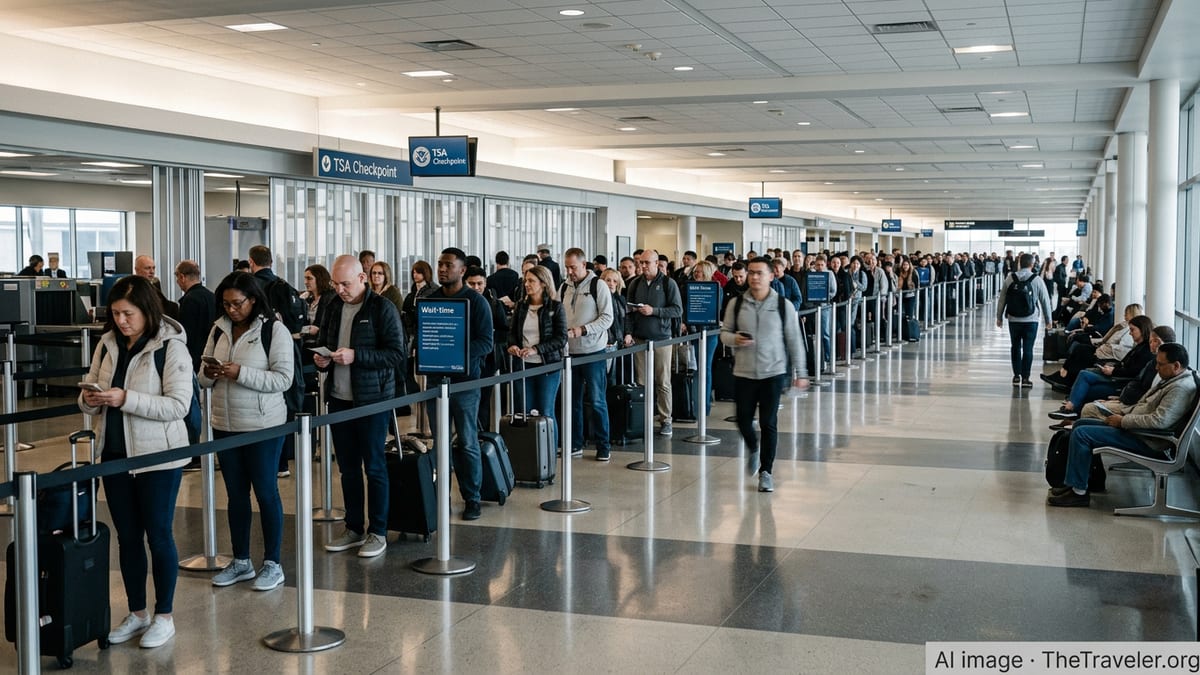
Reports from across Europe indicate that the first months of full EES operation have been marked by lengthy queues at passport control, particularly at major holiday gateways. Travel trade outlets have documented waits of two to three hours at some airports during busy periods, with passengers missing flights after being held up in lines that snaked through terminal corridors.
Coverage by European travel media and national newspapers has highlighted repeated bottlenecks at border posts where biometric kiosks are not fully functional or where too few officers are available to guide first time users through fingerprints and facial image capture. In some cases, terminals have reportedly reverted to manual processing when systems have slowed or gone offline, undermining the promise of faster, automated controls.
Airlines for Europe, a major carrier association, has characterised the launch at some hubs as evidence of a “systemic” problem rather than minor teething troubles. After a rollout weekend that saw queues of up to three hours at certain border checkpoints, the group and its airport counterparts urged the European Commission to allow partial or total suspension of EES at individual crossings when operations become overwhelmed.
For travellers, particularly visitors from the United Kingdom, North America and other non EU countries, the experience has been a mix of confusion and concern. Social media posts and travel forums describe holidaymakers arriving at airports well in advance only to be trapped in border queues, with some resorting to rebooking tickets at their own expense.
EU insists system improves security and border control
The Entry/Exit System is designed to replace manual passport stamping for short stay non EU travellers with a centralised digital register of entries and exits. Official information from EU institutions describes it as a cornerstone of the bloc’s efforts to tighten control over the Schengen external border, combat overstays and strengthen security while ultimately making border checks more efficient.
Under EES, the system records a traveller’s biographic data from their passport along with fingerprints and a facial image, then logs each crossing of the external border. Published EU briefings say this should enable authorities to more easily detect people who exceed their authorised stay and to identify potential security risks, while also standardising practices across member states that have long relied on fragmented national databases and manual stamps.
Early statistics released by officials and reported by European media suggest that the technology has already flagged thousands of suspected overstayers and several hundred individuals categorised as potential security threats. Supporters of the project point to these figures as evidence that, despite visible disruption, the system is delivering on its core promise of tighter border control.
However, even EU linked agencies acknowledge that the transition will be lengthy. A senior representative of border agency Frontex recently indicated in public comments that it could take up to two years for border operations to stabilise under the new regime as countries upgrade infrastructure, refine processes and train staff.
Calls grow for suspension powers and summer safeguards
With the peak summer travel season approaching, airports and airlines are increasingly focused on whether Europe’s border system can cope with surging passenger volumes. Industry groups have urged Brussels and national governments to make flexible use of new legal provisions that allow member states to partially suspend EES at specific border crossings in exceptional circumstances.
Recent Council documents outline a framework for a “progressive” implementation of EES, recognising that a single, instantaneous switch to full automation risked overloading the central IT system and local infrastructure. Those rules give national authorities room to temporarily revert to traditional checks if traffic intensity becomes unmanageable or if technical problems compromise throughput.
Airport operators, however, argue that this flexibility must be applied proactively rather than as a last resort. Commentaries in sector publications stress that the reputational damage from scenes of gridlocked terminals, stranded families and missed connections could weigh on Europe’s competitiveness as a tourism destination for years.
Some governments and border agencies have already begun advising travellers to arrive significantly earlier for flights departing to or from the Schengen area, particularly if they are non EU nationals facing first time registration. Travel advice columns now routinely recommend allowing additional time for border control on both arrival and departure while EES beds in.
Balancing security goals with traveller experience
The clash over EES highlights a broader tension in global travel between security driven digitisation and the need to keep journeys predictable and humane. Airports warn that without sufficient investment in equipment, staffing and passenger information, even well intentioned systems can end up shifting risk and inconvenience onto travellers and frontline workers.
Advocates of the new regime counter that, once stabilised, biometric border checks can shorten queues, reduce human error and provide a clearer picture of who is entering and leaving the Schengen zone. They argue that the alternative would be to maintain paper based passport stamping that offers limited analytical value in an era of mass travel and heightened security concerns.
For now, the competing narratives collide at border control lines across Europe, where the promise of seamless, digital travel often meets the reality of trial and error. As the airports chief’s comments in Prague underline, the aviation industry is urging policymakers to acknowledge the scale of the challenge rather than insist publicly that all is under control.
How the EU responds in the coming months, and whether it is willing to use the suspension levers it has built into the system’s legal framework, will be closely watched by airlines, airports and millions of passengers planning trips into and out of the Schengen area.