


More news on this day
Spanish engineering group ADELTE has secured a new contract in Morocco to design, manufacture and install a telescopic passenger gangway for the cruise terminal at the Port of Tangier Ville, strengthening the company’s position in the North African country’s fast-evolving maritime infrastructure sector.
Get the latest news straight to your inbox!
New contract focuses on Tangier’s cruise terminal
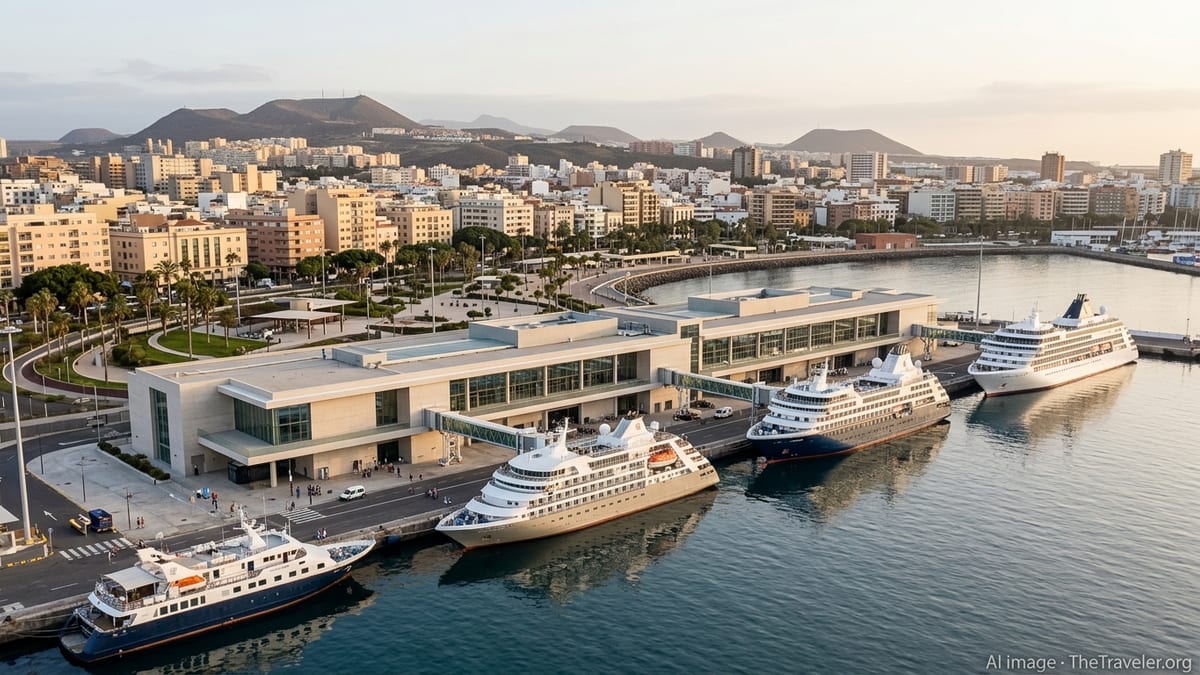
Publicly available information indicates that the Port of Tangier Ville’s management company has awarded ADELTE the contract to supply a new passenger boarding system dedicated to cruise ships. The installation will serve the cruise terminal set in Tangier’s bay, where vessels berth within walking distance of the city’s historic medina and seafront promenade.
Reports describe the project as part of a broader effort to enhance the comfort of cruise passengers, streamline embarkation and disembarkation flows and improve overall reception conditions at one of Morocco’s most visible maritime gateways. The new system is expected to reinforce Tangier’s appeal to cruise operators seeking distinctive ports of call along Western Mediterranean and Atlantic itineraries.
According to published coverage, the Port of Tangier Ville has been progressively shifting from traditional ferry activity toward a stronger focus on cruise traffic, after the development of the larger Tanger Med complex east of the city absorbed much of the roll-on/roll-off and freight business. Upgrading passenger boarding infrastructure at Tangier Ville is seen as a key step in that repositioning.
Telescopic ARGOS gangway to link ship and shore
Information released by ADELTE and regional media indicates that the new boarding system will be based on the company’s ARGOS design, a telescopic, rail-mounted gangway created specifically for large cruise ships. The structure is conceived as a ship-to-shore connection that can move along the quay and adjust to different vessel sizes and door positions.
Descriptions of the ARGOS model highlight a configuration with one or more long enclosed tunnels connecting the terminal building or elevated walkway directly to the cruise ship’s access doors. The system incorporates a docking cabin and a telescopic ramp section that can adapt to tidal variations and minor vessel movements, maintaining continuous passenger circulation between ship and shore.
The gangway is reported to integrate advanced sensors and electromechanical actuators designed to compensate actively for changes in the ship’s position relative to the quay. This technology aims to keep the boarding bridge correctly aligned and to enable safe, barrier-free movement for large numbers of passengers during simultaneous embarkation and disembarkation operations.
Delivery timeline and operational expectations
Regional business media in Morocco report that the new ARGOS gangway for Tangier Ville is scheduled for delivery and commissioning in 2027. That timeframe aligns the project with anticipated growth in cruise calls in the second half of the decade, as more itineraries include Moroccan ports in response to rising demand for North African and Atlantic city-break style destinations.
Once in service, the automated system is expected to reduce turnaround times for cruise ships by simplifying access between the terminal building and the vessel. Fixed quayside gangways or temporary mobile ramps often require additional staffing and manual adjustments, while a purpose-built, remotely controlled system can standardize procedures and minimize delays caused by weather or tide-related constraints.
The installation is also likely to support enhanced security and passenger-processing workflows inside the terminal. By channeling flows through an enclosed, dedicated link, operators can better separate arriving and departing passengers and coordinate with border control and baggage-handling facilities, an increasingly important requirement as vessel capacities continue to grow.
Longstanding Moroccan presence underpinned by new deal
According to corporate communications and industry coverage, ADELTE has been active in Morocco since the early 2000s, supplying passenger boarding bridges and systems to multiple ports. The new Tangier Ville contract will bring the company’s total number of delivered passenger boarding systems in the country to around 15 units once completed.
Existing references cited for ADELTE in Morocco include earlier passenger boarding bridges at Tangier Ville, several SEDNA-model gangways for the Tanger Med ferry terminal east of the city, and additional systems at the ports of Nador and Casablanca. These projects span both cruise and ferry operations, highlighting a sustained relationship with Moroccan port authorities and terminal operators over more than two decades.
Industry observers note that the latest award consolidates ADELTE’s profile as a preferred supplier for complex passenger access projects in Morocco, where port infrastructure has been undergoing a long-term modernization program. The country has invested heavily in both freight and passenger facilities, including the development of Tanger Med as a major transshipment hub and the repositioning of Tangier Ville as a city-centered cruise gateway.
Implications for Morocco’s cruise and tourism strategy
Travel and maritime analysts view the Tangier Ville gangway project as part of a broader strategy by Moroccan authorities to capture more value from cruise tourism. Tangier, Casablanca and smaller ports along the Atlantic and Mediterranean coasts have been competing to attract additional calls from major cruise lines that are expanding deployments in the region.
Upgrading passenger access infrastructure is considered critical to that objective, as cruise operators place increasing emphasis on safe, efficient and weather-resilient boarding systems when selecting ports of call. A modern telescopic gangway at Tangier Ville is expected to support marketing efforts that present the port as offering international-standard facilities within a historic urban setting.
The investment also aligns with wider tourism development plans for Tangier, which in recent years has seen new hotels, cultural venues and waterfront projects aimed at both international visitors and domestic travelers. A smoother arrival and departure experience for cruise passengers can help strengthen the city’s reputation and encourage repeat visits, either by sea or by land-based travel.
For ADELTE, the contract reinforces its strategy of combining airport and seaport passenger access technologies and adapting them to local conditions. By expanding its installed base in Morocco through a high-profile cruise project, the company positions itself for potential future tenders as the country continues to develop its coastal infrastructure and seeks to integrate ports more closely with urban tourism circuits.