


More news on this day
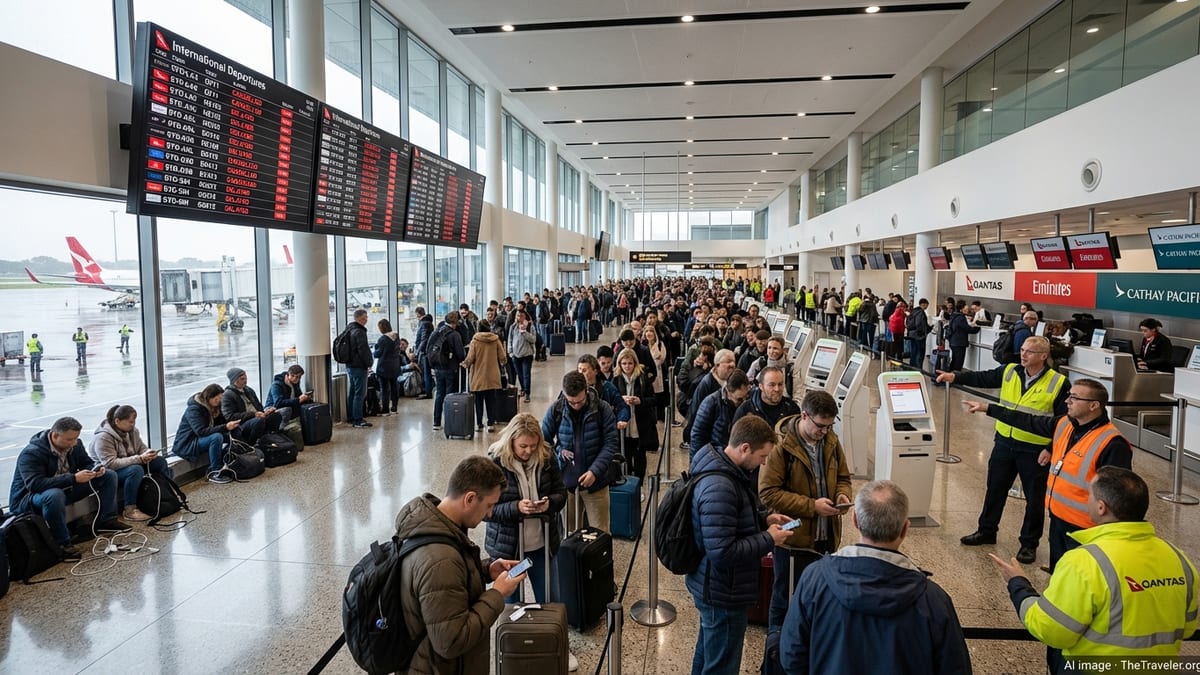
Travelers moving through Seattle-Tacoma International Airport on April 13 faced fresh disruption as Alaska Airlines suspended two flights and reported multiple delays across key West Coast and transborder routes, affecting connections to Los Angeles, Burbank, Vancouver, Toronto and other major cities.
Get the latest news straight to your inbox!
Operational Strain at Seattle-Tacoma Ripples Across the Network
Publicly available tracking data and airline status boards on April 13 indicate that two Alaska Airlines flights linked to Seattle-Tacoma International Airport were suspended, while numerous additional services were delayed or retimed. The affected flights formed part of Alaska’s dense network connecting Seattle with major hubs in California and western Canada, amplifying the impact beyond a single route pair.
The suspensions came on a day when U.S. carriers were already working through a broader wave of disruption, with nationwide statistics showing hundreds of delayed and canceled services across multiple airlines. For passengers at Seattle-Tacoma, this meant longer lines at customer service desks, tighter connection windows and shifting departure times, particularly on flights serving Los Angeles and smaller yet strategically important markets such as Burbank.
Although Alaska’s core schedule at Seattle remained largely intact, the removal of even a small number of rotations in and out of the hub reduced flexibility at a time of already constrained capacity. Delayed inbound aircraft complicated crew planning and aircraft assignment, pushing minor timetable changes on individual sectors into more noticeable disruption across the day.
Industry data for Seattle-Tacoma shows the airport functioning as a principal connecting point for traffic linking the Pacific Northwest with California, Canada and transcontinental U.S. routes. When a carrier adjusts or suspends services at such a hub, the knock-on effects can quickly extend to distant points on the network, including cities hundreds or thousands of miles away from the original problem.
Los Angeles and Burbank Among Hardest-Hit California Markets
Los Angeles International Airport and Hollywood Burbank Airport feature prominently in Alaska Airlines’ West Coast schedule, with multiple daily flights linking both airports to Seattle-Tacoma. On April 13, monitoring sites showed a pattern of delays on several Alaska services touching Los Angeles, with altered departure and arrival times contributing to congestion at already busy terminals.
At Burbank, where the schedule is thinner but heavily relied upon by business and leisure travelers seeking a smaller, more convenient airport, the suspension of a Seattle rotation immediately reduced same-day options. Travelers aiming to connect from Burbank through Seattle to other destinations, including Canadian cities and Midwest hubs, faced rebookings or longer layovers as the carrier worked within a tighter set of available flights.
These California disruptions occurred against a backdrop of continuing schedule adjustments by multiple airlines in the region. Recent reports describe airlines rebalancing capacity toward higher-demand routes while trimming frequencies on others, a pattern that can leave little slack in the system when operational problems arise. In this environment, the loss of two flights and a cluster of delays can quickly translate into missed meetings, vacation interruptions and crowded standby lists for affected passengers.
Travel advisory services emphasize that routes such as Seattle to Los Angeles and Burbank remain among the most sensitive to disruption, simply because of the volume of connecting traffic they carry and the tight turnaround times typically built into their schedules.
Vancouver and Toronto Feel the Cross-Border Impact
Beyond the United States, the disruption at Seattle-Tacoma also reached into Canada, where Vancouver and Toronto form key pillars of transborder connectivity. Published route maps show frequent services between Seattle and Vancouver, along with longer-haul links that place Seattle as a connecting point for traffic heading toward Toronto and other eastern Canadian cities.
On April 13, flight-tracking platforms showed delays on several services feeding into and out of Seattle that are commonly used by passengers traveling between Canadian gateways and major U.S. destinations. Even when specific cross-border flights remained operational, late-arriving aircraft from disrupted domestic legs created tighter ground times and increased the risk of further slippage in departure schedules.
Travel data providers note that when a hub like Seattle experiences even moderate disruption, transborder passengers can be disproportionately affected. These travelers often rely on single daily departures or limited frequencies, especially on secondary routes beyond primary city pairs such as Seattle to Vancouver. A missed connection at Seattle may mean a significantly longer wait for the next available seat toward Canada or, in some cases, an overnight stay.
For Canadian airports, the operational strain manifests less in outright cancellations and more in irregular arrival patterns and fluctuating passenger volumes at customs and baggage facilities. This can slow processing times and add uncertainty for travelers awaiting connecting domestic flights upon arrival in Vancouver or Toronto.
Broader U.S. Flight Disruptions Intensify Passenger Frustration
The difficulties at Seattle-Tacoma occurred in the context of wider U.S. air travel disruption. Industry monitoring firms reported thousands of delayed flights nationwide over the April 11 to 13 period, affecting airlines large and small. Weather issues, crew positioning challenges and tight scheduling across multiple hubs combined to make on-time performance more difficult to maintain.
According to aggregated statistics published on April 13, the cumulative effect of recent weather disturbances and operational pressures led to more than one hundred cancellations and several thousand delays across the U.S. system in a single day. Airports such as Los Angeles, Atlanta and Newark recorded high numbers of affected services, illustrating how a localized issue in one region can rapidly cascade through the national network.
For Alaska Airlines and its customers, this environment reduced the margin for recovery once the Seattle-Tacoma problems emerged. Aircraft and crews that might otherwise have been available to backfill suspended flights or absorb delays were already committed to other disrupted parts of the network. As a result, itinerary changes that might have been resolved with minimal passenger impact instead produced longer rebooking queues and fuller subsequent flights.
Travel assistance platforms report heightened demand for real-time information, as passengers seek clarity on connection windows, rebooking options and compensation rights. Some services are also seeing increased use of predictive tools that flag likely disruption based on weather patterns and historical performance, giving travelers the option to change plans proactively.
What Travelers Can Expect in the Coming Days
While Seattle-Tacoma International Airport remained open and functional on April 13, the combined effect of suspended Alaska Airlines flights and rolling delays suggests that residual disruption could linger into subsequent travel days. When a hub schedule is compressed by cancellations or suspensions, airlines often require additional rotations to fully restore normal aircraft and crew patterns.
Travel industry observers indicate that recovery speed will depend on several factors, including overnight weather conditions, aircraft availability and the absence of new operational shocks elsewhere in the network. If conditions stabilize, carriers typically work through their backlogs within 24 to 48 hours, using spare capacity and schedule adjustments to re-accommodate disrupted passengers.
For travelers with upcoming trips involving Seattle, Los Angeles, Burbank, Vancouver, Toronto or other connected cities, experts recommend closely monitoring airline apps and airport status boards on the day of travel and remaining prepared for revised departure times. Passengers with tight connections through Seattle may wish to review alternative itineraries or seek earlier departures where possible in order to build additional buffer into their journeys.
Despite the turbulence of the past several days, schedule data continues to show strong demand on the key West Coast and transborder routes at the heart of Alaska Airlines’ network. As airlines adjust and refine their operations in response to seasonal patterns and recent disruptions, travelers can expect ongoing tweaks to departure times and frequencies, even after the immediate wave of delays and suspensions subsides.