


More news on this day
New York’s LaGuardia Airport registered 84 delayed departures and two cancellations in the latest reporting window, creating fresh pressure on already fragile air corridors linking major cities in the United States and Canada and testing the resilience of networks operated by Air Canada, Republic, American Airlines, Delta and other carriers.
Get the latest news straight to your inbox!
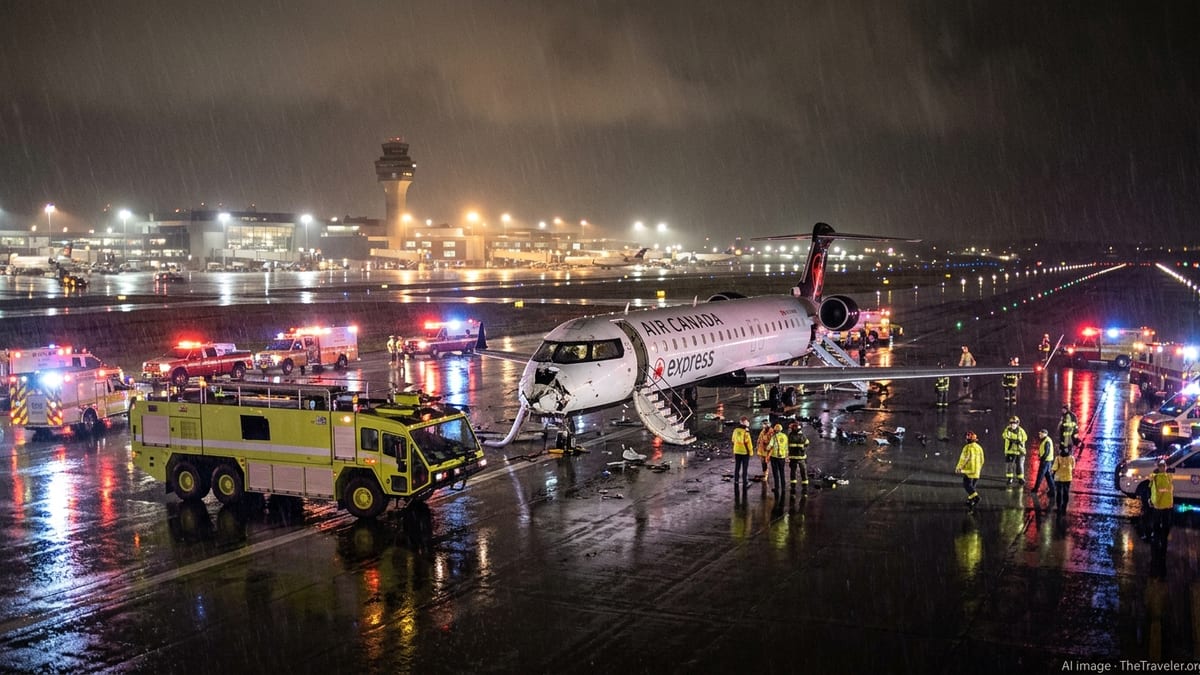
Cluster of Delays Highlights Fragility at a Key New York Gateway
Publicly available aviation dashboards for late May show LaGuardia again emerging as a flashpoint for disruption, with 84 flights delayed and two cancelled over a compact period. While modest compared with the most severe nationwide meltdowns, the figures are significant for an airport that primarily handles high-frequency shuttle traffic along the busy Northeast Corridor and key cross-border routes.
Operational notices from national airspace monitoring tools indicate that traffic management initiatives affecting New York area airspace, combined with unsettled spring weather along the Eastern Seaboard, have contributed to slower arrival and departure flows. When even a small portion of LaGuardia’s tightly timed schedule is pushed back, the effects can quickly cascade into later banked departures and missed connections at downline hubs.
LaGuardia’s recent history underscores how quickly disruption can escalate. Earlier in the spring, separate operational crises at the airport triggered far larger waves of cancellations and extensive rolling delays, prompting airlines to reassess schedule buffers and gate utilization. The latest figures, though smaller in scale, reinforce concerns that the margin for error at the New York gateway remains narrow as peak summer traffic approaches.
Industry observers note that by late May, airlines are already operating at near-peak seasonal capacity, leaving limited room to absorb irregular operations. This environment makes any cluster of delays at a slot-constrained hub like LaGuardia particularly impactful for both domestic shuttles and transborder services.
Major Carriers and Regional Partners Share the Strain
According to aggregated delay tallies and airline performance summaries, the current wave of disruptions is being felt across a wide mix of operators. Air Canada, American Airlines and Delta are among the most exposed at LaGuardia and on key connecting routes, with Republic and other regional partners bearing a significant share of the schedule strain on shorter segments.
These partner airlines operate many flights under the banners of larger network carriers, often flying smaller regional jets on high-frequency shuttle routes. Tight aircraft rotations and limited spare capacity mean that a delay on an early LaGuardia departure can reverberate through multiple cities over the course of the day, even when the initial schedule impact appears limited.
Recent disruption snapshots from industry data providers show this pattern playing out beyond New York. Nationwide tallies for late May point to more than 2,000 delayed flights and over 100 cancellations on some days, with American, Delta, United, Southwest and regional affiliates such as Republic, SkyWest and Envoy all appearing prominently in delay statistics. LaGuardia’s latest figures fit into this broader backdrop of strain across the U.S. domestic system.
Canadian carriers have also been drawn into the turbulence. Cross-border services operated by Air Canada and its partners rely heavily on punctual operations at New York, Boston, Chicago and other U.S. hubs. When U.S. disruptions intensify, these carriers face challenges maintaining schedule integrity on key transborder corridors, even when weather and staffing conditions in Canada are relatively stable.
Transborder Corridors Hit as Delays Spill Over into Canada
Coverage of the ongoing flight chaos indicates that Canada is among the countries most affected by recent U.S. operational problems outside America’s borders. Thunderstorms, shifting winds and air traffic control programs at U.S. hubs such as Atlanta, Dallas Fort Worth, Newark, San Francisco and New York are feeding a chain reaction that stretches into Montreal, Toronto and Western Canadian gateways.
Travel data and route maps highlight how closely intertwined these networks have become. LaGuardia and neighboring New York airports support dense schedules to major Canadian cities, while cross-border traffic also funnels through hubs in Chicago, Detroit and Boston. When a LaGuardia departure to a Canadian city is delayed, passengers may miss onward connections within Canada or on long haul routes to Europe and Asia, amplifying the disruption.
Reports from consumer rights platforms and travel advisories describe rising instances of missed connections, overnight layovers and same day rebookings for travelers moving between the two countries. Airlines typically prioritize reaccommodating passengers on the next available flights, but limited seat availability during busy travel periods can push some rebookings into the following day, especially on international segments.
Analysts point out that this interconnectedness means even localized disruptions can have outsized international consequences. A relatively small number of delays recorded at LaGuardia can destabilize carefully timed cross-border schedules, affecting both business travelers on shuttle routes and leisure passengers heading to holiday destinations in either country.
Weather, Airspace Constraints and Infrastructure Limitations Converge
Independent aviation coverage portrays the current turbulence as the product of several converging forces rather than a single cause. Seasonal thunderstorms, low cloud ceilings and shifting winds have led to repeated ground delay programs at major airports, including San Francisco and hubs along the East Coast, constraining the number of takeoffs and landings permitted per hour.
At the same time, the New York airspace remains among the most complex in the world, with LaGuardia, John F. Kennedy International and Newark Liberty sharing crowded corridors. Regulatory documents and public planning materials show that federal authorities have periodically granted scheduling relief and capacity waivers at New York airports in recognition of chronic congestion and staffing challenges in the region.
Infrastructure projects intended to relieve some of this pressure are still catching up with demand. LaGuardia’s multibillion dollar terminal redevelopment has improved passenger facilities and gate layouts, but it has not fundamentally expanded the surrounding airspace. Elsewhere in the region, rail and road upgrades on the Northeast Corridor are progressing only gradually, leaving air travel as the primary option for many time sensitive trips.
These structural constraints mean that when irregular operations occur, options for rerouting flights or quickly scaling capacity are limited. Airlines can adjust schedules, swap aircraft types or consolidate lightly booked services, but they remain bound by the underlying runway and airspace limits that define daily throughput into and out of New York.
Passengers Confront Limited Options as Summer Travel Looms
With the peak summer season approaching, traveler advocacy groups and consumer platforms are urging passengers to prepare for continued volatility. Guidance compiled from regulators and airline policies emphasizes that compensation and care obligations vary depending on the cause of a delay or cancellation and the jurisdiction in which the disruption occurs.
In the United States, federal rules focus largely on transparency and prompt refunds for cancelled flights or significant schedule changes, while in Canada, passenger protection regulations outline more detailed standards for compensation and assistance in some circumstances. However, both frameworks allow airlines flexibility when disruptions are linked to weather or air traffic control decisions, which have featured prominently in recent weeks.
For now, the cluster of 84 delays and two cancellations at LaGuardia stands as another reminder of how little slack remains in the transborder aviation system. Even on days without a headline grabbing meltdown, modest operational hiccups at a single constrained hub can ripple across major corridors between the United States and Canada.
As airlines, airports and regulators brace for heavier summer demand, attention is likely to remain focused on whether infrastructure upgrades, staffing adjustments and refined schedules can keep pace. Travelers moving through LaGuardia and other busy hubs may find that building extra time into itineraries and monitoring flight status closely are among the few practical defenses against an increasingly unpredictable operating environment.