


More news on this day
Passengers at Indianapolis International Airport faced mounting frustration on May 29 as 26 flights were delayed and two were cancelled, with publicly available tracking data indicating that ripple effects from coastal airspace bottlenecks in the United States and Ireland disrupted operations for Republic Airways, Southwest, United, Aer Lingus and other carriers.
Get the latest news straight to your inbox!
Delays Build at a Normally Smooth-Running Midwestern Hub
Indianapolis International Airport is widely regarded as a relatively efficient mid-sized hub, but on May 29 its departure boards told a different story. Flight status platforms tracking the airport’s operations showed a growing cluster of delayed departures across regional, domestic and transatlantic routes, far above what is typical for the facility in late May.
Regional operator Republic Airways, which flies many of the feeder services that connect Indianapolis to larger coastal hubs, appeared among the most affected. Multiple departures to major eastern and southern gateways were listed as late, reflecting how issues that begin in constrained coastal airspace often translate into rolling schedule problems for regional affiliates.
Southwest and United also showed notable knock-on delays from their network operations. Several of their Indianapolis services tied to large coastal airports were running behind schedule as aircraft and crews arrived late from earlier flights slowed by traffic management programs, weather-related spacing and congestion farther east.
Two flights from Indianapolis were cancelled outright, according to real-time monitoring services, underscoring that the disruption was not limited to modest pushbacks. With capacity already tight headed into the busy summer travel season, even a small number of cancellations can force passengers into crowded rebooking queues and stretch available seats across multiple later departures.
Coastal Airspace Constraints Ripple Inland
Industry disruption reports and aviation briefings indicate that the root of many of Friday’s delays lay far from Indianapolis itself. Coastal airspace around key US hubs has been subject to a mix of structural constraints and short-term traffic management measures, including ground delay programs and flow restrictions when low clouds, shifting winds or storms reduce runway capacity.
Recent national disruption summaries show that on some days in late May more than five thousand flights across the United States have operated behind schedule, with roughly a hundred cancellations, particularly concentrated at large coastal gateways. When those hubs slow down, the effect cascades through the regional spokes that depend on them, including cities like Indianapolis.
Published aviation briefings from this month also highlight how runway closures, staggered approach rules and weather-driven spacing requirements at airports such as San Francisco, New York area facilities and Florida gateways can combine with already high demand to reduce the number of flights that can safely move through constrained airspace each hour. Airlines then adjust by holding departures, modifying routings or delaying arrivals, leaving aircraft and crews out of position.
Those network dynamics help explain why travelers in the Midwest can find themselves stranded even when local skies are relatively clear. In many cases, the aircraft scheduled to operate an Indianapolis departure is still waiting for a slot at a coastal airport, or a crew has exceeded duty limits after earlier delays elsewhere in the system.
Transatlantic Links Tie Indianapolis to Irish Bottlenecks
The disruption in Indianapolis on May 29 is also occurring at a moment when links between the airport and Ireland are expanding. Aer Lingus has announced and begun rolling out new and planned services between Dublin and several US cities, including Indianapolis, as part of a broader push to grow transatlantic connectivity.
At the same time, Irish aviation policy debates and capacity pressures at Dublin Airport are drawing attention to the limits of how many passengers and flights can pass through one of Europe’s key transatlantic gateways. Parliamentary committee reports and industry submissions this spring describe concerns that passenger caps and infrastructure constraints could restrict growth and complicate scheduling during peak seasons.
For travelers, this means that aircraft and crews linking the US Midwest with Ireland are operating through an increasingly busy and occasionally constrained North Atlantic corridor. When weather systems, staffing limits or capacity rules affect operations around Dublin or along oceanic tracks, the impact can propagate back through hubs in the northeastern United States and eventually to connecting cities like Indianapolis.
Friday’s mix of local delays and broader bottlenecks illustrates how vulnerable long-haul and connecting itineraries can be to even modest disruptions in transatlantic airspace. A late-arriving inbound aircraft from Ireland or a missed connection at a coastal hub can quickly cascade into schedule changes for passengers who began or intended to end their journeys in Indiana.
Passengers Face Longer Waits, Tight Connections and Limited Options
For those on the ground at Indianapolis International, the operational explanations provide little immediate comfort. Travelers reported through social channels and flight-tracking tools that departure times were repeatedly pushed back in 15 to 30 minute increments, complicating connections at hub airports and stretching what had been manageable layovers into tight or missed links.
With 26 flights delayed and two cancelled, the pool of available seats on subsequent departures tightened quickly. When regional services operated by Republic Airways or similar carriers run late, passengers trying to connect onward on mainline flights with Southwest, United or other airlines can find rebooking options limited, particularly on popular evening departures to coastal cities.
Publicly available consumer guidance notes that in such situations passengers are often eligible for assistance ranging from meal vouchers to hotel accommodation, depending on the cause and length of the disruption and the airline’s own policies. However, those benefits can vary widely, and travelers must typically navigate customer-service lines or digital channels during the same peak periods when airlines are struggling to reset their schedules.
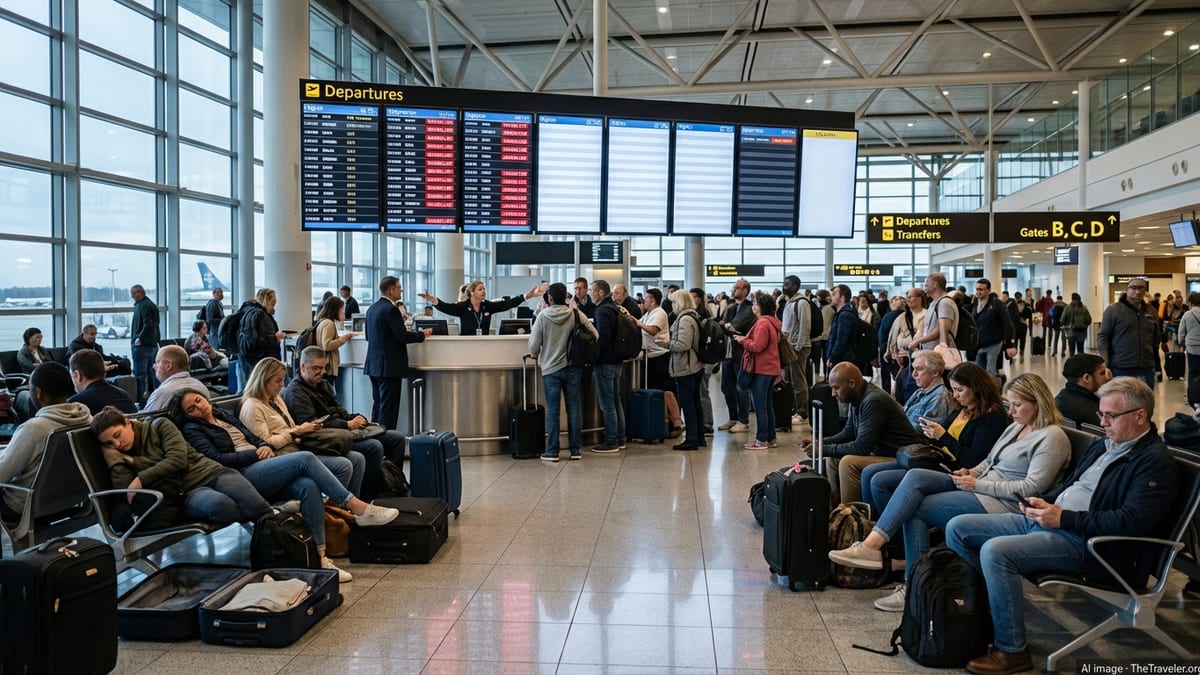
The result on days like May 29 is a familiar but frustrating picture: crowded gate areas, long lines at service counters, and a steady stream of public address announcements as carriers try to juggle delayed crews, aircraft and connecting passengers while keeping safety margins intact.
Growing Summer Demand Meets a Stressed Global System
The Indianapolis disruption is unfolding as US and European aviation recoveries continue to push traffic levels close to or beyond pre-pandemic volumes. Forecasts from US aviation authorities released this month point to sustained growth in passenger numbers through the next decade, with particular strength on transatlantic routes that connect North America and Europe, including Ireland.
Yet many of the structural challenges that generate days of widespread delays remain unresolved. Airspace modernization projects, staffing pipelines for controllers and pilots, and infrastructure upgrades at key coastal airports are all multi-year efforts. In the meantime, short-term measures such as ground delay programs, reroutes and flow restrictions are likely to remain common tools for balancing safety with demand.
For airports such as Indianapolis, which depend heavily on connections through larger hubs, the implication is that even well-run local operations will periodically be caught up in national and international bottlenecks. As carriers add routes like new Aer Lingus links between the Midwest and Dublin, the city’s travelers gain options but also become more exposed to ripple effects from constraints on both sides of the Atlantic.
As the busy summer travel season gets underway, aviation analysts suggest that days like May 29 may become more frequent across the network. For Indianapolis passengers, Friday’s wave of 26 delayed flights and two cancellations offers an early reminder that in a tightly linked global air system, trouble at the coasts or over the ocean can quickly arrive in the heart of the Midwest.