

Flying to, from, or within Alaska feels different from traveling anywhere else in the United States. Distances are vast, weather can change quickly, and many communities are reachable only by air. Whether you are arriving on a long haul from overseas, connecting through Anchorage to the Lower 48, or hopping between regional hubs, understanding how Alaska’s major airports work will make your trip far smoother. This guide focuses on what international and domestic travelers need to know before they land in the Last Frontier.
Anchorage: Alaska’s Primary Gateway
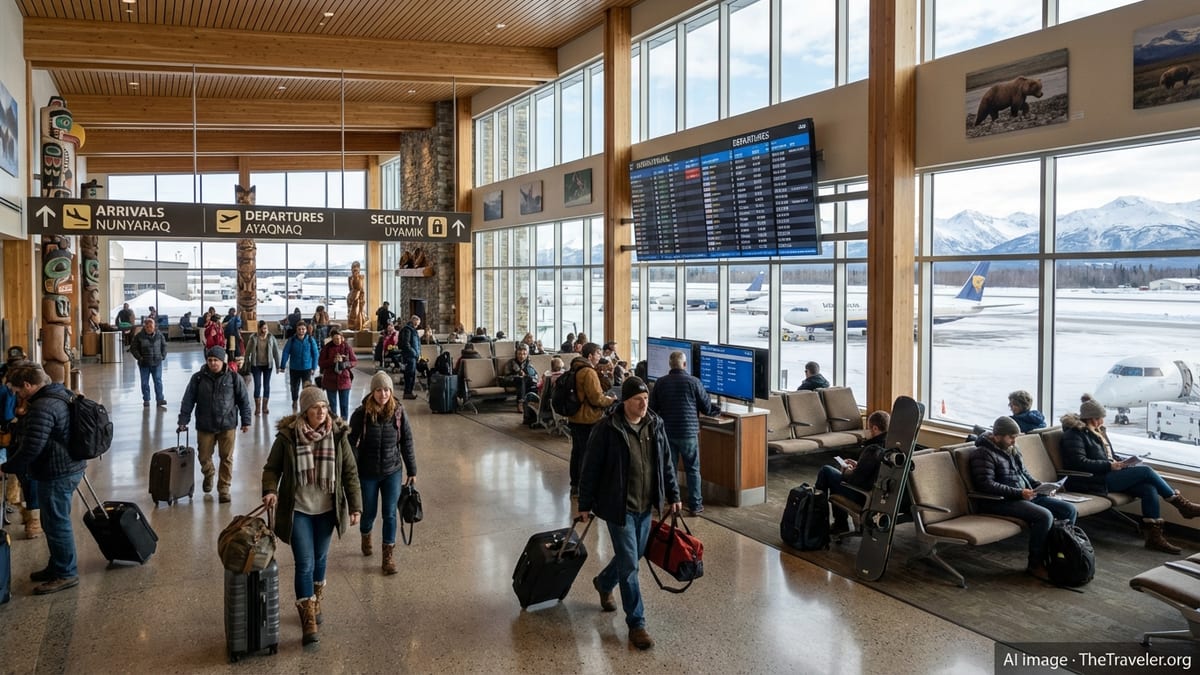
Ted Stevens Anchorage International Airport is the main air gateway for most travelers entering or leaving Alaska. Located a short drive from downtown Anchorage, it handles the majority of the state’s long haul domestic flights as well as a limited but important mix of international services, particularly during the peak summer season. Large narrow body and wide body aircraft share the runways with a substantial cargo operation, so the airport can feel busy even outside traditional passenger rush hours.
For domestic travelers, Anchorage functions much like a mid sized U.S. hub, with frequent flights to Seattle, Portland, and other West Coast cities, as well as connections deeper into the Lower 48. International routes are more seasonal and may include services to Canada and occasional transpacific or charter operations. Schedules shift year to year, and many routes are concentrated from late spring through early fall, so it is worth double checking flight options and seasonal timetables when planning.
Inside the terminal, Anchorage is relatively compact and simple to navigate. The South Terminal serves most passenger airlines, with check in counters, security, and concourses arranged in a straightforward layout. Walking distances are generally modest compared with larger continental hubs, but you should still allow enough time for check in, possible queues, and winter weather that can slow ground transport and aircraft operations.
Arrivals into Anchorage are usually efficient. Domestic passengers collect baggage in the lower level halls and exit into a central arrivals area with ground transportation, hotel shuttles, and rideshare pickup zones clearly marked. For travelers connecting onward to regional flights within Alaska, checked bags can often be tagged through, but it is always wise to confirm this at your origin airport, particularly if you are mixing different airlines on a single journey.
International Arrivals and Border Formalities
For international travelers, Anchorage is a designated port of entry with on site U.S. Customs and Border Protection facilities. If Anchorage is your first point of landing in the United States, you will clear immigration and customs there before making any onward domestic connections. Procedures are generally similar to other American gateways, though passenger volumes are smaller and lines are often shorter outside peak seasonal periods.
Non U.S. citizens can expect standard passport checks, fingerprinting, and customs screening. Wait times are often moderate, but they can lengthen when multiple international flights arrive close together or during busy cruise and tour seasons in summer. Programs such as Global Entry, where available, can reduce processing time, but travelers should still plan conservatively and avoid very tight connections when booking itineraries that require clearing U.S. border controls in Anchorage.
Some international travelers may transit Anchorage without formally entering the United States, especially on technical or cargo related operations. However, for typical passenger flights, you should assume that you will need to meet full entry requirements. That means carrying a valid passport, and if required, the appropriate U.S. visa or pre travel authorization such as ESTA for eligible visitors. Because entry rules and airline procedures can change, checking both airline guidance and official government resources shortly before departure is prudent.
After clearing customs, many passengers recheck bags at designated transfer counters and proceed through Transportation Security Administration screening for their onward domestic flights. Rechecking procedures are usually well signposted, but staff are accustomed to assisting visitors who may be unfamiliar with U.S. connecting norms. Allow extra time if you are traveling with oversized gear common in Alaska such as skis, fishing equipment, or outdoor expedition bags, since these can take longer to process.
Security, Check In, and Timing Your Arrival
Security screening in Alaska’s major airports follows standard Transportation Security Administration procedures used throughout the United States. In Anchorage, TSA operates checkpoints that handle both regular and PreCheck lanes, and current data suggest typical waits under about 15 minutes, though this can fluctuate with daily demand and seasonal spikes. Many travelers find that arriving two hours before a domestic departure and around three hours before an international departure is a sensible baseline at Anchorage.
Morning and late afternoon can be the busiest times, particularly in summer when tour groups and cruise passengers move through in waves. During these periods, giving yourself an extra 30 minutes beyond standard recommendations adds a useful buffer. Travelers who hold TSA PreCheck or other trusted traveler credentials generally move faster through screening, but lines can still back up during weather disruptions or irregular operations, so it is best not to cut things too close.
Check in options at Alaska airports include airline counters, self service kiosks, and mobile boarding passes for most major carriers. Printing a physical boarding pass or downloading it to your device before leaving your hotel can save time once you reach the terminal. If you are checking bags, especially oversized or special items such as firearms, camping fuel, or frozen fish, build in more time than you might at a typical city airport, since staff may need to conduct additional inspections or direct you to separate drop off points.
For travelers driving in from outside Anchorage, distance and road conditions play a significant role in timing. In winter, snow, ice, and limited daylight can slow traffic into all major airports in the state, and road closures are not uncommon in remote areas. It is sensible to follow local advisories and give yourself a wider margin of error than you might in milder climates, especially if your ticket involves a tight downstream connection to the Lower 48 or overseas.
Fairbanks and Juneau: Key Regional Hubs
While Anchorage dominates long haul traffic, Fairbanks International Airport and Juneau International Airport are critical hubs for travelers headed into central and southeast Alaska. Fairbanks sits near the geographic center of the state and attracts visitors for aurora viewing, interior road trips, and connections to smaller communities. The airport offers domestic services from several U.S. carriers and periodic international or charter flights, often tied to peak tourism seasons.
Fairbanks is also a designated U.S. port of entry, with Customs and Border Protection officers on site during posted hours. International arrivals here tend to be less frequent and may require advance coordination, particularly for general aviation or charter operations. Travelers who find a convenient international routing into Fairbanks should still check whether their flight involves a prior U.S. entry point where formal immigration and customs clearance occurs before they land in Alaska’s interior.
Juneau International Airport serves Alaska’s capital, a city isolated from the state’s road system and accessible primarily by air or sea. The airport handles a mix of regional jet and turboprop traffic, with frequent domestic service to other Alaskan communities and West Coast gateways such as Seattle. While it carries the title of international airport, current scheduled traffic is largely domestic or cross border within North America, and many visitors to Juneau arrive via cruise ship rather than by air.
Both Fairbanks and Juneau offer more modest terminal facilities than Anchorage, with shorter walking distances and a more intimate feel. Services such as rental car counters, small cafes, and regional airline desks are usually clustered in a single main hall. At peak times, especially in summer or during major events, check in and security can still become congested, so the same general timing guidance applies: about two hours before domestic departures and at least three hours before any international or complex connecting itinerary.
Flying Within Alaska: Regional Air Travel Realities
For many travelers, a trip to Alaska does not stop at the first major airport. Regional and local flights play a vital role in reaching national parks, remote lodges, and smaller communities that lie far from the road network. These services may operate from the same terminals as major airlines or from adjacent general aviation facilities, depending on the airport and carrier. Aircraft range from regional jets and turboprops to small bush planes and floatplanes.
Schedules on these routes can be more weather dependent and flexible than on large domestic city pairs. Fog, snow, and strong winds are common in various parts of the state, especially along the coast and in mountainous regions. Delays and cancellations, while not constant, are frequent enough that travelers should build in generous buffers if a regional flight connects to a long haul departure in Anchorage, Fairbanks, or Juneau. Travel insurance and flexible ticket options can reduce the financial risk of disrupted plans.
Weight and baggage limits are often stricter on small aircraft, and certain types of gear may need advance approval. Outdoor travelers should confirm policies on items such as fuel canisters, bear spray, firearms, or large coolers of fish and game, since these frequently require special handling or may be prohibited in checked or carry on baggage. If your trip involves a mixture of large airline and bush flying segments, packing in smaller, soft sided bags that fit easily into tight cargo holds is usually more practical than rigid suitcases.
At regional terminals, check in and security procedures may feel informal compared with big city airports, but they still follow federal regulations. In some smaller locations, airlines request that passengers arrive 60 to 90 minutes before departure, even when flights board only a handful of travelers. This gives staff time to weigh baggage, balance aircraft loading, and assess weather conditions. Patience and flexibility are valuable assets when flying within Alaska, especially in shoulder seasons and mid winter.
Ground Transport, Services, and Seasonal Considerations
Getting to and from Alaska’s airports can be straightforward in larger cities and more complex in remote areas. In Anchorage, taxis, rideshare services, hotel shuttles, and on site rental cars are available at the main terminal. The ride into downtown usually takes less than 20 minutes in normal traffic. Fairbanks offers similar options, though services may be less frequent overnight or during very early morning hours, so late arriving passengers should confirm availability in advance.
Juneau’s airport lies a short drive from the city’s main commercial district and ferry terminals. Local taxis and shuttles can be arranged, and rental cars are commonly used by visitors exploring the surrounding area. In all three cities, winter driving demands more caution than in many parts of the Lower 48. Rental vehicles are typically equipped for cold conditions, but visitors unfamiliar with snow and ice should allow extra time and consider local advice on routes and parking near their lodging.
Inside the terminals, amenities vary. Anchorage offers the broadest selection of food outlets, shops, and lounges, though it still feels smaller than major continental hubs. Fairbanks and Juneau feature more limited but functional services, often with a local flavor such as regional coffee stands, souvenir kiosks, and information desks staffed by tourism volunteers during peak seasons. Free or time limited Wi Fi is common, but speeds can fluctuate with usage, particularly when cruise or tour groups move through in large numbers.
Seasonality has a significant impact on the airport experience. Summer brings longer operating hours for concessions, denser flight schedules, and a higher concentration of leisure travelers. Winter, by contrast, can see fewer flights but more challenging weather, with snow removal operations and deicing sometimes adding to gate and taxi delays. Dressing in layers, keeping essential medications and a change of clothing in your carry on, and allowing extra transfer time between flights are prudent habits year round in Alaska.
Connecting Through the Lower 48 and Canada
Many journeys to or from Alaska involve at least one connection through a major hub in the Lower 48 or Canada, most commonly Seattle, Vancouver, or other West Coast cities. For travelers heading to Europe, Asia, or Latin America, these hubs provide the long haul links that Anchorage and Fairbanks may not always offer on a year round basis. When planning itineraries, it is helpful to think of Alaska’s airports as regional endpoints that feed into larger networks rather than fully independent global hubs.
Airlines serving Alaska often coordinate schedules to optimize connections in these southern gateways, but weather or operational issues in the state can still ripple through the chain of flights. Booking on a single ticket where possible tends to provide better protection in the event of delays, since the operating carrier has clearer responsibility to rebook passengers. If you must book separate tickets, especially on low cost or regional carriers, consider overnighting at the hub or building in a wide buffer to reduce the risk of missed onward flights.
International travelers should be mindful of where customs and immigration formalities occur. For example, a passenger flying from Europe to Fairbanks via Seattle will usually clear U.S. border controls at the first point of entry in Seattle before continuing domestically to Alaska. Conversely, some itineraries from Alaska to other countries may involve preclearance or exit checks at Canadian airports, particularly in Vancouver or Calgary. Reading ticket details and confirming the sequence of entry and exit checks with your airline can prevent surprises.
Because schedules and entry procedures can evolve over time, particularly in response to changing demand and regulatory requirements, it is wise to verify connection recommendations close to your travel date. Airlines, airports, and government agencies publish updated guidance on minimum connection times, document requirements, and health or security measures. Travelers who keep an eye on these updates and maintain flexible plans tend to experience fewer disruptions when moving between Alaska and international destinations.
The Takeaway
Alaska’s airports reflect the character of the state itself: vast distances, strong links to the outdoors, and a reliance on aviation for everyday life. Anchorage serves as the primary international and domestic gateway, supported by important hubs in Fairbanks and Juneau and a dense network of regional and bush operations that reach far beyond the road system. Each airport offers a slightly different experience, but all reward travelers who prepare thoughtfully and allow generous time buffers.
For both international and domestic passengers, a few principles go a long way toward a smooth journey. Build in extra time for check in, security, and weather related disruptions, especially in winter and peak summer seasons. Understand where you will clear customs and immigration if you are crossing borders, and keep documents and essential items organized in your carry on. Be realistic about the unique challenges of regional flying in Alaska, from weight limits to rapidly changing weather, and remain flexible when plans need to shift.
With these considerations in mind, flying to and within Alaska can be an enjoyable and even memorable part of your adventure rather than a source of stress. From the views of snow capped mountains on approach to Anchorage to the intimate feel of smaller regional terminals, Alaska’s airports offer a distinct sense of place. Thoughtful planning and an appreciation for local conditions will help you make the most of every takeoff and landing in the Last Frontier.
FAQ
Q1. How early should I arrive at Anchorage airport for a domestic flight?
Plan to arrive about two hours before a domestic departure at Anchorage, adding 30 minutes during peak seasons, early mornings, or if you are checking bags.
Q2. How much time do I need for an international departure from Alaska?
For international flights from Anchorage or other major Alaskan airports, aim for around three hours before departure, and consider more time if you have complex itineraries or special baggage.
Q3. Where will I go through U.S. customs if I am flying into Alaska from overseas?
If Alaska is your first stop in the United States, you typically clear U.S. customs and immigration at that Alaskan airport. If you connect through a Lower 48 or Canadian hub first, you will usually complete formalities there.
Q4. Are TSA procedures in Alaska different from those in other U.S. airports?
No. Alaska’s major airports follow the same Transportation Security Administration rules as the rest of the country, including limits on liquids and standard screening of carry on items.
Q5. Can I make tight connections between regional flights and long haul departures?
It is safer to avoid tight connections in Alaska, especially when a regional or bush flight feeds into a long haul service. Weather and operational delays are common enough that longer buffers are advisable.
Q6. What should I know about baggage on small regional aircraft in Alaska?
Small regional aircraft often have stricter weight and size limits than major airlines. Soft sided bags pack more easily, and some gear, such as fuel or bear spray, may be restricted.
Q7. Do Alaska’s airports offer public transportation to downtown areas?
Anchorage, Fairbanks, and Juneau all have taxis and shuttles, while public transit is more limited and schedules may be sparse at off peak hours. Many visitors rely on rideshare and rental cars.
Q8. How do Alaskan winters affect airport operations and travel plans?
Winter brings snow, ice, and limited daylight, which can slow road access and require aircraft deicing. Travelers should allow extra time and monitor weather and flight status closely.
Q9. Is Wi Fi available at Alaska’s main airports?
Most larger Alaskan airports provide free or time limited Wi Fi, though speeds can vary, especially when terminals are crowded during peak tour and cruise seasons.
Q10. Are there lounges or quiet areas to rest during long layovers in Alaska?
Anchorage has the most developed lounge and seating options, while Fairbanks and Juneau offer smaller but generally comfortable waiting areas. Availability and opening hours can vary seasonally.