


More news on this day
An Alberta couple stranded in Saint Lucia during WestJet’s cabin-crew strike is raising concerns about the airline’s automated rebooking process, saying a replacement itinerary failed to account for their citizenship and left them facing costly, time-consuming hurdles to get home.
Get the latest news straight to your inbox!
Strike disruption leaves Canadian travelers overseas
The couple, who live in Alberta and had been vacationing in Saint Lucia, were among thousands of WestJet passengers affected after the carrier curtailed international operations during a cabin-crew strike at the start of August. Published coverage indicates WestJet began suspending flights as negotiations with flight attendants intensified, triggering widespread cancellations on routes that could strand crews and aircraft abroad.
Reports from affected travelers describe long waits for assistance and limited contact options as the airline worked through a backlog of disrupted itineraries. Many passengers relied on automated rebooking messages arriving hours after initial cancellation notices, while phone and chat channels were reported as overloaded.
In the case of the Alberta couple, their original return flight from Saint Lucia to Canada was cancelled as part of the schedule reductions. The subsequent rebooking was meant to get them home on another carrier, but the routing involved additional border formalities that did not match their travel documents, creating fresh complications instead of relief.
Their experience illustrates how quickly routine resort departures can become complex when labor disputes intersect with cross-border regulations and limited alternative capacity from a Caribbean island.
Rebooking raises citizenship and routing concerns
According to news reports, the couple received an automatic rebooking that routed them from Saint Lucia through the United States on a partner airline. At first glance, the itinerary appeared to offer a timely way home, but it did not fully account for their status as Canadian permanent residents traveling on foreign passports, with only Canadian permanent resident cards to support re-entry.
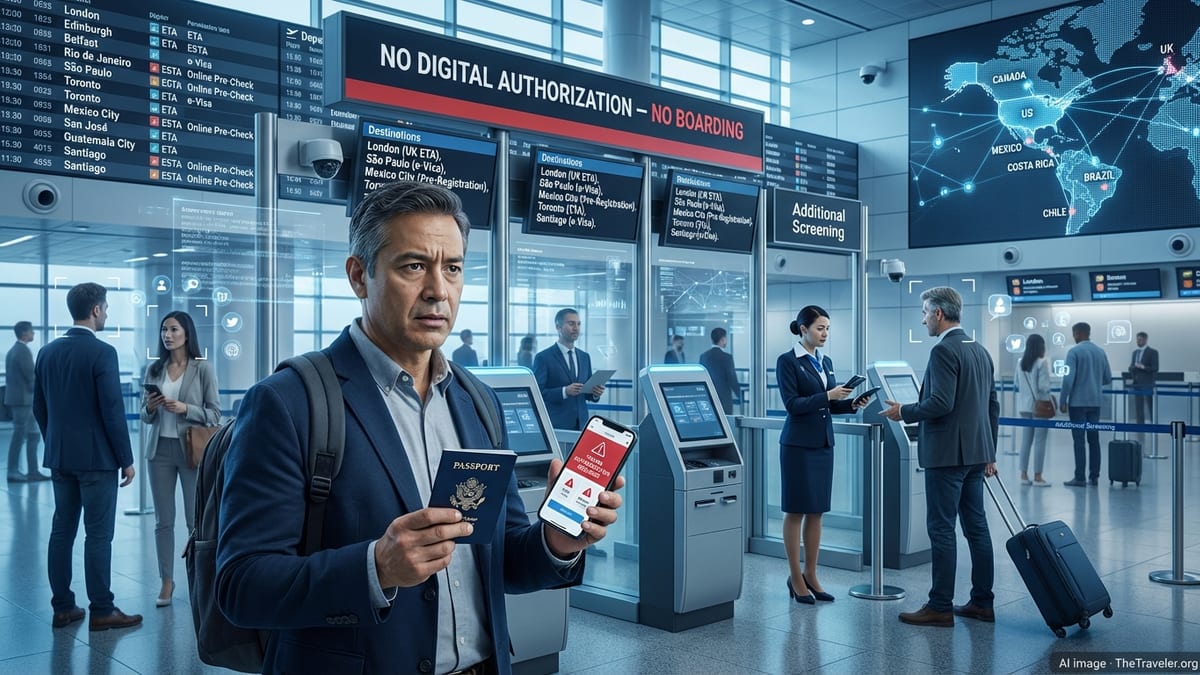
Transit through the United States typically requires advance permission or visas depending on nationality, even for brief connections. Publicly available information shows that travelers who do not qualify for visa-free entry or electronic travel authorization cannot simply pass through a U.S. airport without the proper documentation. For the couple, this meant the rebooked itinerary would have required paperwork they did not possess and could not easily obtain while stranded in Saint Lucia.
The pair reportedly described the situation as “a bit torturous,” noting that while they were grateful to receive an alternative flight, the routing introduced new uncertainty. They faced the prospect of being denied boarding on the connecting segment or refused transit if U.S. requirements were not met, undermining the purpose of the rebooking.
Their case underlines a recurring tension in large-scale disruption events: automated systems can quickly assign seats on available routes, but may not capture nuanced factors such as citizenship, residency status or visa needs that determine whether a traveler can legally follow the new path home.
Passenger rights and airline obligations under Canadian rules
The dispute over the Saint Lucia rebooking comes amid heightened scrutiny of WestJet’s handling of cancellations during the strike. Advocacy groups and legal commentators in Canada point to the Air Passenger Protection Regulations, which set out obligations for airlines when flights are cancelled for reasons within their control.
Guidance circulated by passenger-rights organizations explains that, when a flight is cancelled due to a strike by an airline’s own employees, carriers must generally offer travelers a choice between a refund and rebooking on the next available flight, including on competing airlines if necessary. For international trips, this can include routing from a nearby airport and covering ground transport between airports if the alternative departure point changes.
In practice, travelers have reported mixed experiences in securing these options during the WestJet disruption. Some passengers say they were proactively moved to other carriers, while others describe spending many hours on hold to request rebooking that respected their preferences and legal constraints. The Alberta couple’s complaint centers not on the lack of a rebooking, but on the suitability of the itinerary in light of their citizenship and documentation.
Travel-law specialists often note that carriers rely heavily on automated systems and generic assumptions about travel documents, which can fall short when customers hold multiple citizenships, residency permits or passports from countries with more complex visa arrangements. When those nuances are overlooked, rebooking may technically satisfy schedule obligations but still leave passengers exposed to immigration risks.
WestJet’s response and broader operational pressures
Public statements from WestJet about the strike emphasize efforts to stabilize the schedule and restore services as quickly as possible. The airline has said it is working to rebook affected guests on the next available flights while managing a surge of inquiries at a peak travel period.
Operationally, strikes can force airlines to rebuild schedules with fewer crews and aircraft, particularly on long-haul and leisure routes where planes and staff may be positioned far from home bases. Industry analyses indicate that in such circumstances, carriers often depend on partners or competitors to move stranded passengers, especially from holiday destinations with limited direct connectivity.
However, as airlines search for seats wherever they can find them, individual traveler needs can become harder to track. Complexities such as special medical requirements, expired documents or, as in the Saint Lucia case, citizenship considerations may not surface until a passenger checks in or attempts to transit a third country.
The Alberta couple’s experience therefore speaks not only to WestJet’s immediate handling of the strike, but also to a broader debate over how airlines balance automated efficiency with individualized review during mass disruptions. As labor disputes and operational shocks continue to test global carriers, questions are mounting about whether current rebooking systems are keeping pace with the realities of modern, multi-status travelers.
What stranded travelers can do when rebookings misfire
Travel experts suggest that passengers facing complex citizenship or visa situations should carefully review any rebooked itinerary before accepting it, especially when it involves new transit points. If a routing requires passing through a country where a visa or electronic authorization is needed, travelers are typically advised to check official immigration guidance rather than relying solely on airline assumptions.
If a rebooking appears incompatible with a traveler’s documents, consumer advocates recommend contacting the carrier promptly to request an alternative route that avoids problematic transit hubs. In the Canadian context, publicly available guidance on passenger rights indicates that travelers can ask to be rebooked on different airlines or itineraries that better match their circumstances when disruptions stem from events within an airline’s control.
In situations where communications channels are overloaded, some passengers report more success by speaking directly to airline staff at airport counters rather than waiting on phone lines. Others have documented out-of-pocket spending on hotels and replacement tickets, later seeking reimbursement by citing regulatory obligations and published policies.
For the Alberta couple stuck in Saint Lucia, the ordeal highlights how a vacation can quickly transform into a logistical puzzle when labor strife collides with border rules. Their story adds to a growing chorus of passenger accounts that may shape how airlines and regulators refine rebooking practices in the wake of this latest disruption.