


More news on this day
A major power outage at Perth Airport on 29 October 2026 caused hours of disruption across multiple terminals, grounding outbound flights, halting check in and security screening, and leaving passengers stranded in Perth and at airports around Australia as schedules unraveled.
Get the latest news straight to your inbox!
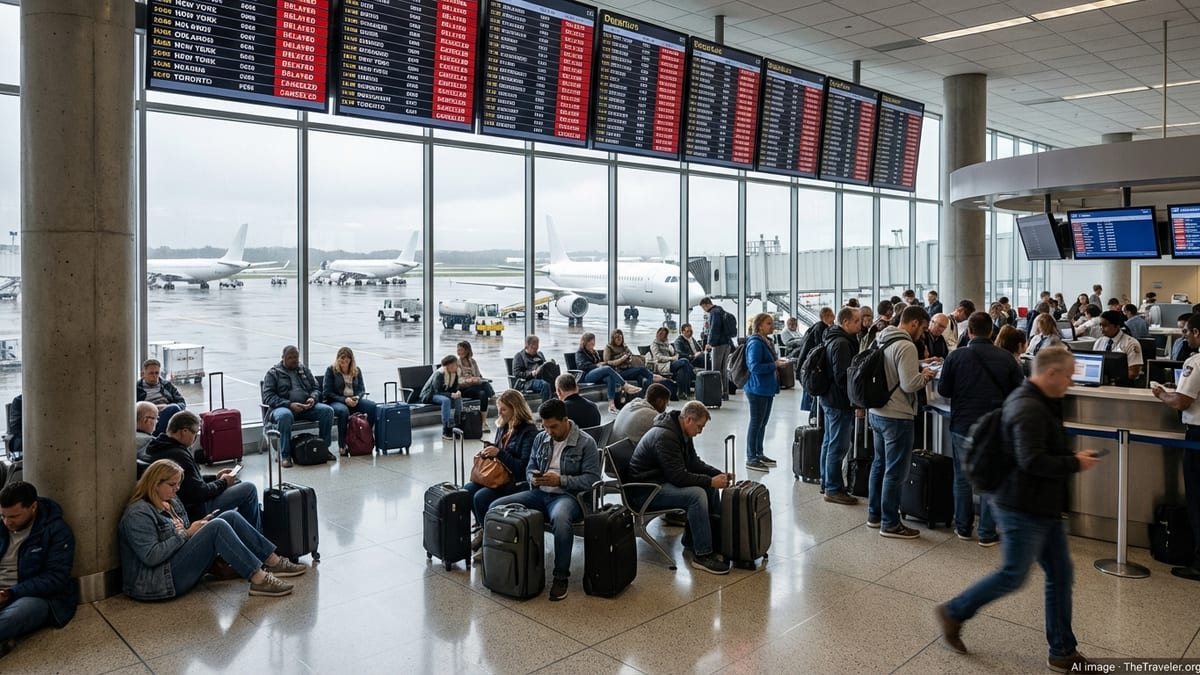
Outage hits terminals and stops departures
According to local media coverage, the disruption began on Thursday 29 October when Perth Airport reported a loss of power that affected terminal operations, including lighting, check in facilities and flight information systems. Live departure boards showed delays and cancellations building through the afternoon as airlines struggled to process passengers without full access to key systems.
Reports indicate that Qantas, Virgin Australia and Jetstar services were among those affected, with several flights delayed or cancelled as the outage unfolded. While exact numbers varied by carrier and route, domestic and interstate travellers faced extended waits in departure halls as staff resorted to manual workarounds where possible.
Inbound flights were able to continue landing, but the lack of full terminal power meant that the usual flow of passengers and baggage through the airport was significantly slowed. Some arriving travellers encountered long queues at immigration and baggage reclaim as systems were progressively brought back online.
Perth Airport’s publicly available information shows that generator power began restoring supply to the terminals in the late afternoon and early evening, allowing basic operations to resume. However, the knock on effect on airline schedules meant delays continued well beyond the initial outage window.
Travellers stranded across Australia
The outage’s impact extended well beyond Perth itself, with passengers left stranded at airports around Australia when their inbound aircraft or onward connections failed to depart on time. National news reports and social media posts described travellers waiting for updates in cities including Melbourne, Sydney and Adelaide as flights to and from Western Australia were held or cancelled.
Some passengers reported being advised to return home or to nearby accommodation and rebook for the following day, particularly on evening departures once it became clear that schedules could not be recovered quickly. Others stayed at the airport in the hope that their flight would still depart, leading to crowded gate areas as airlines reassessed departure times.
For travellers with international connections, the timing of the disruption posed particular challenges. Perth Airport functions as a key gateway between Western Australia and long haul services to Asia, the Middle East and Africa, and missed connections can translate into significant rebooking and accommodation costs. Publicly available accounts indicate that several passengers had to rearrange onward travel at short notice.
By the following morning, published airline schedules showed many services operating again, but with residual delays and equipment changes as carriers repositioned aircraft and crew. Travellers were advised through airline channels to monitor their bookings closely and allow extra time at the airport.
Weather and network resilience in focus
The outage occurred during a period of severe weather across parts of Western Australia, with storm activity and strong winds affecting the state power network on the same day. Independent outage trackers that compile data from Western Power recorded an unplanned interruption affecting the Perth Airport postcode on 29 October, aligning with reports of the disruption to the terminals.
Background planning documents for Perth Airport highlight power loss as a known operational risk, with a mix of grid supply, backup generators and, more recently, co generation facilities used to support critical systems. However, the latest incident has focused attention on how quickly those backup systems are able to stabilise operations during a major grid disturbance.
Publicly available coverage of Perth Airport’s longer term strategy indicates that the airport has been investing in infrastructure upgrades across its terminals and airfield, including projects aimed at improving resilience to extreme weather and utility disruptions. The 2026 master planning material specifically notes that power outages linked to storms and other hazards can cause operational delays and reputational damage if not managed effectively.
In the wake of the October outage, media reports state that Perth Airport has committed to a thorough internal review of its backup generation and contingency procedures, with the aim of reducing the risk of a similar level of disruption during future power events.
Advice for upcoming passengers using Perth Airport
In the days since the power loss, no further widespread outages have been recorded for the airport precinct, and Perth Airport’s passenger update pages emphasise that terminals remain open while broader construction and maintenance projects continue. Nonetheless, the incident has underlined the importance of checking real time information before travelling.
Airlines operating at Perth, including Jetstar, Virgin Australia and Qantas, maintain online travel alert pages that are updated with disruption details when major events occur. Public guidance following the outage has consistently urged passengers to confirm their flight status directly with their airline rather than relying solely on airport displays, which can be affected by power or data issues.
Perth Airport’s own passenger guidance also recommends allowing additional time to reach Terminals 1 and 2 during busy periods, due to ongoing roadworks and car park construction in the Airport Central precinct. For travellers connecting between Terminal 1 and Terminals 3 and 4, where some domestic services operate, transfer times should be factored in when rescheduling flights after a disruption.
Travel industry commentary suggests that, while events on the scale of the 29 October outage remain relatively rare, they are a reminder for travellers to keep booking references handy, ensure mobile devices are charged, and have access to airline apps or websites where rebooking options and digital boarding passes can be managed if airport systems are temporarily unavailable.
What the outage means for Western Australia’s key gateway
Perth Airport is the primary international and domestic gateway for Western Australia, handling flights across four passenger terminals and linking the state to major cities across Australia and to destinations in Asia, the Middle East, Africa and beyond. Any extended disruption has immediate knock on effects for tourism, business travel and freight.
The October power loss follows previous isolated technical incidents at the airport, including baggage system issues and security related evacuations reported over the past two years. Taken together, these events have prompted ongoing debate about how best to balance major construction works, sustainability targets and resilience upgrades while maintaining smooth day to day operations.
Available planning documents show that Perth Airport is working toward consolidating more services into its Airport Central precinct, alongside a new parallel runway and expanded terminal facilities in the coming decade. Those investments are expected to include further improvements to backup power, digital systems and passenger processing capacity.
For now, the late October outage serves as a case study in how a single failure in external power supply can cascade into hours of delays for thousands of travellers, even when flights are technically able to operate. For travellers passing through Perth in the weeks ahead, the message from published guidance is clear: check in early where possible, monitor airline communications closely and be prepared for schedules to change at short notice when infrastructure shocks occur.