


More news on this day
Alberta’s newly unveiled long-term passenger rail blueprint is putting high-speed service between Calgary, Red Deer and Edmonton at the centre of a broader vision to reshape how residents move across the fast-growing province.
Get the latest news straight to your inbox!
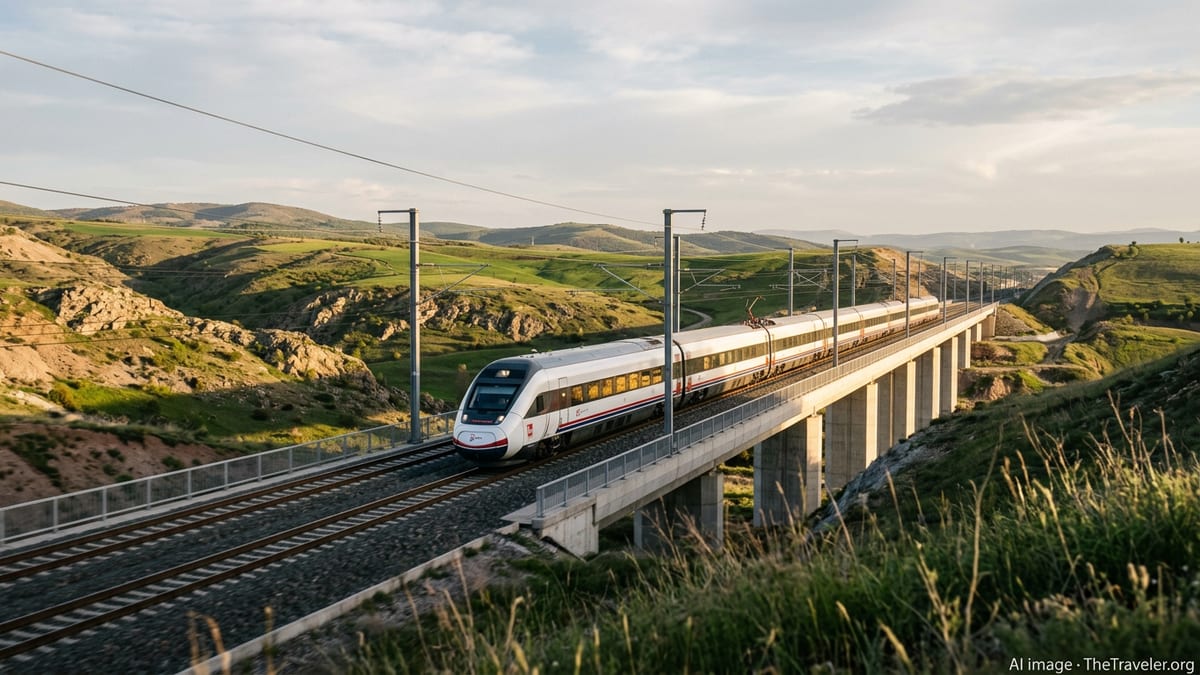
A 30-year rail map with high-speed ambitions
Publicly available provincial planning documents describe a 30-year Passenger Rail Master Plan that sets out a phased network of intercity, regional, commuter and airport services. At the heart of the proposal is a high-speed corridor linking Edmonton, Red Deer and Calgary, identified as having the strongest potential demand and economic impact among the routes under study.
Material published by the Alberta government indicates that the preferred concept for the Calgary–Red Deer–Edmonton spine envisions trains operating at more than 300 kilometres per hour, with service occurring more than once per hour. The line is framed as a regional high-speed service that would integrate with local transit systems and future airport rail links at both ends of the corridor.
The Passenger Rail Master Plan is positioned as a strategic framework rather than a construction schedule. Official budget and planning documents point to work under way on feasibility, alignment options and station locations, with the network intended to be built out in stages over several decades. Government communications describe the plan as a foundation for future investment decisions rather than a commitment to immediate construction.
The province has recently signalled that this work is moving into a more detailed phase. Recent coverage from Alberta-based news outlets reports that the government is directing 15 million dollars toward implementing recommendations from the completed master plan, with the high-speed corridor singled out as a priority for further analysis and early-stage design.
Calgary–Edmonton corridor at the centre of the proposal
The proposed high-speed line follows the well-established Calgary–Edmonton corridor, a region that includes the cities of Calgary, Red Deer and Edmonton along with several growing communities between them. Federal census data and provincial estimates show this corridor as one of Canada’s most densely populated intercity regions outside the Quebec City–Windsor axis, with population growth in Alberta exceeding the national average in recent years.
Historic rail and highway patterns help explain why planners have again focused on this route. Archival records and transport histories show that passenger rail once operated between Calgary and Edmonton for nearly a century before services were discontinued in the 1980s. Since then, Highway 2 has carried most intercity travel, contributing to congestion and travel-time reliability concerns that the province now cites in support of studying modern rail.
Current passenger rail planning materials describe the new corridor as a clean-sheet, passenger-focused route rather than a simple upgrade of existing freight tracks. The concept under review positions Red Deer as a major intermediate hub, reflecting both its geographic midpoint and its growing role as a regional service centre. Planners also reference potential connections to surrounding communities through feeder bus or regional rail links, with the high-speed line acting as the main spine.
While the Calgary–Edmonton corridor is treated as the flagship, the master plan situates it within a broader network, including a higher-speed Calgary–Banff service and potential commuter and airport express trains in both major metropolitan areas. This network approach is presented as a way to strengthen the business case for high-speed infrastructure by linking it to local and regional transit markets.
Technology choices and private-sector proposals in play
The province’s documents and related commentary leave technology choices for Alberta’s high-speed rail aspirations deliberately open. The Passenger Rail Master Plan references high-speed service with operating speeds up to roughly 320 kilometres per hour, which aligns with conventional steel-wheel high-speed rail systems used in Europe and Asia. At the same time, earlier public discussions around the plan have acknowledged interest from firms proposing alternative concepts, including higher-speed conventional rail and proprietary ultra-fast systems.
Among the conventional high-speed ideas, the Prairie Link Rail Partnership has publicly promoted a proposal for a multibillion-dollar high-speed line between Calgary and Edmonton. Information released by the consortium’s partners describes a service targeted at competitive journey times with air travel, connecting the two cities via Red Deer and including links to their international airports. The proposal has been presented as privately led and dependent on regulatory approvals and agreements with governments.
Alberta’s planning approach also appears to leave room for other delivery models. Commentaries on the government’s rail engagement processes point to the possibility of mixed public and private participation, with intercity and tourist-oriented routes potentially led by private entities and commuter services involving a larger public role. The current master plan, however, stops short of endorsing any single proponent or technology, instead outlining performance targets such as speed, frequency and connectivity.
Separately, companies promoting ultra-high-speed or “hyperloop-style” technologies have published conceptual material for Alberta, highlighting the straight alignment and relatively flat terrain of the Calgary–Edmonton corridor. Government materials note that such concepts represent private positions rather than adopted policy, and they are being treated as part of the wider landscape of ideas as the province evaluates feasible options.
From feasibility to funding and timelines
While the high-speed rail vision is ambitious, much of the work now focuses on the practical steps required before any construction can begin. Provincial business plans describe a process moving from master planning into detailed feasibility assessments, including ridership forecasts, environmental reviews, economic analysis and cost estimates. Engagement material released in early 2025 indicates that public consultations have been held in Calgary, Canmore, Red Deer and Edmonton to gather feedback on potential routes and station locations.
Infrastructure experts note that high-speed rail projects elsewhere typically require significant upfront public investment, long lead times and careful integration with existing transit. Alberta’s own economic and budget documents emphasize the need to balance major capital commitments with other priorities, including highways, schools and hospitals. For now, the 15 million dollar allocation toward the next phase of passenger rail planning is being described as seed funding to refine options and prepare any future procurement processes.
Timelines for actual service remain distant. Summaries of the Passenger Rail Master Plan refer to a 30-year horizon for building out the full provincial network, with high-speed services on the Calgary–Red Deer–Edmonton corridor positioned as a long-term objective rather than an imminent project. Commentators following the file have observed that even under favourable conditions, design, approvals and construction could extend over many years once a specific alignment and funding model are selected.
In the meantime, complementary studies are proceeding. A Calgary Airport Rail Connection Study, funded jointly by the province and the city, has produced a technical report examining how to link the international airport to Calgary’s light rail system and any future regional or high-speed lines. Similar work is anticipated around Edmonton’s airport and regional connections, with the goal of making eventual high-speed services part of a seamless door-to-door journey.
Public expectations and regional competitiveness
The emergence of a formal provincial rail plan has energized long-running public debate in Alberta about intercity transportation. Online discussions and commentary in regional outlets reflect both optimism and skepticism. Some observers argue that fast, frequent trains between Calgary, Red Deer and Edmonton could significantly shift travel patterns, reduce highway pressure and position the province more competitively alongside North American regions investing in rail. Others question whether costs, political cycles and competing infrastructure needs will allow the vision to be realized.
Comparisons are frequently drawn with international high-speed rail networks and with early-stage efforts in other parts of Canada, including the Toronto–Windsor corridor. Analysts point out that Alberta’s relatively long distances, dispersed population and heavy reliance on private vehicles present both challenges and opportunities. The Calgary–Edmonton corridor is seen as unusually well suited for passenger rail by North American standards, given its population density, economic integration and limited intermediate stops.
Regional economic development advocates frame the master plan as part of a broader strategy to connect labour markets, support tourism and reduce greenhouse gas emissions. Alberta’s positioning of the high-speed line within a multi-corridor passenger rail network is presented as a way to maximize these benefits, tying the flagship route to commuter and tourist services that could feed ridership.
For now, Alberta’s high-speed rail aspirations remain on paper, but the combination of a formal 30-year plan, dedicated planning funds and growing public attention marks a shift from previous decades of intermittent studies. The coming years of feasibility work, public engagement and potential procurement will determine whether the Calgary–Red Deer–Edmonton corridor becomes one of North America’s first true high-speed rail lines or remains a recurring vision in provincial transport planning.