


More news on this day
Royal Caribbean’s Liberty of the Seas has experienced a weather-related delay on a UK sailing, disrupting its itinerary from Southampton and forcing adjustments for passengers expecting a short European cruise.
Get the latest news straight to your inbox!
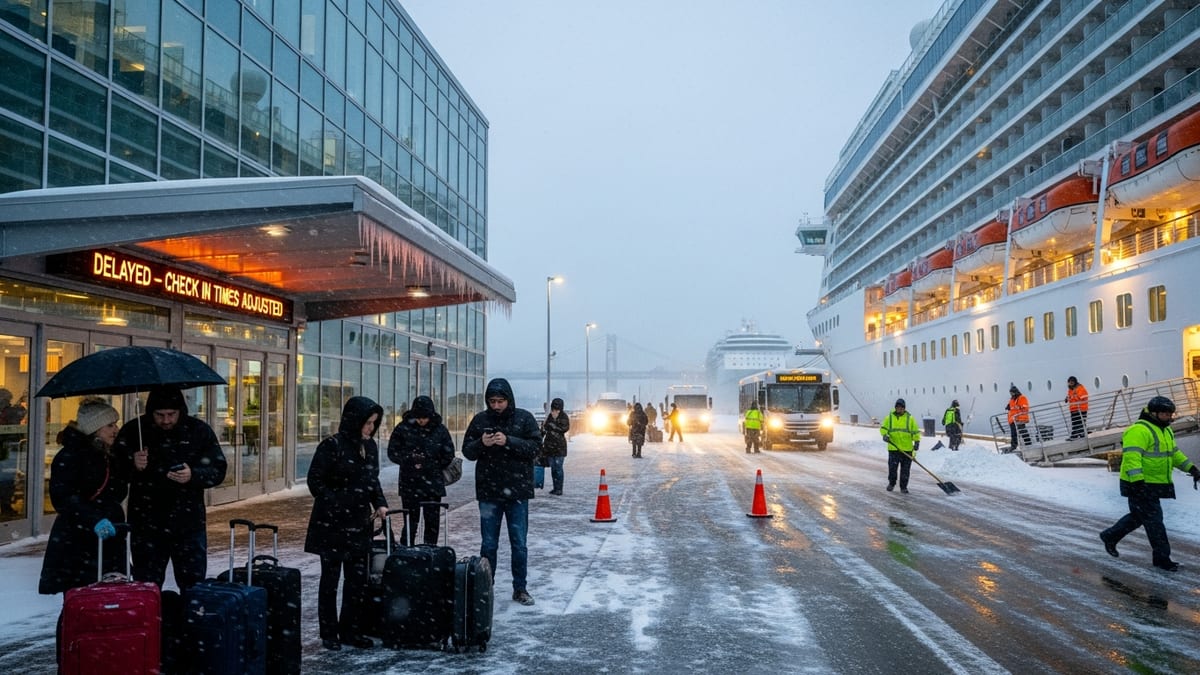
Stormy Conditions Disrupt Southampton Sailing
Heavy winds and rough seas in waters around the United Kingdom have disrupted the latest Liberty of the Seas departure from Southampton, affecting a short cruise that was scheduled to visit near‑continental ports before returning to the UK. Publicly available marine tracking data and cruise schedule listings indicate that the ship reduced speed and altered course as weather systems moved across the North Sea and English Channel, resulting in later than planned timings.
The ship, one of Royal Caribbean’s Freedom‑class vessels, is operating a series of Europe itineraries from Southampton in summer 2026. Deployment schedules show a pattern of two‑night weekend getaways, week‑long Spain and Portugal cruises, and five‑night Hamburg and Bruges sailings, all of which rely on tight port calls and overnight transits between the UK and mainland Europe. When storms move through the region, those schedules leave limited flexibility for on‑time arrivals.
In this latest instance, deteriorating conditions prompted a more cautious speed profile and route, extending sea days and compressing time available in port. The adjustments led to a delay for guests planning to disembark and for those booked to join the next cruise, highlighting how vulnerable short northern European itineraries can be to unsettled weather patterns, particularly in shoulder and early summer periods.
Regional forecasts in recent days have pointed to strong gusts and choppy seas in the approaches to the North Sea, a combination that frequently disrupts ferry and cruise operations. Under such circumstances, cruise lines typically prioritize stable positioning and safer speeds over punctuality, especially for larger ships navigating congested shipping lanes into major ports.
Impact on Passengers and Itinerary Changes
The weather‑related delay has primarily affected embarkation and disembarkation timings for Liberty of the Seas, along with the sequence and duration of port calls. Cruise industry tracking platforms show that the ship’s scheduled time in at least one continental port has been shortened, with extra hours spent at sea to avoid the worst of the conditions and to arrive during more favorable tides and wind windows.
For passengers already on board, the delay translated into longer sea time and adjustments to onboard programming. When itineraries are compressed by weather in northern Europe, cruise operators commonly expand indoor entertainment, adapt dining schedules, and adjust use of open‑deck attractions that are more exposed to wind and spray. Guests joining from Southampton faced revised boarding guidance and were advised to monitor communications related to check‑in windows and potential knock‑on delays to departure.
Those with onward travel plans after the disrupted cruise are among the most affected, particularly passengers with flights scheduled close to the original arrival time. Travel agents and online forums frequently advise allowing generous buffers on either side of northern European cruises because late arrivals due to storms are more common in these waters than on some more sheltered routes.
Reports from recent seasons on similar ships show that when conditions deteriorate significantly, cruise lines may also cancel port calls altogether and substitute additional sea days. In the current case, available information suggests modifications rather than wholesale cancellations, but the episode underscores how swiftly a tightly timed itinerary can be reshaped by the weather.
Liberty of the Seas’ UK Season and Route Profile
Liberty of the Seas is spending part of 2026 deployed in Europe, including a series of departures from Southampton focused on short breaks and northern and western European routes. Brochures and deployment documents outline regular two‑night weekend sailings from the UK port, alongside five‑night trips to Hamburg and Bruges and longer Spain and Portugal cruises, all designed to appeal to British and European holidaymakers seeking convenient departures without long‑haul flights.
The ship’s UK‑based season coincides with Royal Caribbean’s broader strategy of positioning larger vessels closer to major source markets, using Southampton as a hub for British travelers. That strategy places ships into the variable conditions of the North Sea and English Channel, where low‑pressure systems and strong westerly winds can rapidly build rough seas, particularly during transitional weather periods.
Liberty of the Seas is among the larger cruise ships regularly scheduled in and out of Southampton, carrying thousands of passengers on each voyage. Its size offers stability in heavy seas, but the vessel still must operate within local pilotage rules, port closure protocols, and wind limits that govern safe berthing and tender operations. In practice, that can mean slowing approaches, waiting offshore for better conditions, or diverting around the worst of a storm system, all of which have timetable implications.
While guests are typically drawn by the ship’s entertainment complexes, water attractions, and family‑friendly amenities, the northern European deployment inevitably exposes itineraries to a different risk profile than warm‑weather Caribbean routes. This latest delay illustrates how even a brief weekend getaway cruise can encounter operational constraints in the UK’s often changeable maritime climate.
Weather Risks and Growing Focus on Operational Resilience
Cruise observers note that weather‑related disruptions are an enduring feature of itineraries around the British Isles and northern Europe. Strong winds can make it difficult for ships to use outer berths, while swell and wave conditions may limit tender operations in smaller ports. In addition, port authorities and pilots apply conservative thresholds for maneuvering large vessels in high winds, especially when transiting narrow channels or docking near urban waterfronts.
Recent seasons have seen multiple examples of ships in the region arriving late, skipping ports, or extending sea days when storms track across the North Atlantic and into the North Sea. Travelers sharing experiences on cruise discussion platforms frequently describe missed calls and altered routes as part of the trade‑off for sailing in scenic but meteorologically unpredictable waters.
The Liberty of the Seas delay comes at a time when operators are under increasing scrutiny to demonstrate robust contingency planning. Industry information and consumer guidance materials emphasize the importance of flexible itineraries, backup port options, and clear advance messaging about the possibility of change. Itineraries for 2026 in the region now routinely carry notes highlighting that port times are subject to alteration based on weather and operational needs.
Analysts point out that, although delays can be frustrating, such decisions generally reflect a cautious approach to safety and ship handling. The Liberty of the Seas disruption reinforces expectations that passengers booking UK and northern European cruises should remain prepared for schedule adjustments, particularly when traveling during months known for more active storm tracks.