


More news on this day
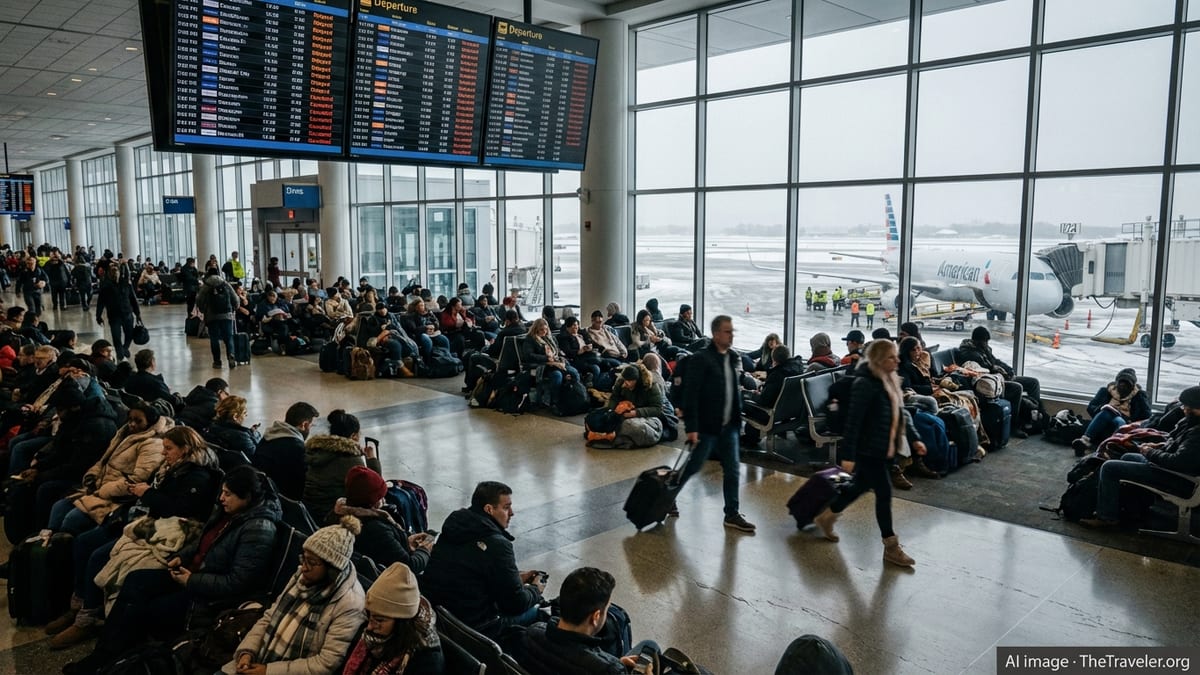
Travelers moving through John Wayne Airport in Orange County on June 20, 2026, are facing a difficult travel day as American Airlines cancels six flights and posts extensive delays on multiple routes across the United States and Mexico, affecting links to Oakland, Phoenix, San Francisco, Utah, Minnesota, and additional destinations.
Get the latest news straight to your inbox!
Ripple Effects Across Key Domestic and Cross-Border Routes
Publicly available flight tracking boards and schedule data indicate that American Airlines operations at John Wayne Airport are under strain, with six cancellations originating from or destined for the Orange County facility and numerous additional services posting significant delays. The disruptions are centered on high-demand domestic routes, including services connecting Southern California with the Bay Area, the Mountain West, and the Upper Midwest, as well as selected flights to Mexico.
Routes to Oakland and the wider San Francisco Bay region appear among the most affected, with passengers reporting missed connections and rebookings onto later departures via alternative hubs. Flights linking John Wayne Airport with Phoenix and other Arizona gateways are also seeing extended ground holds and revised departure times, creating knock-on effects for travelers bound for connections in the interior United States.
Connections between Orange County and Northern California, particularly San Francisco and the broader Bay Area, are sensitive to even short delays because of tight turnarounds and constrained slot windows at busy airports. Today’s schedule disruptions are forcing some travelers onto circuitous routings, with detours through secondary hubs, further extending total journey times.
The network impact extends beyond the West Coast. Services involving Utah and Minnesota, often used as connection points for journeys into the Rocky Mountain states and the Upper Midwest, are experiencing schedule changes that are reverberating through American Airlines’ broader domestic grid. Travelers connecting from John Wayne Airport onto these routes are facing longer layovers and, in some cases, overnight stays.
Operational Pressures Add to a Summer of Unsettled Flying
The issues at John Wayne Airport are unfolding against a wider backdrop of operational challenges for American Airlines and many competitors during the early summer period. Recent national statistics described in independent travel coverage show several hundred cancellations and thousands of delays across United States carriers in mid-June, underscoring how fragile airline schedules can become when weather, staffing, or airspace constraints converge.
In this context, disruptions at a regional hub such as John Wayne Airport can quickly spill over into longer-haul domestic and international services. When aircraft and crew are not in their planned positions, subsequent flights may be forced into rolling delays, which then appear across departure boards throughout the day. Travelers departing from or arriving into Orange County on American Airlines are encountering this pattern as the airline works through its Saturday schedule.
Reports from recent days at other major airports suggest that staffing levels in air traffic control and ground operations continue to influence departure flows, especially in peak afternoon and evening travel windows. When congestion builds, carriers typically implement ground delay programs and minor schedule adjustments designed to absorb pressure on the system. The current pattern at John Wayne Airport, with a cluster of cancellations followed by waves of delays, reflects how these mitigation efforts can still result in significant inconvenience for passengers.
Although American Airlines has not provided a detailed public breakdown for each affected flight at John Wayne Airport, historical data and broader 2026 travel analysis point to a combination of factors, including weather in other regions, crew positioning challenges, and high summer demand that leaves little slack in daily schedules.
Impact on Travelers Bound for Oakland, Phoenix, San Francisco, and Beyond
The immediate consequence for many passengers at John Wayne Airport is missed connections through key American Airlines hubs and focus cities. Travelers booked on itineraries involving Phoenix, a major connecting point in the Southwest, are reporting rebookings onto later services, occasionally with additional stops introduced to bypass bottlenecks.
Passengers heading to the Bay Area, including routes that feed into Oakland and San Francisco, are confronting cascading delays as regional and mainline aircraft arrive late from previous segments. For some, this is resulting in same-day plans being abandoned in favor of next-morning departures, particularly where the final legs involve connections to smaller regional airports in Utah, Minnesota, or neighboring states.
Those traveling to or from Mexican destinations are also feeling the strain. While the number of outright cancellations on cross-border routes remains smaller than on certain domestic services, delays originating in Orange County or at upstream hubs are causing tight connection windows to evaporate. Some travelers are being shifted to alternative American Airlines itineraries that route through Texas or Arizona, lengthening overall travel times but preserving arrival on the same calendar day.
The disruption is not limited to business travelers. The June weekend timing means family vacations, weddings, and other leisure plans are being affected, with social media posts and traveler reports describing long lines at service desks, crowded gate areas, and considerable uncertainty about revised departure times.
What Passengers Can Do as Disruptions Continue
With cancellations and extensive delays in play, passengers at John Wayne Airport are turning to a combination of airline apps, airport information screens, and third-party flight tracking tools to monitor changing departure times and gate assignments. Published travel guidance emphasizes the importance of checking flight status frequently on days when large portions of an airline’s schedule are disrupted, since information can change in short intervals.
Travel rights for affected passengers vary by itinerary and jurisdiction, but general practice when a flight is canceled includes offering a later departure on the same airline, a rerouting through another hub where capacity exists, or a refund when travel no longer makes sense. For long delays, some travelers may be eligible for meal vouchers or hotel accommodations, depending on the cause of the disruption and the airline’s internal policies.
Travelers with tight onward connections, including those headed to smaller cities in Utah and Minnesota from John Wayne Airport via Phoenix or other hubs, are being advised in public travel resources to proactively contact the airline once it becomes clear a delay will jeopardize the original itinerary. Early rebooking can open up additional options before later flights also reach capacity.
Industry analysts note that, during periods of system strain, flexibility can be crucial. Passengers able to adjust travel to earlier or later departures, or to route through alternative airports in Southern California or the Bay Area, may find more options than those tied to a single nonstop flight. However, with demand high at the outset of the summer season, spare seats can be limited, especially on popular weekend departures.
Broader Implications for the Summer Travel Season
The disruptions at John Wayne Airport add to a growing list of June travel incidents that highlight how sensitive the United States air network remains to concentrated operational stress. Multiple recent events involving cancellations and heavy delay volumes at other major hubs and regional airports have already prompted renewed scrutiny from travelers and consumer advocates regarding airline scheduling practices and contingency planning.
Flight performance data compiled so far in 2026 indicate that some carriers, including American Airlines, have experienced elevated cancellation and delay rates during weather events and peak travel periods, amplifying the impact on passengers passing through secondary airports such as John Wayne. The current situation in Orange County illustrates how quickly challenges can spread from large hubs to smaller but strategically important nodes in the network.
For travelers planning trips later in the summer, today’s events at John Wayne Airport serve as a reminder to build additional time into connections, especially when routing through busy hubs or during afternoon and evening departure banks. Purchasing flexible tickets, considering travel insurance that covers significant delays, and preparing backup plans for critical journeys may help mitigate some of the risks exposed by the latest wave of disruptions.
As airlines, airports, and regulators continue to navigate high demand and a complex operating environment, the performance of carriers at airports like John Wayne will remain a key bellwether for how smoothly the rest of the 2026 peak season unfolds for passengers traveling across the United States and Mexico.