


More news on this day
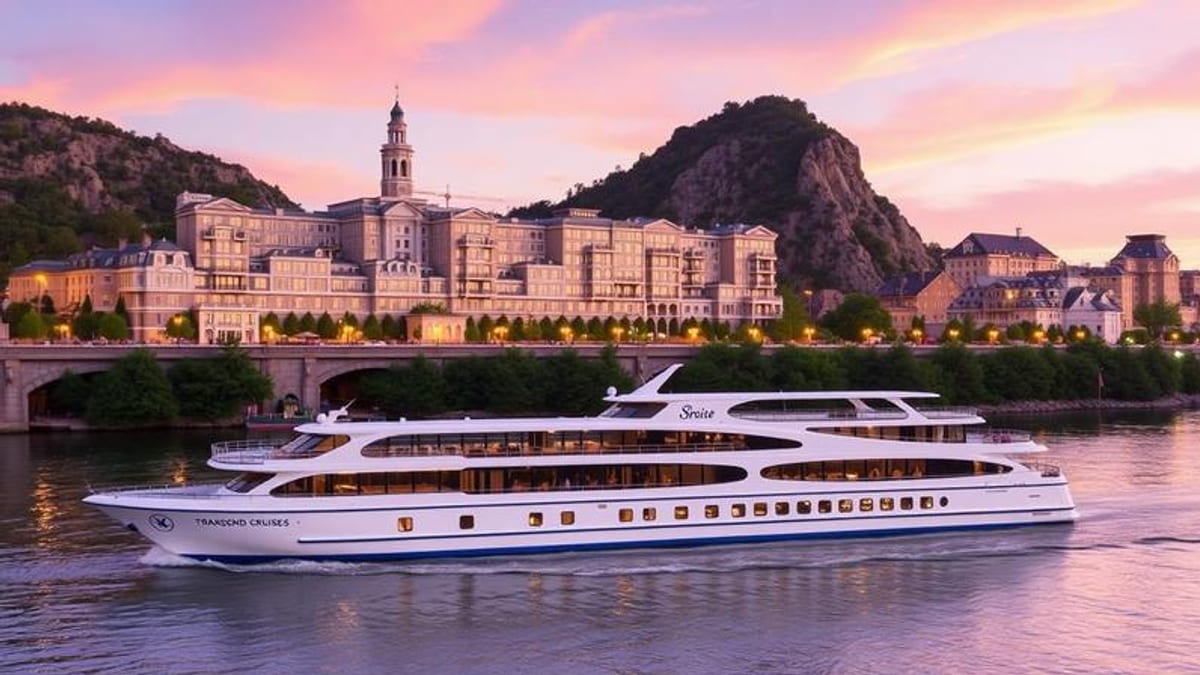
Groups-focused river cruise start-up Transcend Cruises is preparing to introduce its first ship, a purpose-built vessel tailored exclusively to the charter, meetings and incentives market on Europe’s inland waterways.
Get the latest news straight to your inbox!
First Ship Targets High-End Group and Charter Market
According to recent industry coverage, Transcend’s inaugural vessel, named Connect, is completing final outfitting ahead of its debut season in mid-2026. The ship is described as the first European river cruise vessel designed from the keel up specifically for groups, rather than the traditional retail, per-cabin market. Reports indicate that the company intends to sell the ship on a full-charter basis to corporate event planners, tour operators and other business-to-business partners.
Transcend positions itself as a specialist platform for meetings, incentives, conferences and events on rivers, offering what it describes as a floating venue that can be fully customized. Publicly available information shows that the ship will sail core European rivers such as the Rhine and Danube, focusing on itineraries that allow clients to build bespoke programs around major gateway cities and key cultural stops.
Analysts note that the launch comes as demand for unconventional meeting spaces and experiential incentive travel continues to rise. Industry reports suggest that river cruising has been attracting more charter and partial-ship buyout business, but Transcend’s move to dedicate an entire vessel to that segment marks a notable evolution of the model.
Coverage in trade publications describes Connect as the lead ship in a planned series, with additional sister vessels already under contract. This suggests Transcend is betting on steady growth in group-focused river cruising and is intent on carving out a distinct niche alongside established consumer-facing river lines.
Design Prioritizes Flexible Spaces Over Maximum Capacity
Published details indicate that Connect carries significantly fewer passengers than similarly sized European river ships, with industry reports pointing to roughly 60 percent of the typical guest capacity for its class. By reducing the number of cabins, Transcend has been able to allocate more square footage to multi-use venues, circulation areas and back-of-house support for large events.
The ship’s layout, as described in promotional materials and trade coverage, centers on a series of flexible spaces that can be reconfigured for plenary sessions, breakout meetings, dining, or entertainment. A two-story amphitheater-style lounge is highlighted as a key feature, designed to hold all guests at once for product launches, presentations or performances. Additional venues include multiple restaurants and bars sized to serve the entire complement simultaneously, avoiding staggered seatings.
Cabin configurations are also framed around group requirements. Reports indicate a mix of standard staterooms and suites, with an emphasis on consistent quality and tech-forward amenities rather than a wide tiered hierarchy of categories. This approach is intended to simplify room allocation for planners and align the onboard experience with the expectations of corporate and affinity-group travelers.
Industry observers suggest that the emphasis on flexible interior architecture, rather than sheer passenger numbers, reflects a broader trend in event-focused hospitality. Purpose-built meeting resorts and convention hotels have long optimized around flow and functionality, and Transcend appears to be translating that thinking to the river cruise format.
Sustainability and Technology Built Into the Platform
Information shared by the company and Dutch yard Den Breejen, which is building the Transcend fleet, points to a focus on energy efficiency and next-generation hotel systems. While full technical specifications have not been widely disclosed, available materials reference advanced insulation, optimized hull design and modern propulsion aimed at reducing fuel consumption compared with earlier generations of river vessels.
Onboard, Connect is expected to feature digital infrastructure tailored to corporate users, including upgraded bandwidth capacity, integrated audiovisual systems and flexible lighting and staging solutions. Trade coverage notes that these capabilities are designed to minimize the need for extensive temporary equipment installations, which can be costly and time-consuming on conventional ships not originally designed for large-scale events.
Environmental considerations are increasingly important for meetings and incentive buyers, and observers say purpose-built tonnage can help operators respond to stricter emissions rules and client sustainability benchmarks. While Transcend has not positioned Connect as an alternative-fueled vessel, its newbuild status gives it an advantage over many converted or older river ships that still dominate Europe’s group charter market.
Suppliers across the cruise sector are increasingly highlighting lower-emission hulls, smarter hotel loads and waste-reduction technologies as part of their value proposition. Connect’s entry is likely to contribute to that competitive dynamic on European rivers, particularly among operators courting corporate clients subject to internal environmental reporting.
Partnerships Extend Reach to Expedition and Luxury Travelers
Transcend’s launch is also notable for the partnerships it is cultivating with established travel brands. According to published coverage, the company has signed agreements with Lindblad Expeditions and other operators that will charter Connect and future sister ships for branded seasons. In these arrangements, Transcend provides the ship, crew and marine operations while the partner handles itinerary design, marketing and onboard programming.
For Lindblad, which is known for its expedition voyages and strong focus on nature and culture, such a partnership represents a first step into European river cruising. Trade media reports that the collaboration will allow Lindblad to offer Rhine itineraries using Transcend hardware while maintaining its own style of guiding, lectures and shore activities. This structure illustrates how a charter-only platform can open river cruising to brands that may not wish to invest in shipbuilding themselves.
Travel advisors and group organizers following the development say that these collaborations may help de-risk Transcend’s entry into a competitive market by tying capacity to distribution partners with loyal customer bases. At the same time, the charter-based model keeps itineraries relatively flexible, making it possible to adapt routes and onboard experiences to different segments, from educational travel to luxury incentives.
Industry commentators view such alliances as part of a broader pattern of specialization within cruising, where hardware providers, experience designers and distribution partners work more closely together. Connect’s deployment under various partner brands over the next few seasons is expected to test how far that model can be scaled.
Signals of Growing Investment in River Group Travel
The unveiling of Connect comes amid a wave of new river tonnage and product concepts, suggesting continued confidence in the sector. Reports from river cruise shipyards in Europe point to a busy orderbook that includes both traditional retail-focused vessels and more specialized concepts targeted at niche audiences and group buyers.
Market analysts note that corporate and association events have been recovering steadily across Europe, with many planners looking for formats that combine business sessions with high perceived value experiences. River cruises, which offer a contained environment, changing scenery and easy access to historic city centers, are increasingly being positioned as an alternative to city-center conference hotels.
Transcend’s decision to launch with a purpose-built groups ship, rather than refitting existing tonnage, is widely interpreted as a signal that operators see long-term opportunity in this space. If Connect’s early seasons meet expectations, the additional ships already under construction are likely to further intensify competition for group charters on key rivers.
For now, the focus among observers is on how Connect performs in its first full season and how quickly its capacity is taken up by corporates, meeting planners and specialty tour operators. The ship’s debut is being closely watched as a test of whether a charter-only, groups-first design can redefine a segment of the European river cruise market.