


More news on this day
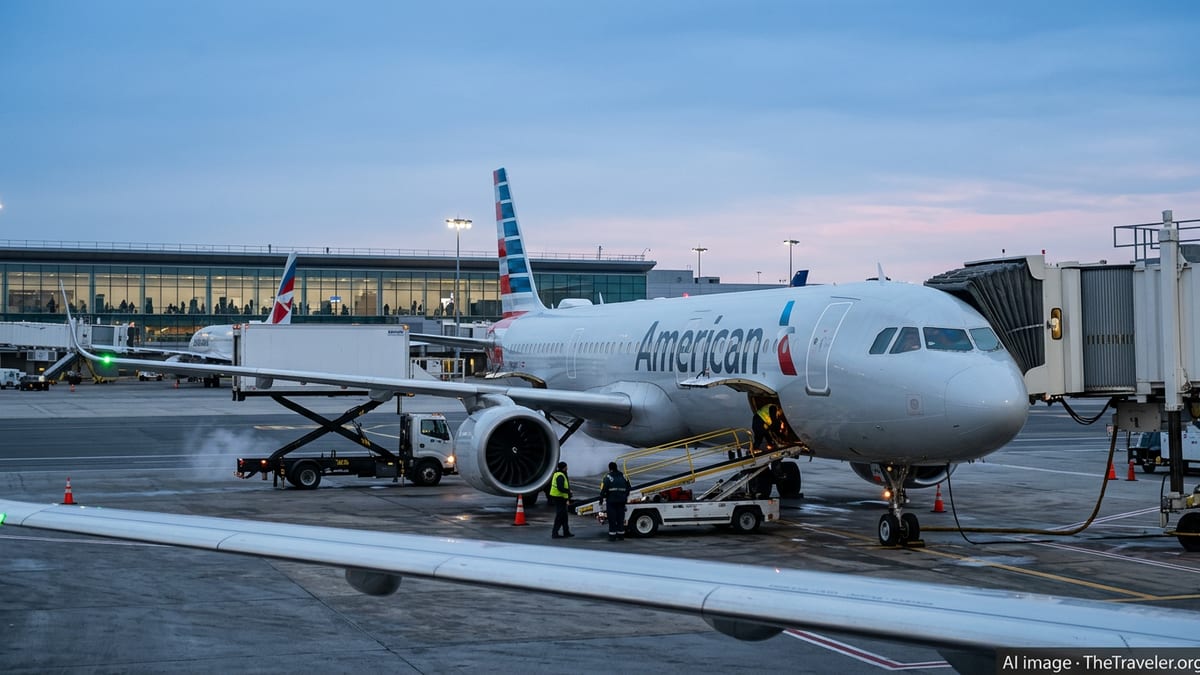
The United States is heading into what analysts describe as a defining summer for global aviation in 2026, with American Airlines emerging as a central force behind an expected surge in international and domestic travel through record schedules, a rapidly modernizing fleet and an expanded premium product aimed at capturing high-spend leisure and business demand.
Get the latest news straight to your inbox!
Record Capacity Puts American at the Front of the Pack
Schedule data for summer 2026 indicates that American Airlines is set to operate the largest seat capacity of any United States carrier, reinforcing the country’s position as the world’s most influential aviation market. Industry analyses of forward schedules show American leading the US field by a substantial margin in total seats offered, underscoring its strategy to deploy more flights and larger aircraft across key hubs as demand rebounds and then surpasses pre‑pandemic levels.
Across the network, American is extending the step change it made for summer 2025, when publicly available figures showed nearly 5 percent more flights than the previous year and peak days approaching 6,800 departures. Early schedule filings and capacity forecasts for 2026 build on that base, pointing to another year of growth shaped by international events, shifting leisure patterns and a continued recovery in corporate travel.
Analysts note that this expansion is not limited to a single region. American’s hubs in Dallas Fort Worth, Charlotte, Miami, Chicago and Phoenix are all positioned to carry higher traffic volumes, with particular emphasis on long-haul connectivity and high-frequency domestic trunk routes. This scale, combined with the breadth of the airline’s network, places the United States at the center of a busy northern summer for global air travel in 2026.
Industry observers view the strategy as a signal that large US carriers intend to retain and expand their share of both transcontinental and intercontinental flows. As other regions work to rebuild capacity, the United States, anchored by American’s growth, appears on track to remain a key driver of global passenger volumes during the peak months.
World Cup 2026 Fuels a Historic Domestic Surge
The 2026 FIFA World Cup, jointly hosted by the United States, Canada and Mexico, is emerging as one of the strongest catalysts for American’s summer expansion. According to specialized aviation and sports travel coverage, the airline is layering additional capacity onto domestic corridors that link World Cup host cities, with plans for tens of thousands of extra seats and new or boosted nonstop services between match locations.
Reports indicate that Texas, in particular, will become a focal point. Dallas Fort Worth is expected to serve as a primary gateway for international fans and a redistribution point for domestic traffic moving between tournament cities. American’s already large presence there gives it an advantage as it times extra flights to match tournament schedules and anticipated spikes in demand around key matchdays.
Beyond Texas, additional flying is being directed toward other US host markets, including major metropolitan areas in the Northeast and along the West Coast. Capacity planners suggest that American is using a mix of mainline jets and larger regional aircraft to quickly scale up frequency, while also optimizing departure times to appeal to fans connecting from South America, Europe and Asia.
Travel researchers expect this World Cup‑driven network to have spillover benefits for tourism and business travel, as visitors tag on side trips before or after matches. With American operating one of the densest domestic networks in the country, the airline is positioned to capture a significant share of that discretionary travel, further amplifying the United States’ role in global aviation flows during summer 2026.
Fleet Modernization Delivers Reach and Premium Comfort
American’s preparations for summer 2026 are closely tied to an accelerated fleet renewal program. Company disclosures and manufacturer statements show that the airline has hundreds of aircraft on firm order across Airbus, Boeing and Embraer types, with dozens scheduled to arrive in 2025 and 2026 alone. These deliveries, combined with cabin refurbishments, are intended to increase both total capacity and the share of higher-yield premium seats.
Recent orders have expanded American’s commitments to the Airbus A321neo family, Boeing 737 MAX and additional Embraer regional jets, while widebody growth centers on the Boeing 787‑9. Regulatory and financial filings describe a fleet plan in which new‑generation aircraft and retrofitted cabins will boost premium seating by more than 20 percent by 2026 compared with earlier in the decade, giving the airline more lie‑flat and extra‑legroom options on key routes.
A particularly important aircraft for the 2026 summer season is the Airbus A321XLR, a long‑range narrowbody designed to open thinner transatlantic and long‑haul routes from American’s key coastal and heartland hubs. Industry reports note that American has adjusted its original order book to 40 units, with deliveries ramping up through 2026. Alongside additional Boeing 787‑9s, these jets are expected to underpin new and upgraded flying to Europe and select deep South America markets, as well as premium transcontinental services within the United States.
These fleet moves are also framed as a sustainability and efficiency play. American’s corporate reporting highlights a steady rise in the share of flying operated by new‑generation aircraft, with lower fuel burn per seat and reduced emissions. Analysts suggest that this combination of improved economics and enhanced passenger experience is central to the airline’s strategy for profitably handling larger volumes of summer traffic.
Premium Cabins, Tech Upgrades and the Battle for High‑Value Travelers
Alongside raw capacity growth, American is leaning heavily into product upgrades that it expects will be fully visible to travelers by the 2026 peak season. Publicly available service announcements describe a broad roll‑out of the Flagship Suite concept on Boeing 787‑9s and Airbus A321XLRs, as well as plans to retrofit Boeing 777 aircraft with similar long‑haul business cabins. These suites bring sliding doors, increased personal space and new storage options to a wider cross‑section of the network.
The airline is also enhancing its traditional Flagship Business and Premium Economy cabins, adding sleep‑focused amenities such as upgraded bedding and, on some routes, pajamas and mattress pads. Reports on upcoming schedule seasons indicate that these improvements will reach flights spanning East Asia, the Middle East, India, Australia and New Zealand, aligning the US‑based carrier more closely with leading international competitors on long‑haul comfort.
Domestically, American is working toward making a unified inflight experience more common. Regulatory filings describe a goal of having next‑generation interiors, including seatback entertainment and improved power options, on nearly every mainline and dual‑class regional flight by spring 2026. Travel analysts view this as a response to intense competition on US trunk routes, where rival carriers are also investing in cabins to court high‑value business travelers and premium leisure passengers.
Technology on the ground is another part of the equation. Operational updates highlight expanded use of rebooking automation, tighter coordination between gate and network control teams and tools designed to keep connecting itineraries intact during disruption. These systems, tested during the summer 2025 season, are expected to play a larger role in 2026 as American attempts to manage record passenger volumes without a corresponding rise in delays and missed connections.
Competitive Landscape and Risks in a Supercharged Summer
While American’s planned scale for summer 2026 puts the United States at the forefront of global air travel, industry watchers caution that the environment remains highly competitive and operationally complex. Other major US airlines are also increasing capacity and introducing new premium products, and foreign carriers continue to add services into American’s hub cities, especially for World Cup and peak leisure dates.
Market researchers note that US airfare trends in early 2026 show signs of softening on some domestic corridors, as carriers flex prices to stimulate demand and maintain load factors. On routes where American holds substantial capacity, such as major East Coast to Florida and transcontinental sectors, analysts are watching how the airline balances aggressive scheduling with the need to protect yields during a period of heavy promotional activity across the industry.
Operational performance is another key variable. Public data from summer 2025 showed improvements in baggage handling and on‑time performance for American, aided by staffing, technology and schedule adjustments. Replicating or surpassing those metrics with even more flights and passengers in 2026 will be a significant test of the airline’s resilience, particularly if weather disruptions or air traffic control constraints are more severe than anticipated.
Even with these uncertainties, current schedules and fleet plans suggest that American Airlines is positioned to play an outsized role in shaping the global travel narrative in summer 2026. Its record seat offering, ongoing fleet modernization and heavy investment in premium and technology initiatives combine to place the carrier, and by extension the United States, at the center of an unprecedented summer surge in international and domestic air travel.