


More news on this day
American Airlines is moving to curb one of air travel’s most aggravating rituals: the “rolling delay,” when a departure time slips in small increments and passengers are left guessing. Recent coverage indicates the carrier is testing more realistic delay forecasts at Charlotte Douglas International Airport while continuing a broader push to explain disruption causes more clearly across its digital channels.
Get the latest news straight to your inbox!
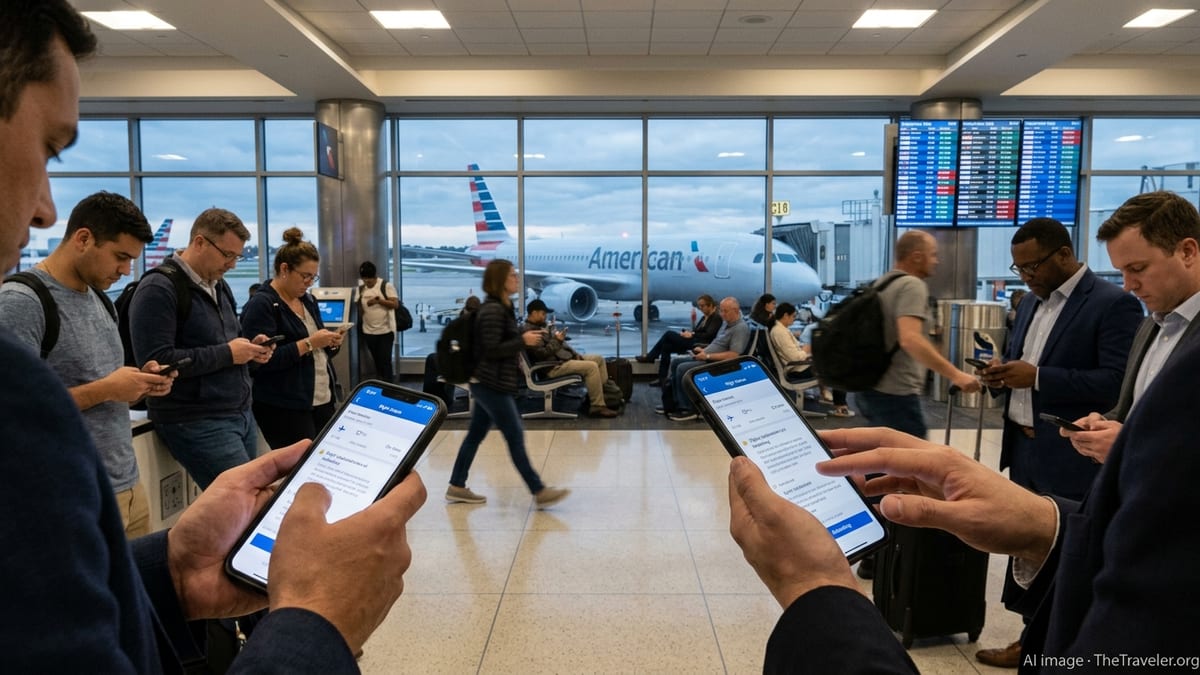
What “rolling delays” are, and why travelers hate them
Rolling delays happen when a flight’s departure time is repeatedly pushed back in short steps, often because the inbound aircraft is late, a crew is out of position, or maintenance work is still underway. Rather than seeing a single, longer delay estimate early, passengers may watch their departure time change every 15 to 30 minutes, complicating decisions like leaving the gate area, buying food, or rebooking.
The practice creates a particular kind of uncertainty. Even when a delay is unavoidable, many travelers say the most frustrating part is not knowing what is actually happening and whether the flight is likely to depart at all. That uncertainty can ripple into missed connections, hotel plans, rental-car pickups, and cruise or tour departures.
Airlines have historically been cautious with early estimates because operations can shift quickly. But when the messaging stays overly optimistic, passengers can feel misled, especially if the ultimate outcome is a long delay or a cancellation after hours of incremental schedule slips.
A Charlotte pilot aims to provide realistic delay estimates earlier
Published coverage this week points to American testing a new approach at its Charlotte hub, one of the airline’s busiest connecting airports. The effort is framed around giving passengers a more realistic estimate from the outset, rather than issuing repeated minor extensions that keep hope alive without improving predictability.
Reports describing the pilot suggest the concept ties the expected departure to more grounded inputs, such as the estimated arrival time of the inbound aircraft, rather than maintaining a near-term departure target that may not be operationally feasible. Charlotte is a natural test bed because disruptions there can cascade quickly across banks of tightly timed connections.
Even with more honest estimates, some rolling delays may still occur. Severe weather, air traffic control constraints, and complex mechanical work can make it difficult to forecast a dependable departure time. The practical goal is to reduce avoidable schedule whiplash and give customers enough certainty to make decisions sooner.
American’s app and website now show clearer delay and cancellation reasons
The Charlotte test comes alongside a wider digital rollout that American has been building for months. On March 16, 2026, American announced a new digital experience that adds easy-to-understand reasons for delays and cancellations directly in the American Airlines mobile app and on aa.com, with the feature rolling out over the course of that month.
The airline has positioned the change as an effort to replace generic status messages with plain-language context, so travelers can understand whether a delay is tied to factors such as weather, air traffic control, crew availability, or mechanical issues. That context matters because it helps passengers decide whether to wait, switch flights, or pursue refunds or rebooking options.
American has also described an expansion of disruption communications beyond the app itself. The same March 2026 announcement outlined plans for tailored push notifications, emails, and text messages, designed to provide more timely and relevant updates as trips are disrupted.
How this fits into U.S. passenger-notification expectations
American’s shift also lands during a period of heightened attention on airline communications and consumer protections. U.S. Department of Transportation materials outline expectations and rules around passenger protections, including timely notification in cases of cancellations and significant delays.
Separately, DOT has emphasized the importance of clear and proactive communication about refunds in the context of major disruptions, and federal rules have continued to evolve around notification obligations. For travelers, that means clearer disruption reasons can do more than satisfy curiosity; they can support faster decision-making when a passenger needs to determine whether to rebook, wait, or request a refund.
For airlines, better communication can reduce pressure on airport customer-service lines during irregular operations. When passengers can see the cause of a disruption and self-serve rebooking options on their phones, fewer people need to crowd podiums and service desks for basic answers.
What travelers should do to benefit from the new updates
To get the most from American’s push toward clearer delay messaging, travelers will want to ensure their contact preferences are set up before travel day. American’s travel tools encourage customers to use the app and configure notifications so they receive day-of-travel alerts such as delays, cancellations, and gate changes.
When a delay or cancellation hits, American’s customer-service pages direct travelers to manage changes in the app or on aa.com, including viewing trip changes and selecting alternatives. That approach is increasingly central to how the airline expects customers to handle disruptions, especially during systemwide weather events or hub congestion.
For passengers connecting through Charlotte or other large hubs, the practical value of honest, earlier delay estimates can be significant. A realistic forecast can help travelers decide sooner whether to move to an alternate routing, switch to a later flight, or make plans for meals and lodging, reducing the stress that rolling delays tend to amplify.