


More news on this day
As Japan heads into another stretch of volatile weather, disaster risk specialists and public safety messaging are stressing a simple rule for residents and visitors alike: avoid unnecessary travel during heavy rain, when flooding, landslides, and sudden transport shutdowns can turn routine trips into emergencies.
Get the latest news straight to your inbox!
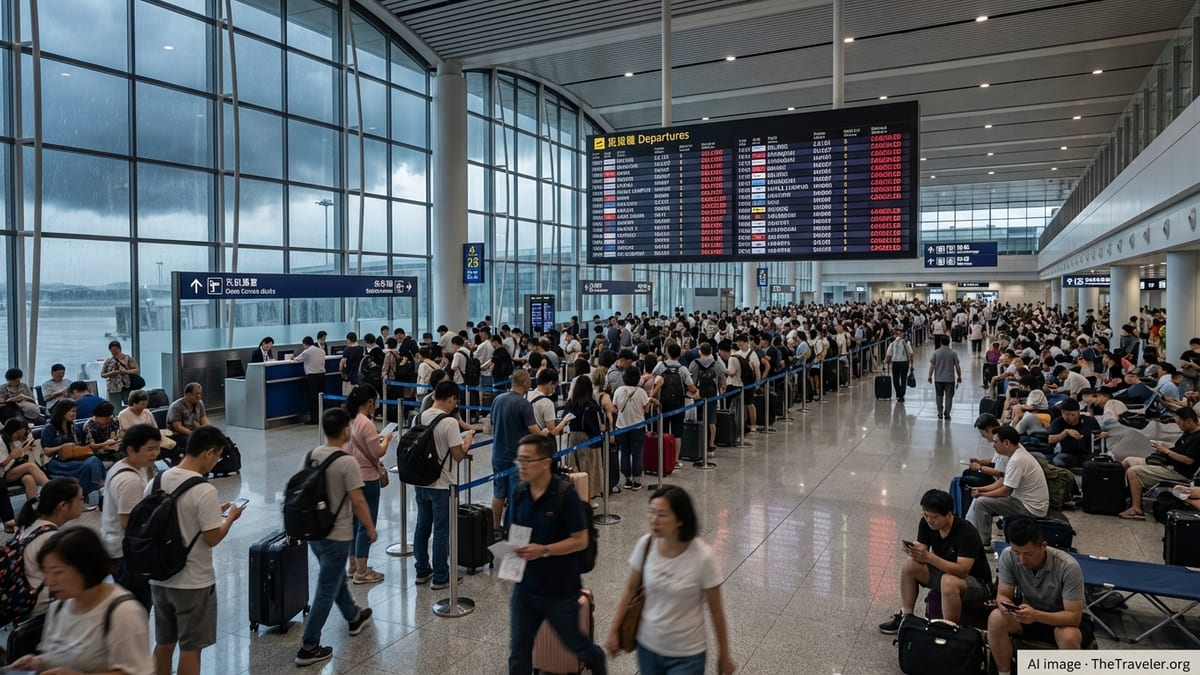
Why “don’t travel unnecessarily” is becoming a core safety message
Recent coverage in Japan has highlighted a recurring pattern during intense downpours: even after the highest-level alerts are issued, people may still move around for errands, commutes, or pickups, adding exposure at the very moment conditions are least predictable. Published reporting tied the renewed messaging to analysis of smartphone location data following the Aug. 13 storm in Chiba, indicating continued movement even after an Emergency Warning was issued.
The travel angle matters because Japan’s heaviest rain events often bring hazards that escalate quickly. Flash flooding can overwhelm drainage in low-lying neighborhoods, water can surge into underpasses and underground spaces, and slopes saturated by prolonged rain can fail with little notice. In such scenarios, the safest choice is frequently to shelter in a secure location rather than attempt to “beat the weather” across town.
The guidance also reflects the reality that emergency services and road-management capacity can be constrained during peak rainfall. When many people are on the move, it increases the risk of stranded vehicles and secondary incidents, complicating response operations.
How Japan’s warning system is meant to guide decisions
Japan’s Meteorological Agency issues layered products that range from advisories to warnings and the highest-tier emergency warnings, with alerting designed to support earlier action before conditions reach a crisis point. The agency’s public materials on heavy-rain disaster preparedness emphasize checking official disaster weather information and using warning levels to adjust plans.
A recurring caution in Japanese meteorological messaging is not to rely on any single indicator. For example, the agency has discussed how information related to linear rainbands can be misunderstood as an “all clear” when it is not issued, even though dangerous rain may still develop. The practical takeaway for travelers is to follow the broader set of heavy-rain and flood alerts and risk maps, rather than waiting for one specific trigger.
For international visitors, Japan National Tourism Organization safety guidance explains what to do when weather warnings are issued, including the significance of higher warning levels and the need to prioritize safety over schedules. Travelers who are unfamiliar with Japan’s terminology may benefit from checking the alert level and the type of risk being flagged, such as flooding versus landslides, since safe behavior can differ by location.
What heavy rain means for trains, flights, and road travel
Japan’s transport network is robust, but heavy rain is one of the most common causes of sudden disruption. Operators may slow, reduce, or suspend service to prevent accidents in high winds, inundation zones, or areas at landslide risk, and shutdowns can occur with limited notice during peak conditions.
Local public messaging aimed at residents and visitors has recently paired severe-weather forecasts with a direct request to refrain from unnecessary movement and to check service status before heading out. One example from Chiba’s international exchange association noted the risk of train cancellations and delays during heavy rain forecasts and urged early precautions, reduced travel, and monitoring of operations.
For air travelers, heavy rain and typhoon impacts can create compounding problems: airport access rail lines may be disrupted, highways may flood, and onward connections may be missed even if flights continue operating. This is why the “stay put” message is often paired with advice to adjust itineraries early, rather than trying to reposition at the last minute when conditions deteriorate.
Typhoon season adds urgency for September travel planning
Late summer through early autumn is a peak period for heavy rain and typhoons, and Japan’s forecast messaging in mid-September 2026 has included scenarios where storms could bring heavy rain, strong winds, and high waves across wide areas. Separate published coverage in Japan has described expected typhoon approaches toward the Kanto region and emphasized flexible planning during holiday travel periods.
In early September 2026, major downpours in central Japan prompted top-level emergency warnings for heavy rain and flooding in parts of Aichi and Gifu, according to published reporting. Such episodes illustrate how quickly conditions can shift from “rainy day inconvenience” to life-threatening flooding risk, especially in urban areas with underground passages and road underpasses.
For travelers, the key lesson is to build slack into schedules during typhoon-influenced periods. A plan that relies on a tight connection, a long taxi ride across low-lying areas, or a late-night train after a day of worsening forecasts is more likely to break when operators make safety-driven service decisions.
Practical steps travelers can take before and during heavy rain
In heavy-rain conditions, the safest decision is often not to travel, but travelers still need a concrete checklist. Publicly available Japanese guidance emphasizes tracking the latest alerts and using official hazard information to understand whether flooding, landslides, or storm surge is the primary risk in a given area.
If you are already in Japan and warnings rise, consider shifting from “moving to the next destination” to “staying in a safe place.” That can mean remaining at your lodging, extending a stay, or choosing a nearby sturdy building on higher ground rather than attempting a cross-city transfer. Where rain is intense, underground spaces can become dangerous quickly, and low-lying routes can be cut off.
For those who must travel, the most useful immediate actions are operational rather than speculative: check the current transport status before departing, recheck it just before boarding, and assume that service may change mid-journey. If you are driving, avoid routes near rivers, steep slopes, and underpasses that can flood, and be prepared to stop early rather than pushing through.