


More news on this day
Americans planning overseas trips are being urged to take a harder look at their itineraries as a series of security alerts, updated travel advisories, and fresh intelligence assessments point to a more volatile global terror environment in 2026.
Get the latest news straight to your inbox!
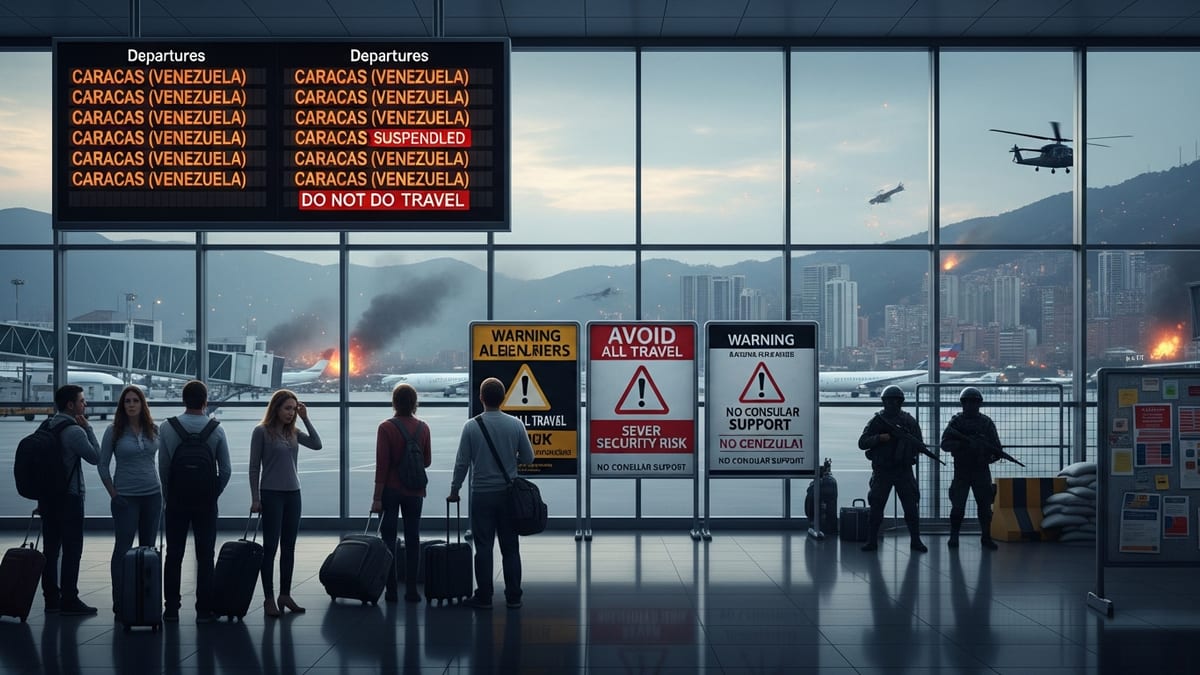
Worldwide Alerts Put American Travelers on Notice
A rare sequence of recent security messages has elevated the visibility of terror risks for U.S. citizens abroad. In July 2026, a Worldwide Caution security alert advised Americans everywhere, and particularly those traveling in the Middle East, to exercise increased vigilance in public places and around large gatherings. The advisory underlined concerns about the potential for attacks targeting or affecting U.S. citizens in popular destinations.
Publicly available information describes the Worldwide Caution as a broad reminder that threats can emerge with little warning, even in locations that many travelers perceive as low risk. Rather than pointing to a single imminent plot, the alert reflects a convergence of regional conflicts, extremist messaging, and opportunistic actors who may seek to strike symbolic or crowded sites where foreign visitors are present.
The current messaging builds on a pattern of global cautions that have been reissued at moments of rising tension, but the 2026 notice is drawing particular attention among travel planners and risk analysts because it coincides with an uptick in specific country advisories citing terrorism.
Travel Advisory Map Shows Terrorism Risks Expanding
The U.S. Department of State’s travel advisory system offers a granular look at how terrorism concerns are shaping official risk assessments country by country. The four-tier scale ranges from Level 1, advising travelers to take normal precautions, to Level 4, recommending that U.S. citizens avoid travel. Each advisory lists key drivers such as crime, civil unrest, kidnapping, or terrorism.
In mid-2026, updated advisories for several close U.S. partners in Europe, including Belgium and the Netherlands, specifically highlight terrorism as a factor requiring “increased caution.” Published information notes that potential attackers may target transportation hubs, public venues, tourist sites, and large events, sometimes with little or no warning. Similar terrorism-related risk markers appear in advisories for parts of the Middle East, North Africa, and South Asia, where extremist groups maintain local footholds.
Separate compilations of U.S. advisories show that more than 20 countries are currently categorized at Level 3 or Level 4, often citing terrorism alongside political instability or armed conflict. Analysts say this evolving map does not signal that every destination is unsafe, but it does demonstrate that terrorism is now a consistent component of travel-risk calculations across multiple regions, rather than a concern limited to a few high-profile hotspots.
Intelligence Assessments Point to Diffuse and Adaptive Threats
Recent threat assessments from the U.S. intelligence community and independent research institutes portray a terror landscape that is less centralized than in the era of large-scale operations conducted by core groups such as al-Qaeda and the so-called Islamic State. According to these analyses, the most significant danger to U.S. interests overseas now comes from a mix of affiliated franchises, local extremist organizations, and self-radicalized individuals operating in loosely connected networks.
One 2026 global terrorism threat review notes that while sustained counterterrorism operations have weakened the capacity of major organizations to launch complex mass-casualty attacks, they have not removed the underlying drivers of radicalization or the appeal of smaller, opportunistic strikes against soft targets. U.S. citizens and facilities abroad, including tourist areas, hotels, and transportation nodes, remain attractive symbolic targets in some regions.
A separate unclassified annual threat assessment for 2026 emphasizes that geopolitical flashpoints, proxy conflicts, and the widespread use of encrypted digital platforms are enabling violent extremists to circulate propaganda, share tactics, and mobilize supporters across borders. This combination, analysts suggest, is contributing to an elevated but uneven risk profile in which the likelihood of an attack may be low in absolute terms for any given traveler, yet the consequences of being caught in an incident can be severe.
What Rethinking Trips Means for U.S. Travelers
For many Americans, current warnings do not necessarily mean canceling international travel altogether, but they do call for a more deliberate approach to where, when, and how to go. Travel-risk specialists advise that rethinking a trip begins with reviewing the latest U.S. government advisory for each country on an itinerary, including any terrorism-related notes in the safety and security sections, and comparing that guidance with information from local authorities and reputable international organizations.
Published guidance on terrorism and international travel highlights several practical steps for individuals who decide to proceed with trips despite elevated risk indicators. Recommendations include avoiding unnecessary time in the public areas of airports and transportation hubs, identifying exit routes in hotels and large venues, and steering clear of demonstrations or crowded events that could attract opportunistic attacks. Travelers are also urged to consider contingency plans, such as knowing how to contact U.S. embassies or consulates and how to communicate with family if local networks are disrupted.
Travel industry observers note that some Americans are already modifying plans by choosing destinations with lower advisory levels, shortening stays in higher-risk areas, or routing itineraries through alternative hubs. Others are investing in specialized travel insurance that explicitly addresses terrorism-related disruptions or evacuations. While these measures cannot eliminate risk, they reflect a growing recognition that security conditions are now a central factor in leisure and business travel planning.
Tourism Sector Adapts to a New Security Reality
The escalation in terror-related messaging is unfolding against a backdrop of recovering global tourism. Industry data and policy research released in 2025 and 2026 show that international travel has been rebounding from the pandemic downturn, yet remains vulnerable to security shocks and perceptions of instability. Destination countries have become increasingly sensitive to how foreign advisories, including those issued by the United States, can influence visitor numbers and economic performance.
Many tourism boards and airport operators are responding by publicizing visible security measures, enhancing surveillance in crowded areas, and refining emergency communication protocols tailored to foreign visitors. These steps are intended both to deter potential attackers and to reassure travelers who may be wary of visiting cities that have previously experienced incidents or currently carry terrorism-related warnings.
Policy analysts caution that the interplay between security concerns and tourism is likely to intensify as conflicts, cyber operations, and disinformation campaigns overlap with physical threats. For American travelers, this means that advisories and alerts may shift more frequently, sometimes on short notice. The emerging consensus among risk experts is that staying informed and flexible, rather than avoiding international travel altogether, will be the defining strategy for navigating the ongoing terror threat environment in the years ahead.
U.S. Department of State – Travel Advisories
U.S. Department of State – Worldwide Caution
CSIS – Global Terrorism Threat Assessment 2026
Office of the Director of National Intelligence – Press Releases