


More news on this day
An Amtrak train traveling through northeast Florida was halted for nearly a full day this week as a fast-moving wildfire forced rail traffic to a standstill, leaving passengers confined to their cars with dwindling supplies, overflowing bathrooms and growing anger over how the disruption was handled.
Get the latest news straight to your inbox!
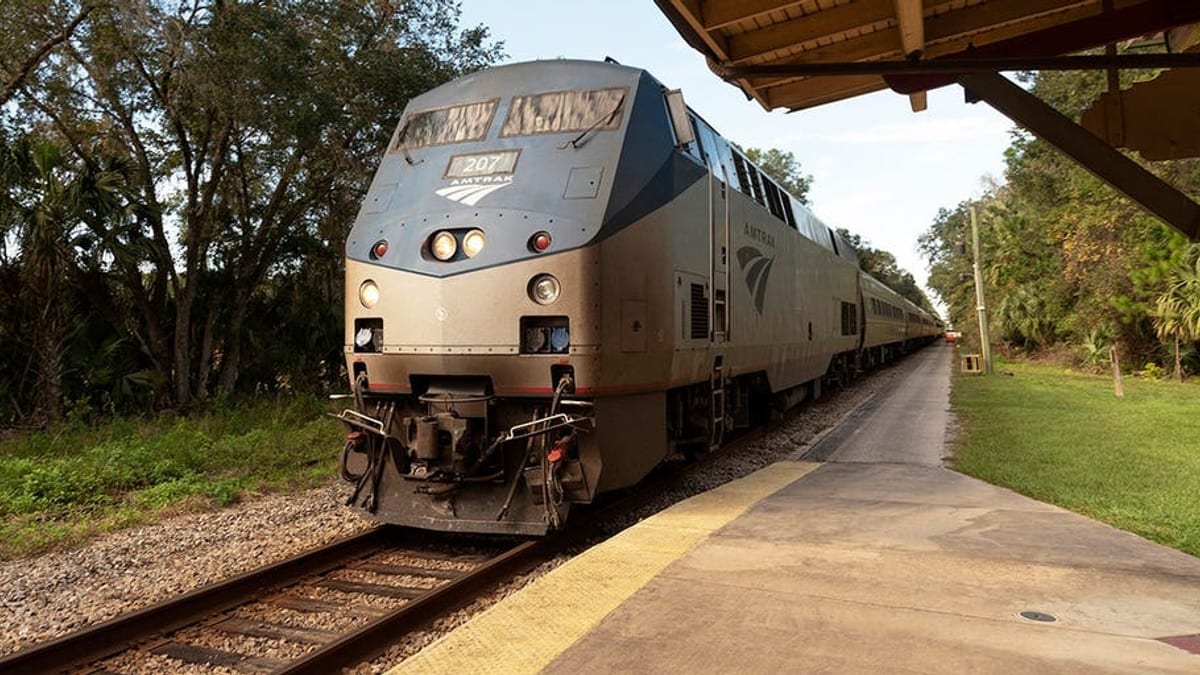
Wildfire Halts Silver Meteor in Rural Florida
Publicly available information indicates that the disruption affected Amtrak’s Silver Meteor, Train 98, as it traveled north through central and northeast Florida on Sunday, April 19, into Monday, April 20. The train, which typically runs overnight between Miami and New York, was brought to a stop near DeLand and later in the Green Cove Springs area after a wildfire erupted along the route.
Coverage from regional broadcasters and local outlets describes a fast-spreading brush fire burning close to the tracks and adjacent highway. The Florida Forest Service reported that the blaze grew to roughly 2,000 acres with minimal containment at one point, and smoke combined with active firefighting operations led to closures along nearby Highway 17 and restrictions on rail movements through the area.
Rail operations in the corridor are controlled by a freight railroad that hosts Amtrak’s passenger services, and network maps show few alternate routes capable of accommodating a long-distance train on short notice. With the wildfire threatening visibility and creating unpredictable wind shifts, dispatchers kept the Silver Meteor stationary for extended periods while fire crews worked to contain the flames and assess whether it was safe to move.
Multiple Amtrak routes in Florida were reportedly canceled, rerouted or delayed as a result of the fire, but the Silver Meteor’s experience stood out because riders remained on board for more than 20 hours beyond their scheduled travel time. Some passenger accounts characterized the ordeal as approaching a full day of disrupted travel from the initial stop to eventual relief.
Onboard Conditions Deteriorate as Hours Pass
As the train remained stranded, social media posts and broadcast interviews compiled by news organizations described increasingly difficult conditions inside several cars. Travelers recounted that onboard water systems eventually stopped working, eliminating access to running water and making it impossible to flush toilets normally.
Without functioning plumbing, toilets in some coaches reportedly began to overflow, creating strong odors and forcing passengers to search for any remaining usable restrooms elsewhere in the train. People writing online and speaking to local television affiliates said they saw trash piling up and sinks running dry as the delay stretched from hours into nearly a full day.
Standard Amtrak long-distance trains carry food, bottled drinks and linens for overnight trips, but they are typically provisioned around scheduled journey times plus a modest buffer. Passenger accounts indicate that the wildfire delay exceeded those assumptions. Some riders reported that snack and meal selections became limited or sold out, particularly in coach, and that staff tried to ration remaining items while awaiting clearance to move.
The combination of overflowing bathrooms, limited water and uncertain information about when the train would resume its journey led several riders to describe the experience as unsanitary and deeply uncomfortable. Online comments compared the Florida incident with previous long Amtrak delays elsewhere in the country where restroom failures and supply shortages became a central point of frustration.
Amtrak Cites Safety as Evacuation Debate Grows
Published coverage of the episode notes that Amtrak has acknowledged the extended delay and linked the stoppage to safety restrictions in an active wildfire zone. Statements summarized in national and local reports indicate that train movements remained subject to the directions of the host freight railroad and public safety agencies, which were coordinating both track conditions and roadside fire response.
Some passengers questioned online why riders were kept aboard for so long instead of being transferred to buses or escorted off the train to nearby roads. However, rail operations experts and veteran riders commenting on the incident pointed out that evacuating passengers from a stationary train in a remote, smoke-affected area can carry its own risks, particularly when other trains or emergency vehicles may still be moving in the vicinity.
Publicly available discussions about railroad protocol emphasize that any decision to move a stopped train, reverse direction, or open doors outside a station typically requires explicit approval from the host railroad’s dispatchers. Personnel who act without such permission can face serious consequences, and railroads prioritize keeping passengers away from active tracks and firefighting activity, even in the face of mounting discomfort on board.
The result, in this case, was a stalemate that left riders feeling “trapped” as they waited for confirmation that tracks ahead were clear of fire and debris. While buses or alternative rail paths are sometimes arranged during weather or infrastructure disruptions, the speed and location of the Florida wildfire constrained the options available within the first many hours of the incident.
Highlighting Climate Risks and Aging Rail Infrastructure
The Florida wildfire delay is part of a broader pattern of extreme-weather disruptions affecting passenger rail across the United States. Previous seasons have brought Amtrak stoppages due to winter storms in the Pacific Northwest, flooding in the Northeast and heat-related speed restrictions in multiple regions, reflecting what transportation analysts describe as growing climate risks to rail corridors.
Industry reporting and policy research over recent years have drawn attention to the limited redundancy of many U.S. passenger routes. Outside the busiest urban corridors, Amtrak trains often share single mainline tracks with freight railroads and lack convenient alternative pathways when incidents occur. A wildfire, washout or bridge problem can therefore shut down an entire segment for hours or days, with few ways to reroute a long-distance train that is already en route.
At the same time, Amtrak’s long-distance fleet is among the oldest in the system, and mechanical vulnerabilities on aging cars can exacerbate the impact of extended delays. Separate incidents in other states have shown how quickly onboard waste tanks can reach capacity and how fragile water and air conditioning systems can be when trains sit idle for many hours in challenging conditions.
Transportation advocates argue that investments in newer equipment, stronger contingency planning and closer coordination with host railroads are needed to make intercity rail more resilient as climate-driven events such as wildfires become more frequent. The Florida case has already been cited in commentary as another example of how quickly a routine overnight trip can turn into a high-profile test of passenger patience when infrastructure, weather and operational constraints collide.
Passenger Backlash and Questions Over Preparedness
As images and videos from the stranded train spread across social media and were rebroadcast by national outlets, frustration among riders appeared to grow. Some travelers compared the experience to widely covered past delays on Amtrak’s Auto Train and other long-distance services, where passengers also reported overflowing toilets, running-low food supplies and confusion over what was happening.
Online discussions following the Florida incident repeatedly returned to questions of contingency planning. Commenters asked whether additional bottled water, backup generators, portable sanitation options or pre-arranged bus contracts could have reduced the discomfort of a delay that approached 24 hours. Others suggested that more frequent communication from crews about what was known and unknown might have helped manage expectations, even if it did not change the underlying safety restrictions.
Rail passenger organizations and some transportation commentators have used the wildfire incident to call for clearer standards governing how long riders can be kept on board during major disruptions before alternative arrangements must be made. They also point to the reputational harm that high-profile episodes of overcrowded or unsanitary trains can inflict on efforts to position intercity rail as a comfortable, climate-friendly alternative to driving or flying.
For the passengers who spent nearly a day confined to the Silver Meteor as wildfire smoke drifted outside and bathrooms failed inside, the journey through rural Florida is likely to shape their perception of Amtrak travel for years to come. Their accounts add another chapter to an emerging narrative about the challenges of operating a national passenger rail network in an era of escalating climate extremes and heavily used, capacity-limited freight corridors.