


More news on this day
As visitor numbers to Athens surge and cultural tourism in Greece reaches new highs, the Ancient Agora of Athens is emerging as one of the city’s most compelling draws, inviting travelers to walk through the political heart of classical democracy while experiencing a new generation of digital and educational initiatives onsite.
Get the latest news straight to your inbox!
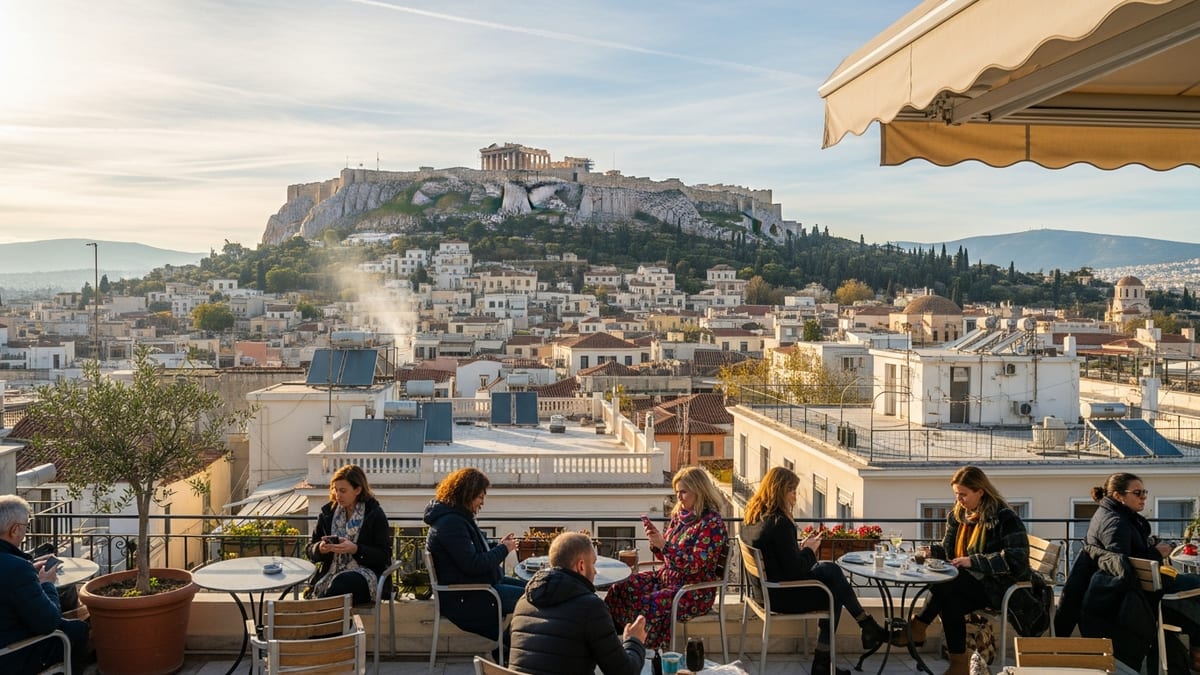
Athens Tourism Boom Lifts the Ancient Agora
Athens is in the midst of a powerful tourism upswing, with published data indicating record international arrivals in 2023 and further growth projected for 2024. Industry and government statistics show that cultural heritage remains at the center of this surge, with archaeological sites and museums collectively attracting more than 20 million visitors across Greece in 2024, reinforcing the capital’s role as a gateway to the country’s past and present.
Within this broader rise, the archaeological zone anchored by the Acropolis has become a focal point, drawing millions and prompting new crowd-management measures such as daily visitor caps at the citadel. As travelers look for ways to deepen their experience beyond the busiest monuments, the Ancient Agora directly below the Acropolis is increasingly positioned as the place where the story of Athenian democracy and civic life can be explored at a more human scale.
Travel guidance and ticketing practices are helping redirect flows. Combined tickets that include both the Acropolis and the Ancient Agora encourage visitors to distribute their time between hilltop temples and the former civic square, while travel forums and guide publishers increasingly highlight the Agora as an essential stop rather than a secondary add-on. The result is a steady rise in visibility for a site once overshadowed by its more famous neighbor.
Reports from local tourism bodies also underscore a shift toward experiences that link monuments with wider urban life. In this context, the Agora’s location between the historic Plaka district and the lively neighborhoods of Monastiraki and Thiseio allows visitors to move fluidly from ruins and museum galleries to street markets, cafés, and contemporary culture, supporting both heritage discovery and city-center businesses.
Walking Through the Foundations of Ancient Democracy
The Ancient Agora of Athens served as the city’s main civic and commercial center from at least the 6th century BC, evolving into the stage on which many of the institutions associated with classical democracy were formed. Archaeological research and historical syntheses point to the square and its surrounding buildings as the place where assemblies met, magistrates worked, and everyday Athenians debated laws, religion, and trade.
Today, visitors can follow paths through the low foundations of public buildings that once housed the council chamber, law courts, and administrative offices. Interpretive signage and museum displays detail how these spaces functioned, connecting scattered stones with stories of citizen juries, political trials, and the development of civic rights and responsibilities that would echo through later democratic movements.
Above the ruins, the best-preserved Doric temple in Athens, dedicated to Hephaestus and Athena, offers one of the city’s most striking ancient silhouettes. The temple’s survival gives travelers a rare sense of what classical architecture looked like before centuries of damage and spoliation, and it provides panoramic views across both the Agora and the Acropolis, underlining how religious, political, and social life were layered in the ancient cityscape.
For many visitors, the appeal lies in the Agora’s atmosphere. Compared with the often-crowded stairways of the Acropolis, the open lawns, shaded trees, and long sightlines across ruins create a slower, more reflective environment. This setting supports a style of cultural tourism that prioritizes wandering, contemplation, and self-guided discovery over quick photo stops.
From Excavation Ground to Showcase of Cultural Heritage
The transformation of the Ancient Agora from a densely built modern neighborhood into an open archaeological park is itself a story that fascinates visitors. Excavations began in the 19th century and accelerated in the 20th, when entire blocks were cleared to uncover the remains of the ancient civic center. Publicly accessible histories describe how decades of systematic digging, conservation, and reconstruction reshaped this section of central Athens into the landscape seen today.
Central to that transformation is the reconstructed Stoa of Attalos, rebuilt in the mid-20th century to house the Museum of the Ancient Agora. The long colonnaded building, originally a Hellenistic shopping and meeting arcade, now displays sculpture, inscriptions, coins, and everyday objects that illuminate public and private life in classical Athens. For travelers, the museum provides both respite from the summer heat and an accessible narrative that ties together the ruins outside.
Information released by Greece’s Ministry of Culture points to ongoing efforts to refine the presentation of the Agora and nearby Areopagus Hill, with projects aimed at clarifying ancient topography and improving the visibility of key monuments. These works, which range from landscape restoration to new signage, are intended to help visitors better understand how streets, temples, and civic buildings once interlocked in a coherent urban whole.
At the same time, Athens is seeking to balance preservation with accessibility. Conservation strategies emphasize careful pathways and controlled access around fragile structures, while still allowing ample vantage points for photography and guided storytelling. This approach aligns with broader national policies that present cultural heritage as both a tourism asset and a public good that must be protected for future generations.
Digital and Immersive Experiences Enrich the Visit
As traveler expectations evolve, the Ancient Agora is benefiting from a wave of digital and interpretive projects that complement walking among the ruins. Virtual reality initiatives supported by Greek cultural institutions have produced detailed reconstructions of the Agora’s buildings and streets, allowing audiences to visualize colonnades, statues, and painted façades as they might have appeared in antiquity.
One virtual-reality digital collection dedicated to the site offers immersive educational scenarios that re-create the structured environment and topography of the Agora, presenting scenes of political debate and everyday commerce in three dimensions. Public descriptions of the project note that it serves both general visitors and academic communities, reflecting a broader trend toward open-access cultural resources designed to bridge scholarship and tourism.
Interactive tours at cultural venues in Athens further extend the Agora experience. Dome-theater presentations and digital mapping projects guide participants through the evolution of the ancient marketplace and its surroundings, linking what can be seen on the ground today with layers of archaeological and historical data. For travelers, these tools transform a field of stone foundations into a legible cityscape.
Digital guide apps, audio tours, and high-resolution online imagery produced for Athens’ heritage sites also influence how visitors plan their time. Many travelers now preview the Agora virtually before arriving, then use mobile content to navigate the site, reducing the need for large printed panels and helping disperse visitors more evenly across the archaeological park.
A Test Case for Sustainable Cultural Tourism in Athens
The growing appeal of the Ancient Agora comes as Athens debates how to manage the effects of rapid tourism growth on infrastructure and daily life. Reports indicate that the city welcomed around 7 million tourists in 2023, with local surveys and media coverage warning of pressures on neighborhoods, public spaces, and services. Municipal plans for tourism capacity studies and data-driven policies highlight the search for a more sustainable model.
In this discussion, the Agora is increasingly seen as a test case for how a central archaeological site can absorb higher visitor numbers while maintaining quality of experience. Its relatively large footprint, shaded areas, and combination of indoor and outdoor spaces help distribute crowds, offering an alternative to the more concentrated pressure on the Acropolis summit.
Travel industry analyses and commentaries from chambers of commerce link the success of sites like the Agora to broader economic goals. Cultural visitors tend to stay longer, spend more in local businesses, and travel outside the traditional peak season, supporting hotels, restaurants, and creative industries in the shoulder months. In Athens, that diversification is viewed as key to making tourism less vulnerable to seasonal swings and global shocks.
As Greece positions itself as a model for sustainable cultural tourism, the Ancient Agora of Athens stands at the intersection of heritage, innovation, and urban life. For travelers, it offers a chance to trace the origins of democratic practice while participating in a living experiment in how historic city centers can welcome the world without losing their character.