


More news on this day
Air travel across Argentina is facing renewed disruption as carriers identified by flight codes FBZ and ARG cancel more than a dozen departures from Bariloche, Ezeiza and Buenos Aires, interrupting key domestic and regional connections to Lima, Salta, Jujuy, Tucumán, Bariloche and other popular destinations.
Get the latest news straight to your inbox!
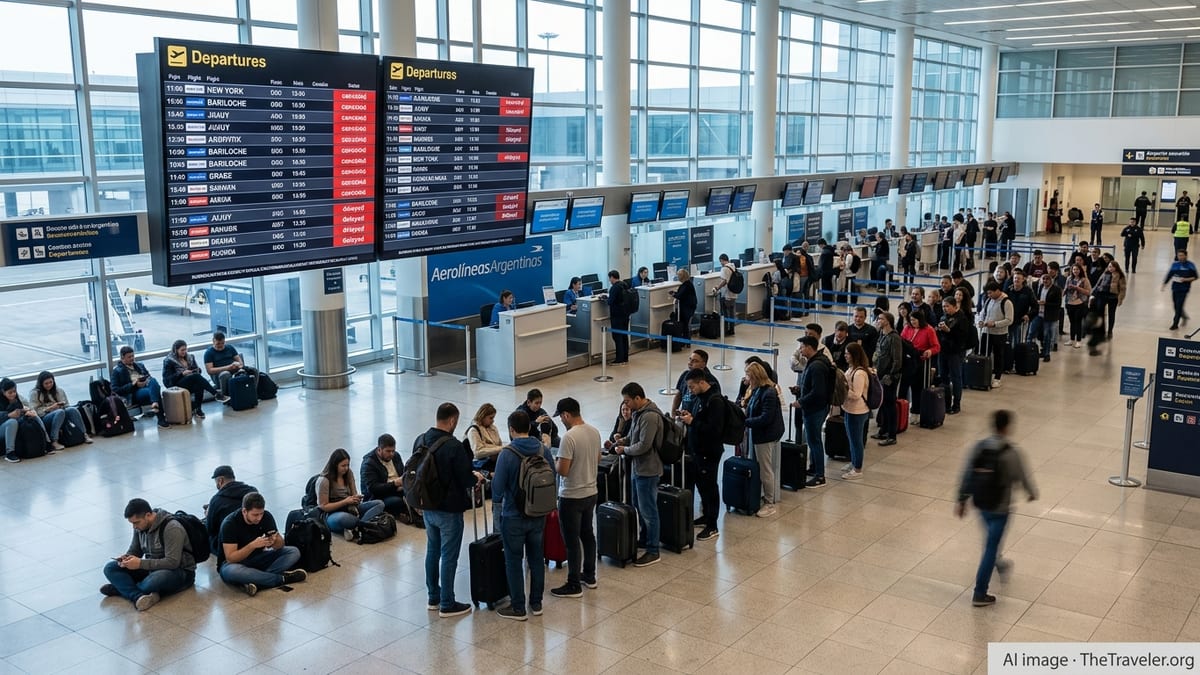
Wave of Cancellations Hits Major Argentine Gateways
Recent operational data and local media coverage indicate that flights operating under the FBZ and ARG codes have removed multiple departures from schedules at San Carlos de Bariloche, Buenos Aires Ezeiza and the Buenos Aires metropolitan network. The adjustments have affected a mix of domestic and regional services, especially those linking tourist and provincial hubs with the capital.
The cancellations are reported to involve services serving northern cities such as Salta, Jujuy and Tucumán, as well as high-demand leisure routes to Bariloche and international links including connections to Lima. The pattern points to a combination of route-level adjustments and short-notice operational issues that are being resolved on a day-to-day basis rather than through a long-term published change.
Airlines operating in Argentina have been navigating a complex environment marked by fluctuating demand, currency volatility and infrastructure constraints at the country’s main airports. Publicly available timetables show that carriers have already been fine-tuning frequencies on domestic sectors, and the latest disruptions add another layer of uncertainty for travelers planning trips in and out of Buenos Aires and Patagonia.
Although traffic through Ezeiza and the Buenos Aires city airports has been steadily recovering, schedule changes of this kind highlight the sensitivity of the network, particularly on routes that depend heavily on seasonal tourism or connecting flows from other South American hubs.
Routes to Lima, Salta, Jujuy and Tucumán Among Those Affected
According to published schedules and reports from Argentine aviation trackers, routes connecting Buenos Aires with key northern provinces have seen a noticeable uptick in short-notice cancellations and re-timings. Services to Salta, Jujuy and Tucumán, important gateways for the country’s northwest, have been listed among those most impacted by the changes under the ARG and FBZ flight codes.
Regional connectivity to Lima has also come under pressure, with travelers reporting disrupted itineraries on itineraries involving Argentina–Peru sectors and onward links through other South American hubs. While Lima remains a critical connection point for North and South American traffic, any instability on the Argentine side of the network quickly cascades across multi-leg journeys.
On the leisure front, Bariloche, one of Argentina’s premier year-round destinations, has again featured prominently in disruption reports. The city’s link to Buenos Aires is a mainstay of domestic tourism, and even a modest number of cancellations can translate into missed hotel nights, lost excursions and complex rebookings for tour operators coordinating group travel.
Travel industry bulletins show that operators have begun advising clients to factor in additional buffer time when planning itineraries that combine domestic sectors with long-haul arrivals or departures, particularly when connecting between Ezeiza and the city’s other airports.
Impact on Travellers and What to Expect at the Airport
The immediate impact for passengers has been longer queues at service desks, last-minute gate changes and a higher incidence of same-day rebooking. Travelers arriving into Buenos Aires with plans to connect directly to provincial cities such as Salta, Jujuy, Tucumán or Bariloche have been most exposed, especially where itineraries include a transfer between Ezeiza and the city airport network.
Publicly available guidance from local agencies and tour operators continues to recommend allowing generous connection windows, particularly when pairing international arrivals with domestic departures. A transfer between Ezeiza and other Buenos Aires airports can take significant time in normal traffic, and same-day cancellations only increase the risk of missed onward flights if buffers are too tight.
Passengers already in Argentina are being encouraged through airline notices and agency advisories to monitor their booking status closely on the day of travel, checking for schedule changes multiple times rather than relying solely on initial confirmation emails. Where flights are removed from the schedule, carriers have generally been offering re-accommodation on later services or alternative routings, subject to seat availability and fare conditions.
For those at the airport, observers note that staff capacity and available alternatives can vary widely by time of day and location. Larger hubs such as Ezeiza typically offer more options for same-day rebooking, while smaller airports may require overnight stays or ground transport alternatives if multiple departures are cancelled in quick succession.
Operational and Economic Pressures Behind the Disruptions
Argentina’s airline sector has been operating in a challenging context, shaped by currency movements, regulatory changes and the broader regional aviation recovery. Public data on fleet utilization and route performance suggest that airlines continue to balance cost pressures with the need to maintain connectivity, particularly on long and thin routes that may be sensitive to fluctuations in demand.
Analysts following the market note that domestic and regional carriers have made frequent tactical adjustments to schedules over the past several seasons. This has included reducing frequencies on some midweek flights, consolidating services at off-peak times and prioritizing aircraft for routes with stronger yields, particularly during high-demand holiday periods and winter travel to Patagonia.
In this environment, even relatively minor operational issues, such as temporary aircraft unavailability or crew reassignments, can result in a series of cancellations that ripple through the network. The clustering of recent disruptions under the FBZ and ARG flight codes appears consistent with this pattern of tightly managed fleets operating close to their utilization limits.
Economic conditions within Argentina also play a role, influencing both the cost base for airlines and the purchasing power of domestic travelers. As carriers respond to these pressures, schedule changes and selective cancellations are likely to remain a feature of the market, requiring passengers to stay flexible and well informed.
Practical Guidance for Passengers Planning Upcoming Trips
For travelers with upcoming journeys involving Bariloche, Ezeiza or Buenos Aires city airports, recent patterns suggest several practical steps can help reduce the risk of serious disruption. Travel advisories currently emphasize booking through-tickets where possible, as this generally improves rebooking options when a flight under the FBZ or ARG code is cancelled or significantly delayed.
It is also recommended that passengers avoid tight same-day connections between long-haul arrivals and domestic departures, particularly when an overland transfer between airports is required. Building in several hours of buffer time can allow for traffic delays, longer security queues and any short-notice schedule changes that arise on the day.
Many airlines and travel agencies now provide real-time alerts via mobile apps, email and text, and passengers are encouraged to opt in to these notifications and check their flight status repeatedly in the 24 hours before departure. Keeping digital copies of tickets, receipts and any disruption notices can help streamline discussions over rebooking or refunds if plans change unexpectedly.
With Argentina’s aviation sector continuing to adjust to evolving economic and operational conditions, travelers can expect some level of unpredictability on selected routes. Those who stay informed, allow extra time and maintain flexible plans are likely to navigate the current wave of cancellations with less stress and fewer missed connections.