


More news on this day
Hundreds of flights have been cancelled and thousands more delayed across Asia and neighboring regions, as operational disruptions at airports in Indonesia, Russia, Saudi Arabia, Japan and other countries trigger a fresh wave of travel chaos for airlines and passengers.
Get the latest news straight to your inbox!
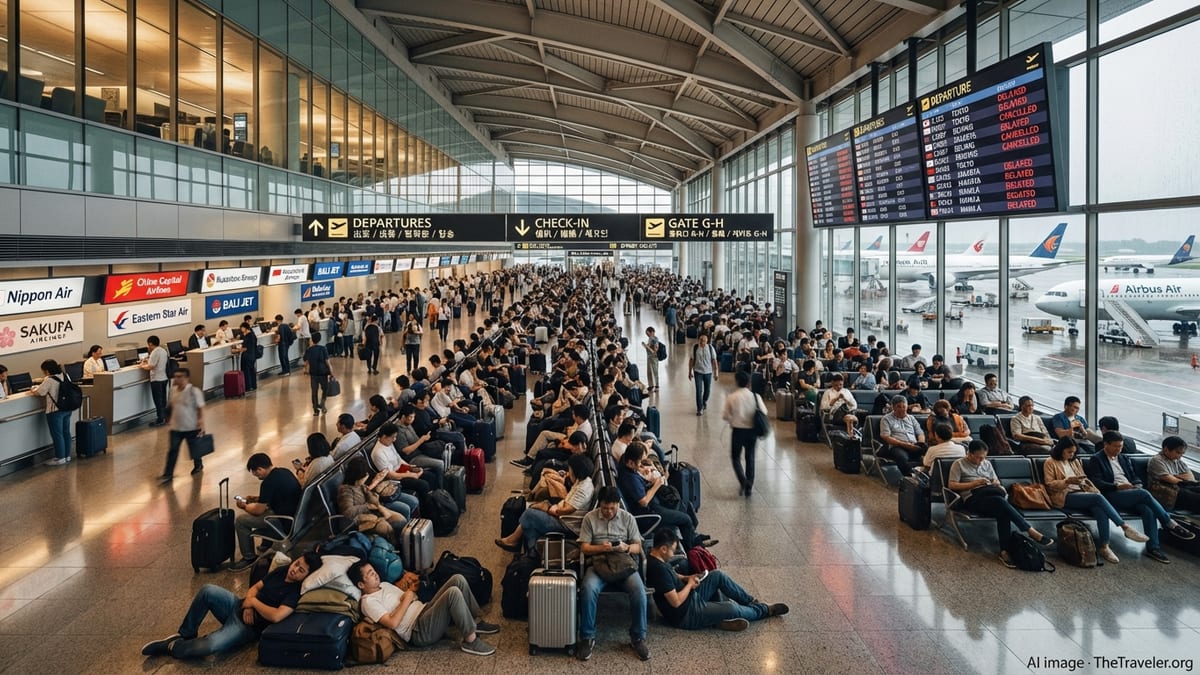
Wide-Ranging Disruptions Across Key Gateways
Latest operational data compiled from flight-tracking dashboards and airport status feeds indicates that at least 477 flights have been cancelled and around 5,399 delayed across a swath of major hubs, including Jakarta, Moscow, Jeddah and Tokyo. The disruption is spread across domestic and international services, affecting both short-haul regional networks and long-haul intercontinental routes.
Publicly available flight boards show heavy strain at Jakarta’s Soekarno-Hatta International Airport, where a mix of Indonesian and foreign carriers have scrubbed departures or pushed back scheduled timings. Similar disruption patterns are visible at Moscow’s primary airports, where Russian and international airlines have adjusted schedules, and at Jeddah and Riyadh in Saudi Arabia, where dense pilgrimage and transit traffic magnifies the effect of any operational setback.
In Japan, airport information screens for Tokyo Haneda and Narita reflect rolling delays, particularly on routes connecting to other Asian hubs as well as Europe and the Middle East. The cumulative picture is of a regional network under pressure, with knock-on effects cascading across multiple time zones.
While the figures remain fluid as airlines re-time or reinstate services, the scale of cancellations and delays places this disruption among the more severe episodes affecting Asia’s aviation network in recent months.
Multiple Airlines, From Flag Carriers to Low-Cost Operators, Affected
The disruption is not confined to a single airline group. Operational data and published coverage show that China Southern, SpiceJet, Garuda Indonesia, Saudia, Oman Air and Aeroflot are among the carriers whose schedules have been hit, alongside additional regional and global airlines operating through the affected hubs.
Garuda Indonesia and its low-cost competitors are facing particular pressure in and out of Jakarta, where tightly banked departure waves leave little room to absorb extended turnaround times. Flight-status boards suggest that aircraft rotations have been pushed well beyond planned schedules, with morning issues in some cases spilling into the late evening.
In Russia, Aeroflot and other domestic operators are navigating a mix of congested airspace, rerouted corridors and stretched ground-handling resources. Published timetables show clusters of delayed departures and arrivals at Moscow’s main airports, with some long-haul flights retimed to avoid further schedule deterioration.
In Saudi Arabia and the wider Gulf, Saudia and Oman Air appear among the carriers reporting late-running services, particularly on routes linking Jeddah, Muscat and other regional transit points to South and Southeast Asia. India-based airlines such as SpiceJet are seeing delays ripple across network nodes, as late inbound aircraft force subsequent departures to depart behind schedule.
Operational and Weather Factors Combine
Reports from aviation data providers and local media suggest that a combination of factors is driving the current wave of disruption, including adverse weather in some regions, staffing constraints in ground operations and air traffic control, and the cumulative effect of congested schedules during a busy travel period.
Thunderstorms and seasonal weather systems are known to trigger capacity reductions at several of the affected airports, particularly in Southeast Asia, where short but intense storms can temporarily halt departures and restrict arrivals. When these conditions intersect with already-tight runway and gate availability, resulting backlogs can take hours to clear.
Separately, airlines across Asia and neighboring regions have been operating near pre-pandemic capacity on many routes, while still rebuilding workforces in maintenance, cabin service and ground handling. Industry analysts note that this leaves little resilience when a single hub experiences even a moderate disruption, often leading to rolling delays rather than isolated incidents.
In some cases, flight tracking data shows aircraft assigned to tight multi-sector rotations in a single day. Once an early leg is delayed, subsequent sectors face compounding setbacks, making same-day recovery difficult without last-minute aircraft substitutions or outright cancellations.
Knock-On Effects for Passengers and Regional Connectivity
The immediate consequence for travelers is extended time at airports, missed connections and a scramble for alternative routings. With key hubs such as Jakarta, Moscow, Jeddah and Tokyo all experiencing disruption on the same day, passengers attempting multi-stop journeys across Asia, the Middle East and Europe are especially vulnerable to itinerary breakdowns.
According to publicly available airline and airport guidance, affected travelers are being encouraged to monitor official apps or flight-status pages closely, as departure times and gate assignments may change multiple times before boarding. In some instances, rebooking options are constrained by already-full flights, especially on popular corridors linking South Asia, Southeast Asia and the Gulf.
Travel planners highlight that regional business and cargo flows are also exposed when such a broad network is affected. Late arrivals at one hub can delay critical freight and mail onward to secondary cities, while crew and aircraft displaced by cancellations can require several days to be repositioned, prolonging the disruption beyond the initial event.
For airports, the surge in delayed flights adds pressure on terminal facilities, from congestion at security checkpoints and boarding gates to crowds at customer service counters as passengers seek rerouting or accommodation support.
What Travelers Can Do as Schedules Remain Fluid
With airlines still adjusting their operations in response to the evolving situation, travel experts recommend that passengers flying through Jakarta, Moscow, Jeddah, Tokyo or other regional hubs build additional buffer time into connections and remain flexible about routing. Publicly accessible advisories emphasize the importance of checking flight status repeatedly on the day of travel rather than relying on earlier printed or emailed itineraries.
Where flights have been cancelled or significantly delayed, consumer advocates advise travelers to keep records of boarding passes, booking confirmations and any written notices of disruption, in case they qualify for refunds or compensation under applicable local or international regulations. Passengers on itineraries involving multiple carriers may need to coordinate with the original ticketing airline to secure consistent rebooking.
Given the volume of delays and cancellations, airport and airline resources such as call centers and service desks are likely to remain busy. Travelers are therefore urged, in publicly available guidance, to use digital self-service tools where possible, including mobile rebooking options, automated vouchers and real-time notifications.
With 477 flights cancelled and 5,399 delayed across multiple countries, the episode underscores how interconnected the Asian, Russian and Middle Eastern aviation networks have become, and how quickly a series of local operational issues can escalate into a region-wide test of airline and airport resilience.