


More news on this day
A Transportation Security Administration technology outage at a major U.S. airport temporarily crippled security screening operations, leading to lines stretching through the terminal and reported waits of an hour or longer as travelers tried to make morning departures.
Get the latest news straight to your inbox!
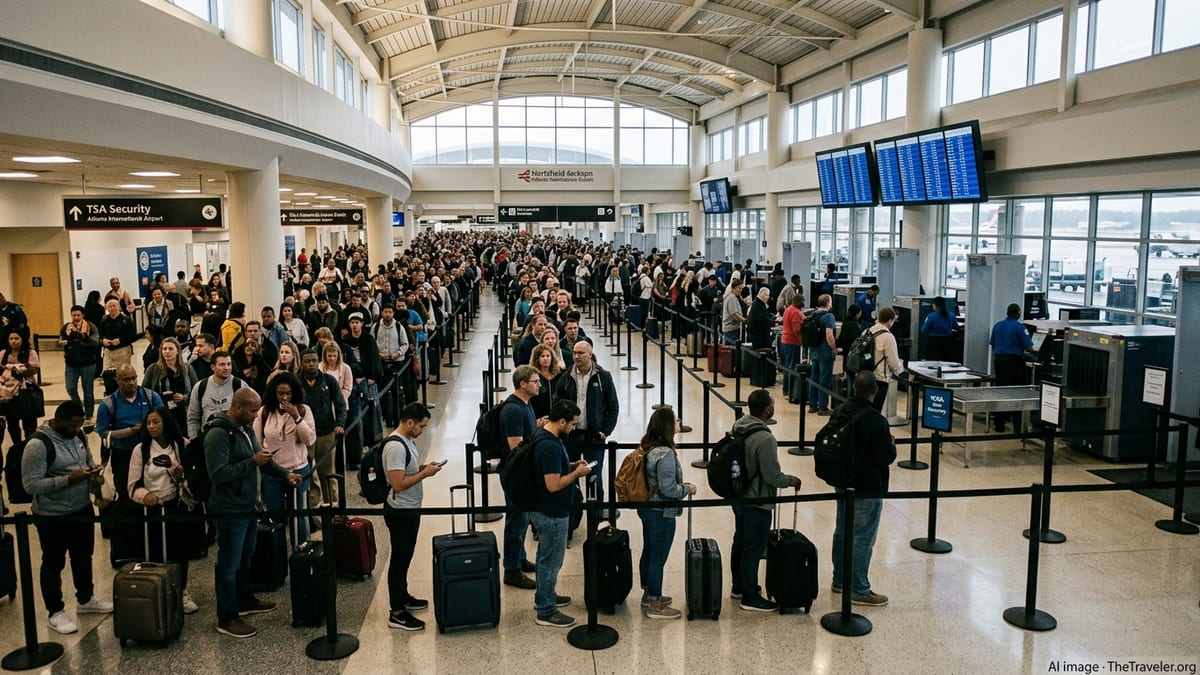
Checkpoint Systems Go Offline and Lines Build Quickly
According to early reports, the disruption began when core screening and identity-verification systems at the airport’s TSA checkpoints went offline, forcing officers to switch to manual procedures. While flights continued to operate, the reduced throughput at security immediately slowed the flow of passengers, with wait times quickly climbing from normal morning peaks to well over an hour.
Publicly available information from airport operations updates and local media coverage indicates that several lanes were closed while technicians worked to restore systems. Remaining lanes processed passengers at a fraction of their usual capacity as officers performed additional manual checks on boarding passes and identification documents.
Travelers described dense lines forming around the main checkpoint area, with queues doubling back through the ticketing hall and into adjacent concourses. Social media posts from the scene referenced extended waits, missed boarding times and gate agents holding aircraft as long as possible for connecting passengers caught in the bottleneck.
While the outage was confined to security screening rather than air traffic control or airline systems, the choke point at the checkpoint created a cascade of minor delays across the morning schedule, especially for short-haul and regional flights with tight boarding windows.
Airport Response Focuses on Crowd Management and Communication
As lines lengthened, airport staff were deployed to manage crowds, direct passengers and triage those with imminent departure times. Public address announcements and message boards urged travelers to have identification and boarding passes ready, remove items in advance and be prepared for longer-than-normal processing at security.
Published updates from airport and airline channels emphasized that flights remained scheduled and that the primary constraint was screening capacity. Ground staff encouraged passengers already checked in and within the terminal to proceed directly to security rather than linger at concessions, in an effort to keep throughput as steady as possible.
Some airlines temporarily relaxed cut-off times for checked baggage and boarding where operationally feasible, according to available schedule and delay data. However, observers noted that there was limited room to adjust without causing further knock-on disruption to aircraft rotations later in the day.
By late morning, reports indicated that additional lanes had reopened as systems were gradually restored, easing the most severe queues. Nonetheless, residual congestion continued for some time as the airport worked through the backlog of passengers who had arrived during the outage window.
Context: Recent Strains on TSA and Aviation Technology
The incident comes against a backdrop of heightened sensitivity around aviation technology failures and security bottlenecks. Recent years have seen several high-profile disruptions in the United States related to software outages, including issues affecting airline operations systems and federal aviation platforms, which have highlighted how dependent airport processes are on integrated IT infrastructure.
Industry analyses and government reports have also pointed to ongoing pressure on TSA staffing and screening resources, particularly during peak travel periods. In earlier episodes at other airports, staffing constraints have translated into elevated wait times and temporary lane closures, even without a concurrent technology problem.
Experts who study system resilience in aviation note that security checkpoints are among the most vulnerable points in the passenger journey, since even a modest reduction in throughput can quickly translate into hour-long delays when flight schedules, terminal layouts and passenger volumes converge at busy hubs.
The latest outage underscores how a localized technical failure at a single airport can ripple outward, affecting airline punctuality, passenger connections and ground operations, even if the wider national airspace system remains unaffected.
Advice for Affected and Upcoming Travelers
For passengers traveling through the affected airport later in the day, publicly available guidance from airlines and airport information channels recommends arriving earlier than usual, especially during morning and late-afternoon peaks when security lines are typically longest. Travelers connecting through the airport are being advised to allow extra time between flights where re-screening is required.
Travelers with flexible plans are encouraged to monitor real-time departure boards and airline notifications for any lingering delays, gate changes or aircraft swaps stemming from the morning disruption. Rebooking options remain subject to individual airline policies, but some carriers routinely offer same-day standby or confirmed changes when irregular operations affect a significant number of flights.
Those who experienced missed departures because of the security slowdown are being directed by airlines to customer-service counters and digital channels to explore reaccommodation options. Compensation or vouchers, where offered, typically reflect airline policies rather than TSA operations, and may vary based on the cause of the delay and the type of ticket purchased.
Industry observers note that travelers can mitigate some of the impact of similar events by enrolling in trusted traveler programs where available, keeping airline apps up to date, and building more generous connection times into complex itineraries through major hubs.
Spotlight on Resilience and Future Preparedness
The TSA outage is likely to fuel renewed discussion about the resilience of airport security technology and contingency planning for system failures. Aviation groups and policy analysts have previously called for greater investment in redundant systems, faster failover capabilities and expanded training for manual processing so that checkpoints can maintain a higher percentage of normal throughput during outages.
Publicly available policy documents and oversight reports have also urged closer coordination among airports, federal agencies and airlines to ensure that communication flows quickly when critical systems go down. Clear, consistent information for passengers about the nature of delays and realistic wait times is seen as essential to preventing confusion and overcrowding in terminal areas.
While the latest disruption appears to have been limited in duration, it reinforces a broader pattern in which isolated breakdowns in digital systems can have outsized effects on travel. As U.S. air traffic continues to rebound and seasonal peaks grow busier, the capacity of security and check-in infrastructure to absorb shocks is likely to remain a central focus for the aviation sector.
For now, travelers passing through the affected airport face longer-than-normal lines and a reminder that even routine journeys can be vulnerable to the fragility of the systems that keep modern air travel moving.