


More news on this day
Arriving passengers at Philadelphia International Airport have reported serious baggage disruption in recent days, with luggage piling up around carousels and many travelers experiencing extended waits to reclaim their checked bags.
Get the latest news straight to your inbox!
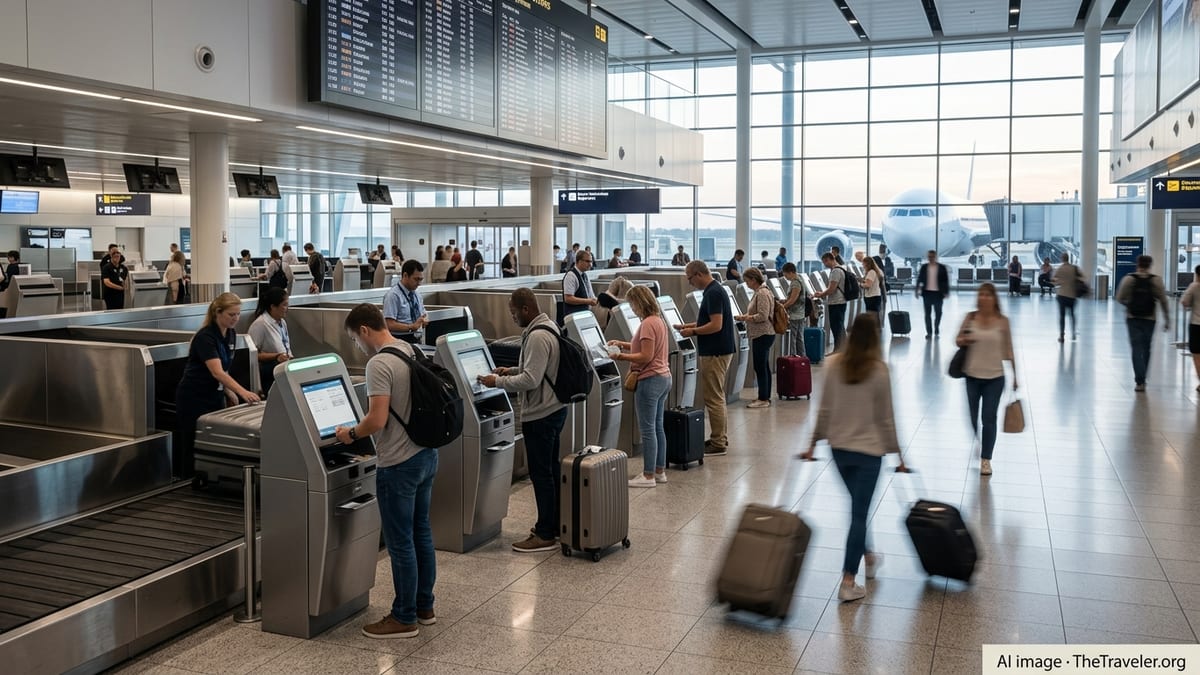
Reports Describe Luggage Pileups and Long Waits
Social media posts and passenger accounts circulating in recent days describe crowded baggage halls at Philadelphia International Airport, with suitcases stacked near carousels and some travelers waiting far longer than usual for their belongings. Images shared in local coverage in past disruptions at the airport have shown similar scenes of tagged luggage lined up beyond the standard claim areas, underscoring how quickly baggage operations can become overwhelmed when flight schedules are disrupted.
While precise numbers on delayed or mishandled bags are not publicly available for the current episode, the descriptions echo earlier periods when arriving passengers encountered large collections of unclaimed luggage at Philadelphia. Those prior instances were often linked to waves of cancellations and diversions that left bags and their owners temporarily out of sync.
The most recent complaints appear to be concentrated around terminals heavily used by major domestic carriers, where a surge of delayed inbound flights can create a bottleneck for baggage belts and ground crews. For travelers already fatigued by late arrivals and full flights, extended waits at the carousel have added another layer of frustration at the end of their journeys.
Weather Disruptions and Operational Strain
The baggage issues are emerging at a time when Philadelphia International Airport has been coping with repeated weather and air traffic challenges. In recent weeks, publicly available flight-tracking data and regional news coverage have highlighted significant delays and cancellations tied to thunderstorms, wildfire smoke, and broader airspace constraints affecting the Northeast corridor.
On several peak days this month, hundreds of flight delays and dozens of cancellations were recorded at Philadelphia, including the period following strong storms in the region. According to published reports, many of those disruptions reverberated into the next day as aircraft and crews repositioned, leaving ground operations, including baggage handling, to catch up.
When large numbers of flights arrive outside of their scheduled windows, multiple aircraft can compete for limited baggage system capacity at the same time. Industry reporting on hub airports across the United States notes that luggage handling is highly choreographed under normal conditions but can quickly fall behind when the arrival flow becomes irregular, forcing operators to triage between unloading new flights and clearing earlier backlogs.
Complex Baggage Systems Under Peak Summer Pressure
The current problems at Philadelphia are unfolding in the middle of an exceptionally busy summer for U.S. air travel. Federal aviation analysis and airport planning documents show that Philadelphia is handling elevated passenger volumes as it prepares for a series of major events over the next two years, from international sports tournaments to large civic celebrations. Summer 2026 has already been described in airport communications as a period of intense activity, with millions of travelers expected to pass through the terminals.
Modern baggage operations involve multiple handoffs between check-in counters, screening systems, sorting belts, ramp workers and carousel delivery. National coverage of large hub airports has highlighted how many individual steps go into moving every suitcase from aircraft hold to arrivals hall and how delays at any point can cascade. Even a modest staffing shortage, minor mechanical fault or temporary closure of one portion of a system can slow the overall flow of bags to passengers.
At Philadelphia, publicly available accessibility and passenger guidance materials emphasize that each airline maintains its own baggage office in the arrivals areas and that luggage is routed to designated claim belts. When flights divert, misconnect or arrive out of sequence, bags may be routed to less obvious locations or held temporarily in overflow zones, requiring travelers to seek assistance from airline teams on the ground.
Traveler Impact and What Passengers Can Do
For affected passengers, the most immediate impact of any baggage disruption is time. Accounts shared online from Philadelphia describe waits that stretch well beyond typical service norms for some flights, as well as confusion over which carousel is serving a particular arrival. Similar episodes at other airports this summer have involved passengers spending more time in the baggage hall than they did in the air, highlighting how even short-haul trips can end with unexpectedly long delays on the ground.
Consumer advocates generally advise travelers to treat checked luggage with caution during periods of known operational stress. Common recommendations include keeping essential medications, valuables and a change of clothes in carry-on bags, using airline and third-party apps to monitor baggage status where available, and retaining baggage tags and claim checks in case items are delayed or misrouted.
When luggage does not arrive as expected in Philadelphia, airport information materials indicate that passengers should proceed directly to their airline’s baggage service desk in the arrivals hall to file a claim. Travelers are typically asked to provide a description of their bags, contact details and any temporary address so that items can be delivered once located. Publicly available guidance also suggests that maintaining receipts for emergency purchases, such as toiletries or basic clothing, may be helpful when seeking reimbursement from an airline after an extended delay.
Philadelphia’s Arrival Experience Under Scrutiny
The latest reports of baggage chaos come as Philadelphia International Airport works to position itself as a gateway for major upcoming events and expanded international service. Recent airport announcements have highlighted new art installations in baggage claim areas and investments in passenger-facing infrastructure, part of a broader effort to improve the arrivals experience.
At the same time, candid feedback from travelers on public forums has repeatedly cited baggage claim as a weak point in the airport journey, mentioning cleanliness, crowding and inconsistent carousel information among their concerns. The current backlog is likely to reinforce those perceptions, even if the underlying causes are tied to broader weather and airspace issues that extend beyond a single facility.
As airlines and the airport work to restore normal baggage flows, the episode at Philadelphia serves as another reminder of how fragile the end stages of a trip can be during peak travel periods. For visitors arriving in the city for vacations, business or major sporting events, the first impression begins not at the gate or security checkpoint, but at the carousel where they wait, sometimes anxiously, for their bags to appear.