


More news on this day
Asia’s aviation network is facing fresh turbulence as a spike of 1,578 delays and 106 cancellations in a single operating window ripples across 22 major hubs, underscoring how quickly disruption in one part of the region can destabilize flight schedules across an interconnected continent.
Get the latest news straight to your inbox!
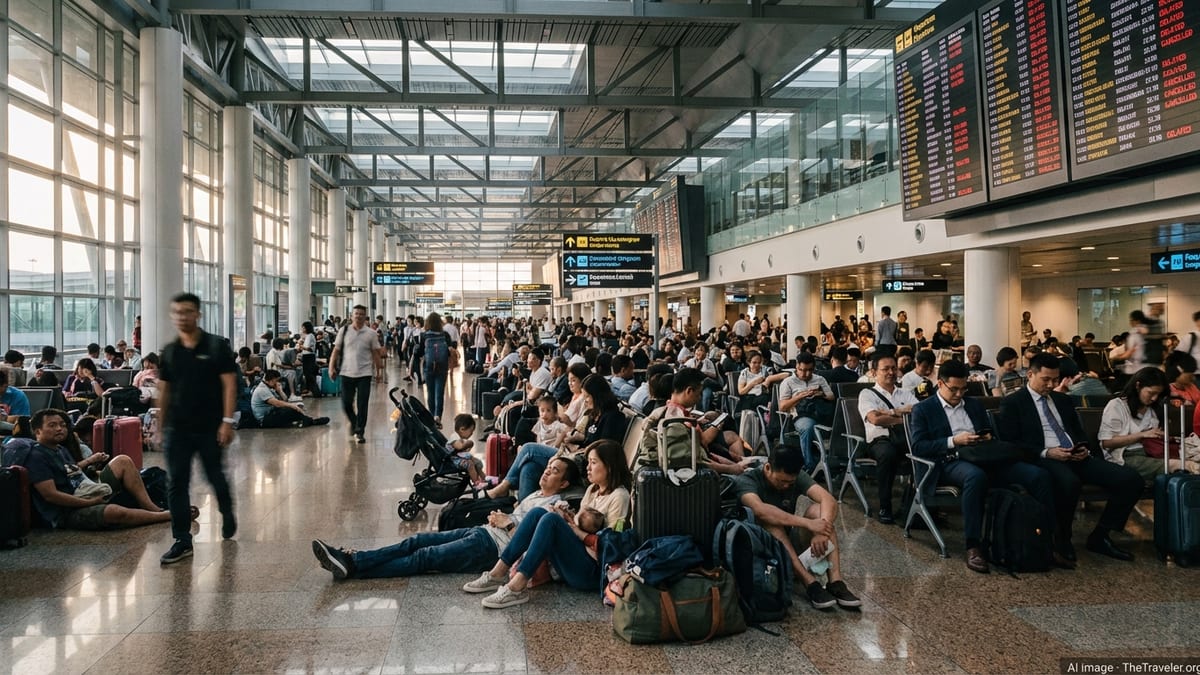
Network Shock Centered on Southeast Asia and Key Transit Gateways
Flight-tracking data and regional media coverage indicate that the sharp rise in delays and cancellations has been concentrated around Southeast Asia’s busiest gateways and a handful of long-haul transit hubs further north. Airports serving Jakarta, Singapore, Kuala Lumpur, Bangkok, Manila, Hong Kong, Seoul, Tokyo and several major Chinese cities have all reported elevated disruption levels compared with recent seasonal norms.
The pattern mirrors earlier regional shocks in 2026, when volcanic ash, severe weather and airspace restrictions combined to push delay counts sharply higher on some days at Jakarta’s Soekarno Hatta, Changi in Singapore, and other high-volume hubs. In the latest episode, a similar concentration of disruption at a small number of high-traffic airports has translated into a much wider network effect, as missed connections and crew-rotation issues multiplied across the day.
While the total of 1,578 delayed flights represents a small fraction of the thousands of daily movements across Asia, the figure is significant because it is clustered around the region’s primary connecting points. Even modest percentages of delayed departures at these hubs tend to trigger schedule knock-on effects that reach well beyond national borders, affecting flights to Europe, the Middle East and North America.
The 106 cancellations recorded across the 22 hubs have had an outsized impact on long-haul and late-evening waves of traffic, where aircraft and crew typically have less flexibility to be reassigned. Publicly available operational data suggests that a single cancellation in a long-haul bank can take multiple days to fully unwind as aircraft rotate through extended route networks.
Weather, Airspace Constraints and Volcanic Activity Drive Disruption
Recent weeks have underlined how exposed Asia’s aviation system remains to external shocks. In early September, a powerful eruption of Indonesia’s Anak Krakatau volcano prompted the temporary closure of eight airports, including Jakarta’s main international gateway, and affected more than 1,500 flights in a short period. Fresh ash advisories and shifting wind patterns have continued to complicate routing and capacity planning in the surrounding airspace.
Monsoon storms, typhoons and intense convective weather have also played a role. Seasonal downpours and thunderstorm clusters across the Bay of Bengal, the South China Sea and the western Pacific routinely force en route diversions, holding patterns and temporary runway closures at coastal hubs. When such events coincide with peak travel periods, delay minutes can climb rapidly even if underlying airport capacity and staffing remain stable.
Additional pressure has come from evolving airspace restrictions and military activity along key international corridors connecting East Asia with Europe and the Middle East. Publicly available route data shows that traffic previously concentrated along the most direct great circle paths has been redistributed, increasing complexity for air traffic controllers and raising the risk that localized constraints will spill over into broader network delays.
Industry and government briefings in recent months have also highlighted how infrastructure upgrades, runway works and airspace redesign projects across parts of Asia are temporarily reducing declared capacity at certain airports and control sectors. While these projects are aimed at improving long-term resilience, they can narrow operational margins during periods of exceptional demand or severe weather.
High Demand and Tight Capacity Expose System Vulnerabilities
Asia’s traffic recovery and growth trajectory are amplifying the impact of irregular operations. International associations have reported that Asia Pacific passenger volumes have rebounded strongly over the past two years, with several markets now at or above pre-pandemic levels and others still registering double-digit annual growth.
At many of the 22 affected hubs, this demand surge is meeting hard constraints in runway, terminal and airspace capacity. In some fast-growing markets, airport expansion programs have lagged behind the pace of new route launches and aircraft deliveries, leaving operators with limited slack to absorb disruption. When a weather system, technical failure or airspace closure occurs, the result can be an immediate spike in delayed departures as airlines and air navigation service providers work to resequence traffic.
Airlines across the region are also contending with tight aircraft availability and ongoing maintenance, repair and overhaul bottlenecks. Carriers have publicly flagged slower-than-planned aircraft deliveries and extended maintenance turnaround times, which reduce the number of spare aircraft on hand to cover unexpected groundings or long delays. This scarcity can turn what might have been a routine delay into a cancellation when an aircraft is not able to complete its planned rotation.
Staffing remains another pressure point. Although many airports and ground handling companies have rebuilt their workforces since the height of the pandemic, sector reports suggest that some markets still face shortages of experienced technicians, pilots and air traffic controllers. Any localized absenteeism or labor action can therefore have immediate operational consequences, especially at hubs that are already operating near their declared capacity limits.
Passenger Impact: Missed Connections, Rebookings and Overnight Disruptions
The operational figures translate into tangible disruption for travelers. Across the 1,578 delayed flights, published data and recent case studies from the region suggest that many passengers have faced missed connections, particularly at transfer-heavy hubs that channel traffic between secondary Asian cities and long-haul destinations.
For short-haul itineraries within Asia, delays of one to two hours can often be absorbed without overnight stays, but same-day connectivity becomes more complicated when inbound flights reach major hubs late in the evening. In these cases, even a relatively small number of cancellations can leave significant groups of travelers in need of hotel accommodation and rebooked services the following day.
Consumer groups in several Asian markets have reiterated calls for clearer, more consistent communication around major disruption events. Publicly available guidance from aviation regulators generally encourages airlines and airports to provide timely updates, refresh online information channels and offer practical assistance such as meal vouchers and rebooking support during extended delays.
Given the scale of recent disturbances, some carriers have also adjusted their schedules and aircraft allocations in the short term, trimming marginal frequencies or consolidating lightly booked flights to rebuild buffers into their daily operations. Schedule databases show that a number of flights in affected corridors have been retimed or temporarily suspended as airlines work to restore reliability.
Outlook: More Volatility Ahead as Peak Travel Continues
With Asia’s late-summer and autumn travel peaks overlapping with ongoing monsoon and typhoon seasons, operational data points to continued volatility in the weeks ahead. Even if the immediate spike of 1,578 delays and 106 cancellations tapers, analysts expect further episodic disruptions as weather systems and external shocks intersect with heavy demand.
Airports and air navigation providers across the region have been emphasizing collaborative decision-making tools and regional coordination arrangements designed to smooth traffic flows and share information about emerging constraints. Publicly available performance dashboards suggest that where these measures are fully implemented, delay minutes per flight can be reduced even under challenging conditions.
Airlines, for their part, are likely to keep focusing on building resilience into schedules, including slightly longer ground times, more conservative connection windows and selective capacity additions at pressure points. However, the recent disruption has underlined that such measures can only go so far when external shocks strike simultaneously across multiple parts of the network.
For travelers planning journeys through Asia’s largest hubs, the latest turbulence serves as a reminder to allow additional time for transfers, monitor flight status closely and be prepared for sudden changes in routing. While the region’s aviation system continues to handle a rapidly growing volume of traffic, the events surrounding this latest wave of delays and cancellations have made clear that even a single day of disruption can reverberate widely across the continent.