


More news on this day
Major Middle East transit hubs are experiencing another wave of disruption, with 836 delays and 28 cancellations reported across the region as airlines adjust operations amid ongoing security concerns and shifting airspace restrictions.
Get the latest news straight to your inbox!
Regional Hubs Under Pressure
The latest disruption has rippled through key Gulf and Levant airports, which serve as critical waypoints for traffic linking Europe, Asia, Africa and Australasia. Publicly available flight tracking data and regional media reports indicate that Dubai, Abu Dhabi, Doha, Muscat and major Saudi gateways have all seen elevated levels of schedule changes as carriers reroute or retime services.
Although most airports remain operational, airlines have been contending with changing routings around sensitive airspace and intermittent restrictions on specific corridors. This has resulted in knock-on congestion at major hubs, where even modest delays on inbound legs can quickly compound into missed connections and late departures on onward flights.
The figure of 836 delayed flights and 28 cancellations reflects a single day of activity across a broad set of regional hubs, highlighting the intensity of the disruption. Aviation analysts note that while the majority of flights are still operating, the proportion of services running behind schedule is significantly higher than typical seasonal averages for the region.
Airport operations teams have responded by adjusting stand allocation, extending staffing on key shifts and revising turnaround plans where possible. However, the highly interconnected nature of hub-and-spoke networks means that recovery from a sharp spike in delays can take several days, even after airspace conditions begin to stabilise.
Security Tensions and Airspace Constraints
The disruption comes against the backdrop of a protracted security crisis involving the United States, Iran and regional actors, with periodic escalations affecting Gulf and Levant airspace. According to published coverage from regional outlets and international wire services, temporary closures or restrictions have been imposed at various points on airspace over Iran, Iraq, Israel, Jordan and several Gulf states during recent flare-ups.
Conflict-zone advisories by aviation safety bodies have urged carriers to exercise caution in certain flight information regions, particularly around the Strait of Hormuz and adjacent waters. Publicly available guidance has focused on the elevated risk posed by missile or drone activity at cruising altitudes, prompting some airlines to avoid designated areas entirely or to adjust flight levels and routings.
These measures have operational and commercial consequences. Detours around restricted airspace lengthen flight times, increase fuel burn and compress turnaround windows at hubs that are already operating close to capacity during peak periods. When combined with episodic military activity or last-minute regulatory changes, they contribute directly to the pattern of delay and cancellation now seen in daily statistics.
Industry observers point out that the region’s role as a bridge between continents gives these disruptions an outsized global footprint. Even passengers whose journeys begin and end far from the Middle East can feel the impact, particularly if they are booked on itineraries that rely on one-stop connections through Gulf or Levant hubs.
Airlines Adjust Schedules and Networks
Airlines based both inside and outside the region have been recalibrating schedules as conditions evolve. Coverage from aviation and business outlets shows that major Gulf carriers have at times suspended select routes, altered departure times and consolidated frequencies in response to temporary airspace closures and demand fluctuations linked to the conflict.
European and Asian airlines with long-haul services into the Middle East have taken a range of approaches, from short-term cancellations on specific days to extended suspension of routes considered most exposed. In several cases, carriers have maintained limited service to key hubs while pausing flights to secondary destinations, effectively concentrating capacity where rerouting options and operational resilience are strongest.
Low-cost and leisure-focused airlines have been particularly sensitive to spikes in operational risk and insurance costs. According to publicly available information, some have opted to suspend services to certain Gulf and Levant destinations through part of the northern summer season, diverting aircraft to alternative markets where route viability is less contingent on regional security developments.
Network planners are also contending with longer-term uncertainty. While a series of diplomatic moves has reduced some tensions at various points in recent months, analysts caution that the pattern of periodic disruption is likely to endure, forcing airlines to retain contingency schedules, extended block times and flexible crewing plans for routes touching the region.
Passenger Experience: Missed Connections and Longer Journeys
For travellers, the most visible effects of the disruption are missed connections, extended layovers and, in some cases, overnight stays triggered by cascading delays. Reports from passenger forums and regional travel coverage describe situations in which relatively modest delays at departure have led to missed long-haul connections at hub airports, with rebooking options constrained by high load factors on alternative flights.
Publicly available guidance from airlines and airports across the Middle East consistently urges passengers to monitor flight status closely, use official apps and channels for updates and allow additional buffer time for connections where possible. Travellers are also being reminded to keep contact details up to date in booking records so that carriers can send real-time notifications of gate changes, delays or cancellations.
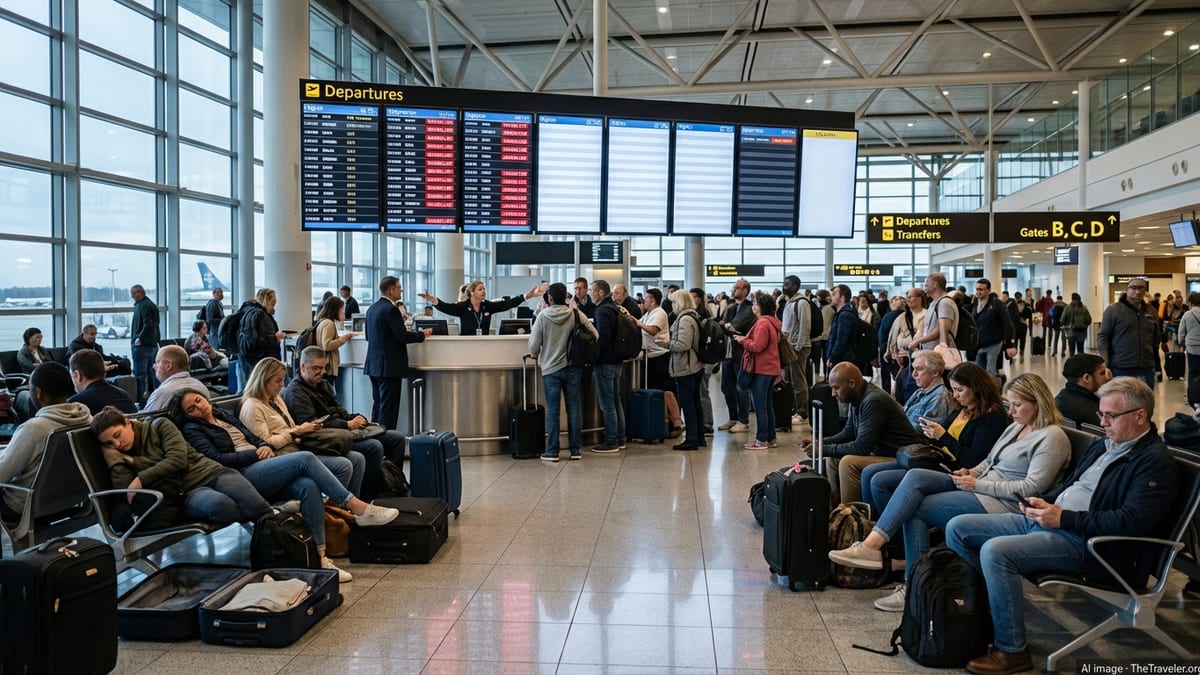
Some airports have temporarily reinforced customer service desks and transfer support teams in response to the surge in disrupted itineraries. Even so, images of busy transfer halls and departure boards showing clusters of delayed flights underscore the strain on passenger-handling resources when a regional hub experiences several waves of schedule disruption in close succession.
Travel advisors note that passengers with onward connections to smaller regional airports or seasonal leisure destinations are often the most exposed to disruption, as these routes typically have fewer daily frequencies. When a missed connection cannot be accommodated on the same day, travellers may face overnight stays or rerouting via entirely different hubs, lengthening total journey times by many hours.
Outlook for the Coming Weeks
Forecasts from aviation data providers and regional analysts suggest that the pattern of intermittent disruption is likely to persist in the near term. While the total number of daily flights operating to and from the Middle East remains high compared with early stages of the conflict, the balance between stability and volatility is finely poised, with each new security incident or diplomatic setback capable of triggering fresh operational challenges.
Some carriers have signalled, through timetable filings and public advisories, that conservative schedules will remain in place across parts of their Middle East networks for at least the next several weeks. This approach allows additional buffer for potential reroutes and extended flying times, at the cost of constraining capacity on certain high-demand corridors.
Industry observers expect that any sustained easing of tensions, combined with clearer and more predictable airspace arrangements, would gradually reduce daily disruption figures below current levels such as the 836 delays and 28 cancellations recorded in this latest episode. However, experience from previous crises suggests that airlines may take time to restore full schedules even after risk assessments improve, preferring a phased return of capacity to avoid renewed volatility.
For now, travellers planning to use Middle East hubs are being advised, in widely available travel guidance, to check bookings regularly, consider slightly longer connection times and remain prepared for short-notice changes. As the region continues to serve as a vital crossroads for global aviation, the balance between maintaining connectivity and managing security risk will remain at the centre of airline and airport decision-making.