


More news on this day
Major travel disruption has swept across Asia and parts of the Middle East, with publicly available flight-tracking data indicating that 733 flights were cancelled and more than 7,000 were delayed in a single day across Japan, China, India, Taiwan and Saudi Arabia, snarling traffic for carriers including China Southern, Japan Airlines, All Nippon Airways, Akasa Air, Philippine Airlines and others serving Tokyo, Shanghai, Delhi, Taipei, Jeddah and additional hubs.
Get the latest news straight to your inbox!
Storms, Regional Tensions and Airspace Constraints Converge
Reports from aviation data providers and regional media indicate that the spike in cancellations and delays is linked to a combination of severe weather, geopolitical friction and constrained airspace on several key corridors. In North Asia, the approach of Super Typhoon Bavi has already led to widespread adjustments to services in and out of Japan and Taiwan, with airlines preemptively scrapping or retiming flights to reduce the risk of aircraft and crew becoming stranded at shuttered airports.
Coverage from outlets in Taiwan and Hong Kong describes carriers cancelling or rescheduling scores of flights to and from Taipei, Taichung and Kaohsiung as Bavi moves closer, while flights to destinations in eastern China and southern Japan are also being thinned out to accommodate expected airport closures and strong crosswinds. In Japan, domestic and regional networks operated by large incumbents and low cost rivals are being trimmed or consolidated as operators seek to preserve aircraft rotations and avoid cascading delays.
Separate reporting on the China Japan market shows that cancellations there remain elevated as longer running diplomatic strains continue to weigh on travel links. Industry data collated earlier in July already pointed to hundreds of services between mainland Chinese cities and Japanese destinations being removed from schedules, and the latest operational data suggests that irregular operations in the current disruption have compounded that trend on routes into Tokyo, Osaka and regional airports.
In West Asia, publicly available information on air traffic over the Gulf and Red Sea regions shows airlines adjusting routings and occasionally holding or cancelling flights as military activity linked to the Iran conflict periodically affects airspace availability. Flights connecting India and other Asian countries with Saudi Arabia are among those vulnerable to rolling restrictions, and travel advisories in recent months have warned passengers to monitor schedules closely when flying to or through Jeddah and other Saudi gateways.
Tokyo, Shanghai, Delhi, Taipei and Jeddah Among Hardest Hit
The latest disruption has been particularly visible at several of Asia’s busiest hubs. Airports serving Tokyo experienced waves of delays as weather bands associated with Bavi brought strong winds and heavy rain, slowing arrivals and departures. Japan’s main full service carriers, including Japan Airlines and All Nippon Airways, have adjusted frequencies on select domestic and regional routes, while low cost players operating from Tokyo’s secondary airports have also consolidated lightly loaded flights.
In mainland China, Shanghai’s twin airports reported elevated levels of delayed departures and arrivals on routes within China and across the wider region. Publicly accessible flight boards and tracking platforms showed disrupted schedules for large carriers such as China Southern and China Eastern, as well as for secondary airlines that rely heavily on connections through Shanghai to reach Japan, Korea and Southeast Asia. On some city pairs, a chain reaction of late arriving aircraft has contributed to further knock on delays.
Delhi and other major Indian hubs, including Mumbai, Bengaluru and Hyderabad, also reported significant operational strain as the disruption rippled across the network. According to Indian media coverage and real time tracking data, carriers such as Akasa Air, IndiGo and Air India have been contending with a mix of congestion, route changes over West Asia and localized weather, all of which have forced short notice schedule changes. Flights headed toward the Middle East, including Saudi Arabia, have been especially exposed to en route diversions and extended flight times.
In the Gulf, Jeddah’s King Abdulaziz International Airport has served as both a destination and a critical transit point for many of the services affected. Publicly available arrival and departure data reflect clusters of delays on flights linking Jeddah with South and East Asian cities, with some rotations pushed back by several hours to accommodate revised routings that skirt sensitive airspace. Additional security and operational checks at various points along these corridors have further slowed turnaround times.
Wide Airline Mix From Legacy Carriers to Low Cost Operators
The disruption has touched a broad spectrum of airlines, from large legacy network carriers to low cost and hybrid operators. China Southern, one of the largest players in the region, has seen cancellations and substantial delays on certain services between Chinese hubs and cities in Japan and Southeast Asia, according to data compiled from flight tracking platforms and traveler reports. These adjustments come on top of earlier capacity reductions on China Japan routes attributed to the diplomatic dispute between the two countries.
Japan Airlines and All Nippon Airways have been among the most visible carriers contending with the effects of Super Typhoon Bavi in the Japanese market. Publicly posted operational notices from the airlines and travel agents show that services to and from northern Japan, as well as flights linking Tokyo with Seoul, Taipei and other regional destinations, are being proactively cancelled or retimed when forecasts indicate unsafe crosswinds or the risk of prolonged airport closures.
In India, Akasa Air has had to reshuffle parts of its international network, including flights connecting Delhi and Mumbai with Gulf destinations that feed onward connections to Saudi Arabia. Reports circulating in Indian media and traveler forums suggest that some services have been consolidated or retimed to reflect airspace restrictions over parts of West Asia, adding pressure to already busy domestic schedules where demand has been recovering strongly.
Elsewhere in the region, Philippine Airlines has adjusted certain routes into Japan and the Gulf, while other Asian and Middle Eastern carriers operating through Taipei and Jeddah have also appeared prominently on lists of delayed flights. Low cost airlines with thinner margins of schedule padding have been particularly vulnerable, as a small delay in one sector can quickly propagate across multiple rotations in a single day.
Travelers Face Missed Connections and Crowded Rebooking Desks
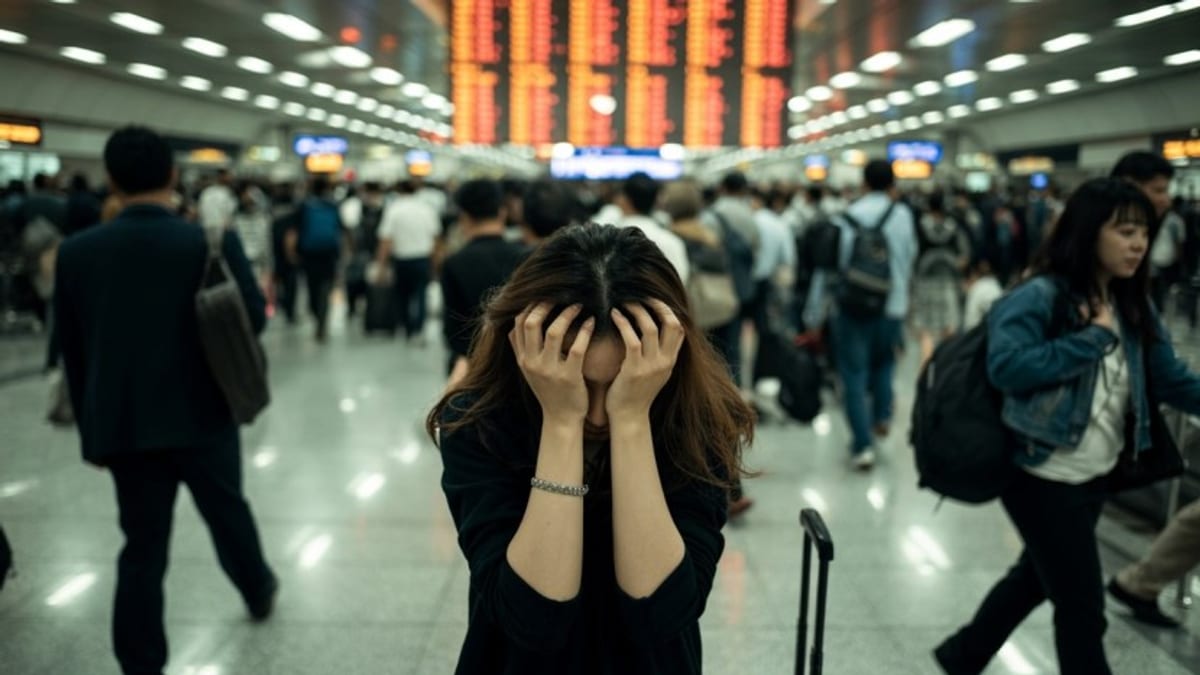
For passengers, the cumulative impact of 733 cancellations and more than 7,000 delays has been extensive. At major hubs from Tokyo to Delhi, travelers have reported long lines at airline counters as they attempt to rebook missed connections or secure overnight accommodation. Social media posts and traveler forums describe crowded transit areas, with many passengers camping near gates while awaiting updated departure times.
Publicly available guidance from airlines operating in the affected regions generally encourages travelers to check flight status frequently on official channels, arrive early at the airport and maintain flexibility on routing where possible. Some carriers have introduced temporary waiver policies allowing fee free changes or refunds on itineraries directly impacted by typhoon related cancellations or airspace disruptions, although the exact level of support varies by airline and booking channel.
Missed long haul connections have been a particular challenge for travelers using Asian hubs as gateways between North America or Europe and destinations in Southeast Asia, India and the Middle East. When feeder flights from regional cities are delayed or cancelled, passengers can lose onward segments that operate only once per day, forcing them to reroute through alternative hubs or wait for the next available departure, sometimes extending journeys by 24 hours or more.
Travel insurance coverage has also emerged as a point of concern. Some policies provide compensation for delays or cancellations caused by severe weather, while others take a more restrictive approach to events linked to conflict or government mandated airspace closures. Reports from affected travelers suggest that outcomes vary widely depending on the insurer, the reason for disruption and the specific wording of each policy.
Outlook: Operational Recovery May Be Uneven
While airlines and airports across the affected regions are working to restore normal operations, publicly available forecasts and operational updates suggest that recovery may be uneven in the coming days. In North Asia, the pace of normalization will depend heavily on the track and intensity of Super Typhoon Bavi, with typhoon related groundings in Taiwan and Japan likely to create a backlog of aircraft and crews that will take time to clear.
In the China Japan market, analysts following airline schedules note that many cancellations tied to the diplomatic rift were made at the planning stage, reducing the number of flights available to absorb additional disruptions when irregular operations occur. This structural reduction in capacity may prolong the impact for travelers trying to rebook, particularly on popular routes into Tokyo during the summer travel period.
Over West Asia and the Gulf, the outlook is closely linked to the broader security situation and associated airspace advisories. Even when core routes remain open, reroutings, altitude restrictions and extended flight paths can reduce schedule reliability and push aircraft and crew utilization to their limits. Carriers serving Saudi Arabia from India, East Asia and Southeast Asia may therefore continue to operate with tight margins for recovery if new disruptions arise.
For now, travel experts and consumer advocates quoted in regional coverage are urging passengers with upcoming trips through Tokyo, Shanghai, Delhi, Taipei, Jeddah and other major hubs to build extra buffer time into their itineraries and to monitor official airline and airport communications carefully. With weather, geopolitics and high peak season demand intersecting, Asia’s aviation network appears set for a period of heightened volatility, even as airlines work to stabilize operations.