


More news on this day
Super Typhoon Bavi is sweeping across key East Asian air corridors, prompting mass flight cancellations in and out of Taiwan, disrupting operations in Hong Kong and rerouting services across Singapore, Thailand and mainland China, as carriers confront another major weather shock to regional travel.
Get the latest news straight to your inbox!
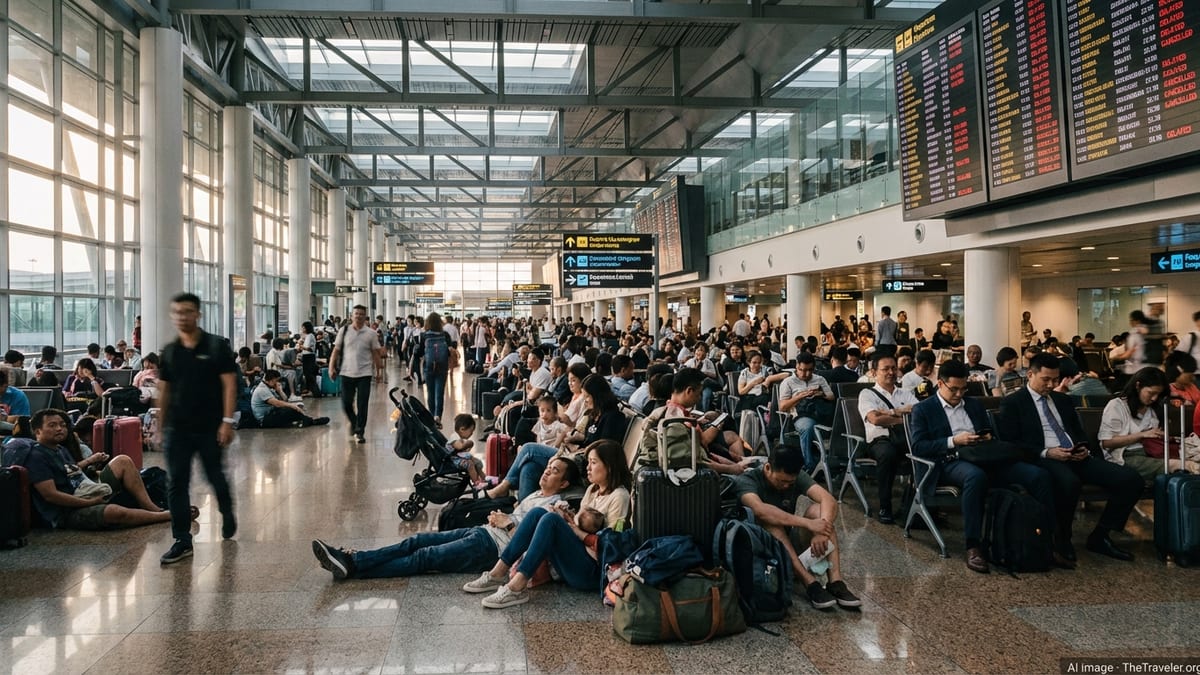
Airports Across Greater China Tighten Operations
Publicly available information indicates that Hong Kong, Taiwan and several mainland Chinese coastal hubs have moved into a period of heightened disruption as Super Typhoon Bavi closes in on major air routes. In Hong Kong, low-cost and full-service carriers have preemptively scrubbed dozens of departures and arrivals, particularly on short-haul links to Taiwan and Japan, in anticipation of deteriorating conditions along the storm’s projected track.
At Taiwan Taoyuan International Airport and Taipei’s domestic facilities, airport data and local media reports show a growing list of cancellations and schedule changes extending from Friday into the weekend. Airlines are adjusting timetables on an almost hourly basis as the typhoon approaches from the southeast, with priority given to repositioning aircraft and crews before wind and rain intensify.
On the Chinese mainland, transport advisories point to tightening controls at airports along the southeast coast as Bavi’s outer bands begin to influence weather over Fujian, Zhejiang and Guangdong. While some larger hubs remain operational, operators are preparing for possible runway closures, ground handling suspensions and knock-on delays that could ripple across the wider East Asia network.
The measures place Hong Kong firmly alongside mainland China and Taiwan in adopting a conservative operational stance, limiting exposure to high crosswinds and low visibility that often accompany powerful Pacific typhoons.
Hong Kong Joins Regional Carriers in Mass Cancellations
In Hong Kong, low-cost operator HK Express has implemented targeted cancellations on routes connecting the city with Okinawa and other points along Bavi’s projected path. The airline’s travel alerts outline complete cancellations for selected flights on July 10 and warn of potential additional adjustments for services between July 9 and 11, while offering refunds or rebooking options to affected passengers.
Service notices from other Hong Kong based and regional airlines show that routes between Hong Kong, Taipei and Kaohsiung are among the hardest hit. According to Taiwan based transport summaries, multiple flights operated by Cathay Pacific and its regional partners between Hong Kong and Taiwanese cities are canceled across several days, with some services also brought forward in an attempt to beat the worst of the weather.
Greater Bay Airlines has also issued a dedicated Super Typhoon Bavi travel advisory, signaling possible disruption to flights between Hong Kong, Bangkok and selected mainland Chinese destinations. Passengers are being urged, through these advisories, to check real time status before traveling to the airport, underscoring the uncertainty that now surrounds short haul itineraries touching Hong Kong.
The combined impact effectively places Hong Kong alongside key mainland Chinese nodes as a focal point of operational stress, even as authorities keep the city’s airport technically open for limited movements when conditions allow.
Taiwan Becomes the Epicenter of Flight Disruptions
While Hong Kong’s schedule has been heavily thinned, Taiwan has emerged as the epicenter of aviation disruption triggered by Typhoon Bavi. Updates from Taiwan’s transport and aviation sectors indicate extensive changes to both domestic and international services, as carriers prepare for a period of severe weather affecting airspace around the island.
Domestic airlines are cancelling or consolidating flights linking Taipei, Taichung and Kaohsiung with offshore islands such as Penghu, Kinmen and Matsu. Ferry operators have taken similar action, with several inter island routes suspended for multiple days, further limiting mobility for residents and travelers in coastal and island communities.
Internationally, schedules published by Taiwan based and foreign carriers show widespread cancellations and rescheduling of flights between Taiwan and Hong Kong, as well as to major Japanese cities including Tokyo and Osaka. Starlux Airlines, EVA Air and Taiwan based low cost operators have released advisories allowing date changes, refunds or rebooking, citing the evolving storm as the primary cause of disruption.
Data from carrier flight status pages indicate that some services between Taiwan and Hong Kong have been canceled outright through at least part of the weekend, reducing capacity on one of the region’s busiest business and leisure corridors just as peak summer travel demand gathers pace.
Singapore, Thailand and Regional Hubs Adjust East Asia Networks
Farther south, Singapore and Thailand have moved to shield their operations from the effects of Typhoon Bavi, even though neither country is directly in the storm’s immediate path. Singapore Airlines has published an advisory detailing affected flights to and from Taipei, along with a series of changes on services touching Sapporo, Seoul and Tokyo, all of which operate through airspace influenced by the typhoon.
The Singapore based group, including low cost affiliate Scoot, has opted for a combination of outright cancellations and retimed departures. According to these notices, some flights have been brought forward or delayed to avoid peak storm periods over Taiwanese and Japanese airports, while flexibility has been extended to customers through waiver policies on change fees and fare differences in select cases.
Thailand’s main international gateway in Bangkok is not yet reporting the same scale of disruption, but regional media and airline alerts indicate that carriers operating multi leg routes between Southeast Asia, Taiwan and Japan are proactively adjusting rotations. This includes rerouting aircraft, swapping equipment and trimming frequencies on days when weather forecasts predict the heaviest impact along Bavi’s track.
These measures highlight how a single typhoon can reshape flight patterns across a wide geographic area, with Singapore and Bangkok joining Hong Kong and major Chinese cities in adapting schedules to maintain safety margins while preserving as much connectivity as conditions permit.
New Pressures on East Asia’s Aviation Recovery
The latest disruption arrives at a sensitive moment for East Asia’s aviation sector, which has been steadily rebuilding capacity on regional routes. Industry analyses of previous typhoon seasons suggest that major storms can inflict short term revenue losses running into tens of millions of US dollars across airlines and airports, through a combination of cancellations, delays, crew displacement and additional fuel and maintenance costs.
In Hong Kong, the current situation follows several years of operational strain linked to public health restrictions and shifting travel patterns, making the airport’s resilience to extreme weather an ongoing focus. Past studies of severe typhoons affecting the city’s aviation hub have highlighted vulnerabilities in ground handling and turnaround times, lessons that operators are now applying as Bavi tests the system once again.
Across the wider region, the response to Typhoon Bavi is reinforcing a more conservative approach to storm related risk, with airlines favoring advance cancellations and flexible rebooking over attempting to maintain full schedules in marginal conditions. Publicly available advisories from carriers in Hong Kong, Singapore, Taiwan and mainland China all emphasize passenger safety, early communication and digital self service tools as central elements of their strategy.
For travelers, the immediate reality is a period of intense uncertainty on some of East Asia’s busiest travel corridors. With forecasts indicating that Bavi will continue to influence weather over the Taiwan Strait and adjacent seas for several days, further adjustments to flight schedules remain likely, and the region’s aviation network faces another complex test of its ability to absorb and recover from climate related shocks.