


More news on this day
Rail passengers across Birmingham and the wider West Midlands are facing severe disruption as a train fire at Birmingham New Street and fresh strike action hit key commuter and intercity routes on the same July weekend.
Get the latest news straight to your inbox!
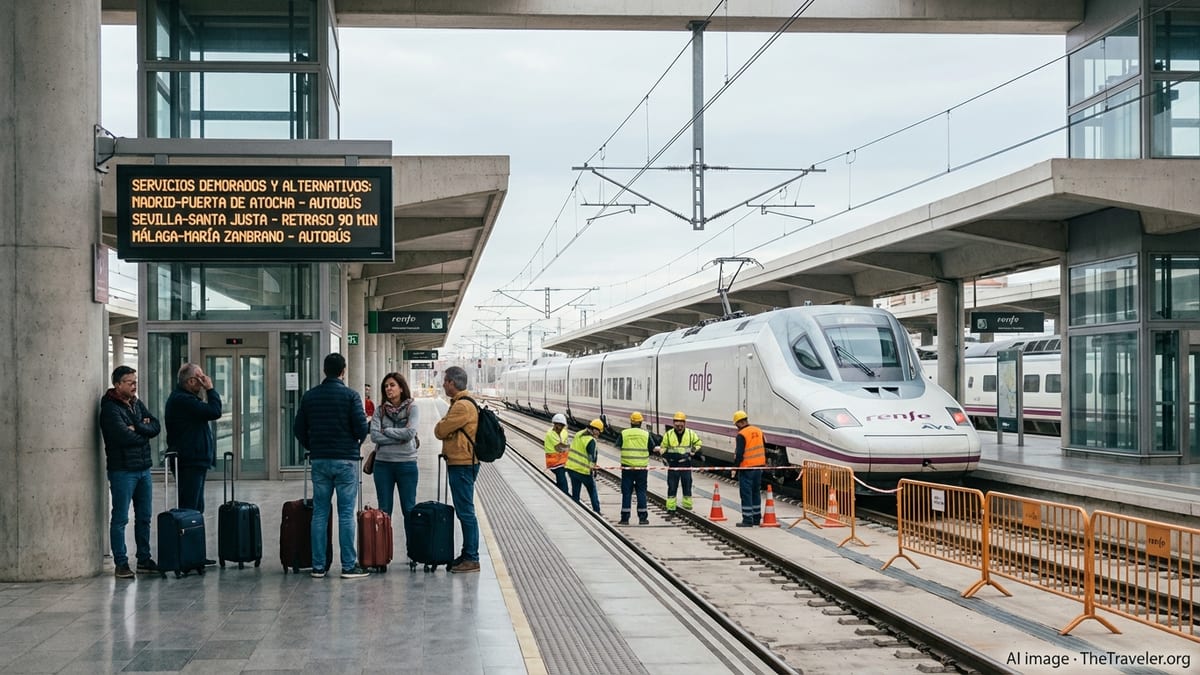
Fire incident triggers emergency response at Birmingham New Street
Services through Birmingham New Street were thrown into disarray after a train caught fire at the busy city centre hub, prompting an evacuation of part of the station and the suspension of several platforms. Publicly available information from rail operators indicates that services were initially brought to a standstill while staff and emergency crews checked the train and overhead equipment.
Early reports suggest the fire was contained on board a single train, but its position within the station throat caused significant knock-on delays. Trains approaching from routes including Wolverhampton, Walsall and Birmingham International were held outside the station or diverted, while departure boards showed a growing list of cancellations and trains “starting at” alternative stations.
Operational updates from National Rail and affected train companies describe engineers examining overhead power lines and signalling equipment for heat and smoke damage before services could gradually restart. Even as limited movements resumed, trains were reported running at reduced speed through parts of the station approach, adding further minutes to already extended journey times.
The incident followed a series of recent infrastructure problems around Birmingham, including earlier disruption linked to fires near the tracks and damage to overhead wires on approaches to New Street. Taken together, these events have highlighted how sensitive the regional rail network is to incidents at or near the station often described in industry coverage as the busiest hub outside London.
Strike action compounds an already fragile timetable
As operators worked to recover the service after the New Street fire, passengers were also preparing for another wave of industrial action. Notices published by West Midlands Railway and London Northwestern Railway set out strike dates on Friday 10 and Saturday 11 July, with widespread timetable cuts across the region and into neighbouring counties.
Information made available by the operator and reproduced in local media shows that some routes will have no West Midlands Railway service at all during the walkouts. Lines flagged for full cancellation include Shrewsbury to Birmingham New Street, while others, such as Wolverhampton to Walsall via Birmingham New Street and parts of the Cross City Line, are scheduled to run at sharply reduced frequencies.
Advisories circulated by local travel bodies and university channels in Birmingham emphasise that the strikes will affect commuters, leisure travellers and event-goers alike, especially those who rely on early morning and late evening trains. Passengers are being urged to check journey planners before travelling, allow extra time, and consider alternative options such as different operators, routes avoiding New Street, or non-rail transport where available.
The industrial action comes against the backdrop of a prolonged national dispute across the rail industry. Previous strike days have already seen Birmingham New Street operate on skeleton timetables or close to most services, and rail businesses have repeatedly warned that trains may also be disrupted on surrounding days as stock and crew end up out of position.
Knock-on effects felt well beyond Birmingham city centre
The combined impact of the New Street train fire and the looming strikes is being felt far beyond the station concourse. According to operator updates and independent travel reporting, routes linking Birmingham with Shropshire, the Black Country, the West Coast Main Line and the wider Midlands are all experiencing reduced resilience.
On days around the incident, National Rail’s disruption summaries have highlighted delayed and altered services between Birmingham New Street and destinations such as Wolverhampton, Walsall, Hereford and Lichfield. Some long distance operators have advised that trains may start or terminate short of Birmingham, with passengers asked to change onto other services or rail replacement road transport where it has been arranged.
Local business groups and regional commentators have expressed concern that recurring disruption at New Street is undermining confidence in rail for both commuting and regional tourism. With other planned engineering work already reducing capacity on key corridors, the additional strain created by unplanned incidents and industrial action risks deterring passengers just as operators are attempting to rebuild patronage.
There are also implications for connectivity with Birmingham Airport and the National Exhibition Centre, which rely on frequent services via Birmingham International. Any reduction in reliability or frequency at New Street can quickly ripple along the corridor, making it harder for travellers to reach flights and large-scale events on time.
Operators advise planning ahead as recovery efforts continue
Rail firms active at Birmingham New Street, including West Midlands Railway, London Northwestern Railway, CrossCountry, Avanti West Coast and Transport for Wales, have all published revised timetables or disruption notices in recent weeks. These documents, together with National Rail’s central updates, underline that services may vary by hour and by route, especially on the strike days immediately following the fire incident.
Passengers are being encouraged, in official guidance, to check their journeys just before travel, as short notice alterations and platform changes remain likely while operators work with infrastructure managers to restore normal operations. Where trains are running, reports from regular users suggest they may be busier than usual, with some services experiencing standing room only as travellers crowd onto the reduced timetable.
Consumer and transport commentators are advising travellers to consider strategies such as travelling earlier or later than usual, avoiding tight connections at New Street, and building in extra time where onward tickets, flights or important appointments are involved. In some cases, it may be possible to route journeys via alternative Birmingham stations or neighbouring hubs, although capacity there is also constrained by ongoing works and past timetable changes.
For those who must travel on the affected dates, publicly available information indicates that ticket acceptance arrangements on other operators, as well as rail replacement buses on certain corridors, may provide limited relief. However, journey planners and operator notices stress that such alternatives cannot fully replace the scale of the normal timetable through Birmingham New Street, and that disruption is likely to remain significant until both the fire-related checks and the current round of strike action have passed.