


More news on this day
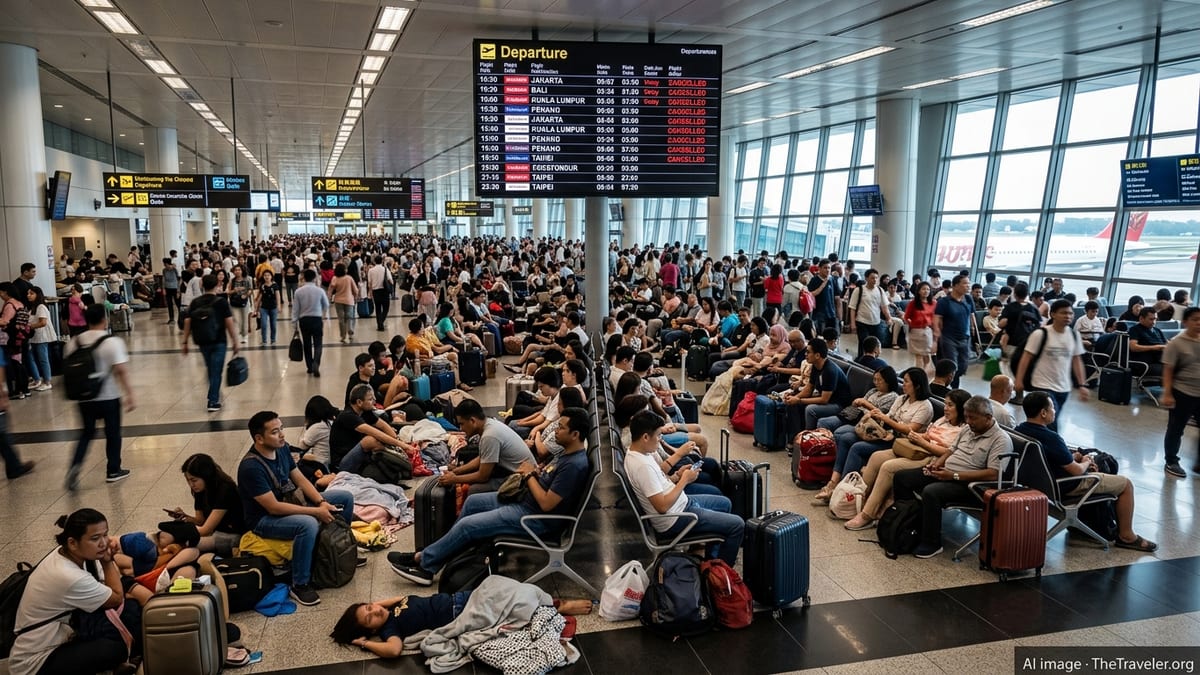
Air travel across parts of Asia is facing another difficult day as publicly available tracking data shows 95 cancellations and 288 delays on flights operated by Tianjin Airlines, Japan Air Commuter, Garuda Indonesia, China Eastern, Shenzhen Airlines and Hainan Airlines, affecting routes in China, Japan, Indonesia and neighboring markets.
Get the latest news straight to your inbox!
Where Disruptions Are Hitting the Hardest
The latest operational data points to particularly heavy disruption at major Chinese hubs, where China Eastern, Shenzhen Airlines and Hainan Airlines handle dense schedules of domestic and regional services. Airports serving Beijing, Shanghai, Shenzhen and Xiamen are seeing clusters of cancellations and late departures, contributing to the overall tally across the region.
Tracking platforms that aggregate live schedules and actual movement times indicate that weather and air traffic control constraints are combining with aircraft rotation issues to slow departures and arrivals. In some cases, individual airports report dozens of late flights in a single morning peak, creating knock-on effects for onward legs throughout the day.
In Japan, regional operator Japan Air Commuter, which connects outlying islands and secondary cities to larger hubs, is experiencing a smaller but noticeable set of delays. These disruptions are especially sensitive for passengers relying on tight connections to long haul departures from Tokyo and Osaka, where a missed commuter sector can mean a full day lost.
Garuda Indonesia’s network is also seeing pressure, with delays on domestic sectors feeding into international departures. Indonesia’s archipelagic geography means that late-running feeder flights from secondary islands can easily cascade into missed connections at Jakarta or other main gateways.
What Is Driving Today’s Cancellations and Delays
Published aviation data and airport information point to a mix of causes behind the 95 cancellations and 288 recorded delays. Periodic thunderstorms and low visibility at several East Asian hubs are slowing departure and arrival rates, while pockets of congestion in busy air corridors are adding further holding time en route.
Operational challenges such as aircraft and crew positioning are also a factor. When an earlier leg runs significantly late, the same aircraft often arrives too far behind schedule to operate its next planned sector, forcing airlines to scrub or retime flights. This appears to be affecting short haul networks for Tianjin Airlines and Shenzhen Airlines in particular, where quick turnarounds are built into daily rotations.
For long haul and regional services operated by China Eastern, any restriction in available runway capacity at Shanghai or Beijing compounds the impact. Even relatively short ground stops can translate into delays of an hour or more as aircraft wait for new departure slots and air traffic control rebalances flows.
While disruptions of this scale remain well below the levels seen during major typhoons or severe weather events, the breadth of airlines and airports involved means that the knock-on effect for travelers is still significant across multiple countries.
How Passengers in Affected Countries Are Impacted
Travelers in China are experiencing the widest range of effects, from straightforward schedule changes to missed domestic and international connections. Passengers departing busy hubs report longer than usual waits at check in and boarding as ground staff work through rebookings and rolling gate changes triggered by delayed inbound aircraft.
In Japan, even a relatively small cluster of Japan Air Commuter delays can have an outsized impact, especially at regional airports with limited alternative services. Individuals booked on multi segment itineraries involving domestic hops to major international gateways are among the most vulnerable to missed onward flights.
In Indonesia, Garuda Indonesia’s delays can ripple across the archipelago, as many routes are served only a few times per day. A late departure from a provincial city can leave travelers arriving into Jakarta or Denpasar too late to catch same day international connections, forcing overnight stays or full itinerary changes.
Foreign visitors transiting the region are also feeling the strain. Because several of the affected airlines operate key links between Asia and Europe, as well as intra Asian routes, delays on one continent can translate into missed meetings, tours or cruise departures thousands of miles away.
Practical Steps for Travelers Caught in the Disruptions
Given the evolving nature of today’s disruptions, air travel specialists generally advise passengers to monitor flight status frequently on the day of departure, using both airline channels and independent tracking tools. Same day schedule changes are common when airlines work to consolidate lightly booked flights or reposition aircraft, and these changes may not appear immediately in all systems.
Travelers with connections in China, Japan or Indonesia are encouraged to build in additional buffer time between flights where possible. Two hours may be insufficient at busy hubs when security queues, immigration checks and terminal transfers are taken into account during a day of elevated delays.
For those already at the airport, remaining close to the gate area and watching terminal displays can be important, as boarding times and gate assignments may shift with little advance notice. Carrying essentials such as medication, chargers and a change of clothes in hand luggage can make an unexpected overnight stay or long delay more manageable.
Passengers who experience a cancellation should retain boarding passes, booking confirmations and any receipts for extra expenses. Depending on the jurisdiction, airline policies and ticket type, some costs may be recoverable at a later date once claims procedures are completed.
What to Watch Over the Next 24 Hours
Operational data suggests that if weather conditions stabilize and air traffic control restrictions ease, airlines may gradually work through the current backlog over the next 24 hours. However, tightly scheduled short haul networks mean that some residual delays are likely to continue into the next operating day.
Observers will be watching closely to see whether China Eastern, Shenzhen Airlines, Hainan Airlines and Tianjin Airlines are able to restore more normal departure patterns at major Chinese hubs by the next morning peaks. Performance at these airports is often a bellwether for broader regional reliability.
In Japan and Indonesia, attention will focus on whether today’s disruptions at Japan Air Commuter and Garuda Indonesia remain localized or spill over into wider schedule adjustments. Any additional weather systems or infrastructure constraints could prolong the recovery period.
For travelers planning to transit China, Japan or Indonesia in the coming days, the most practical approach is to check itineraries regularly, keep contact details up to date with airlines or travel agents, and be prepared for potential last minute changes while the region’s carriers work to restore punctuality.