


More news on this day
Travel across Asia and the Middle East faced severe disruption on June 16 as publicly available data and industry monitoring pointed to 5,976 delayed flights and 555 cancellations centered on key hubs in Indonesia, China, India, Thailand and the United Arab Emirates, impacting a wide range of regional and long haul airlines.
Get the latest news straight to your inbox!
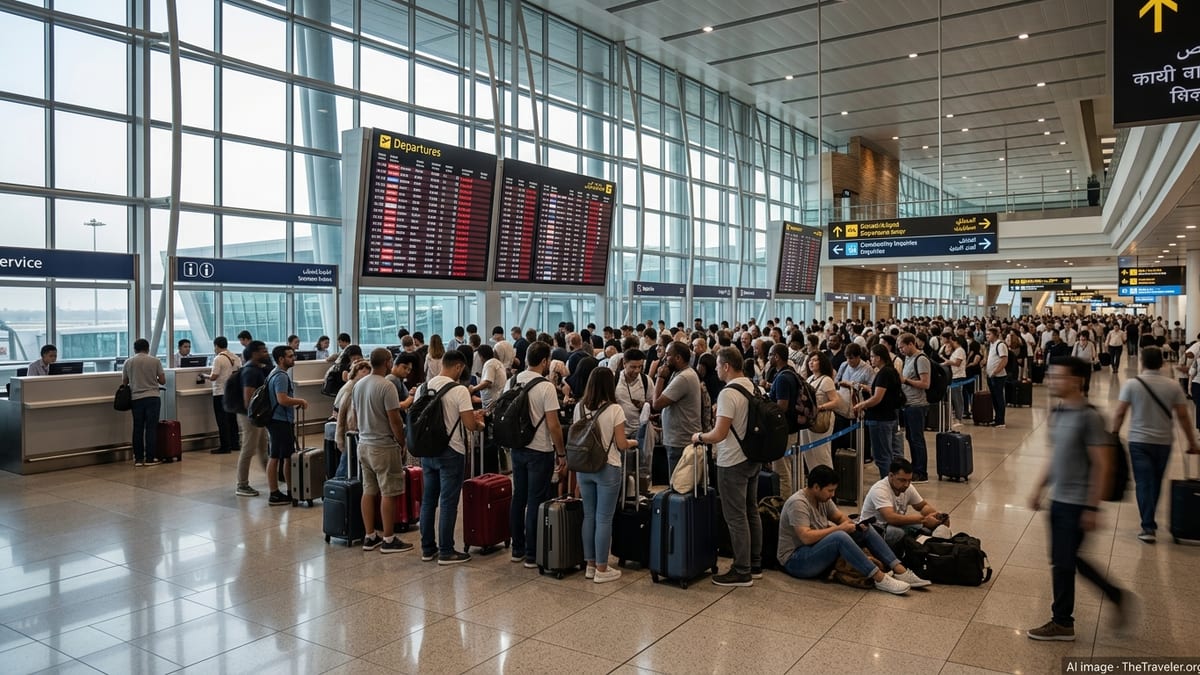
Major Hubs Buckle Under Mounting Delays
Aggregated tracker data and aviation-focused coverage indicate that disruption has been heaviest at some of the region’s busiest airports, including Jakarta Soekarno Hatta, Shanghai Pudong, Hong Kong International, Delhi Indira Gandhi, Bangkok’s Suvarnabhumi and Don Mueang, and Dubai International. The knock-on effect has rippled through secondary airports as aircraft and crews struggle to stay in position for subsequent rotations.
Reports from airline schedule monitors describe wave after wave of late departures and missed slots, with delays often stretching beyond two or three hours. While exact tallies vary between platforms, the overall picture aligns around a single trend: an exceptional spike in late operations across Asia on Monday, compressing airport capacity at precisely the time many carriers are rebuilding schedules for the northern summer.
Travel and aviation sites that track operational performance characterize the situation as part of a broader pattern of stress in the Asia Pacific network. Earlier this year, similar disruption days saw more than 3,000 flights delayed in a single 24 hour period at airports including Bangkok, Singapore, Delhi, Dubai and Jakarta, a scale that is again being approached as June traffic increases.
China Eastern, Citilink, Qatar and Others Face Cascading Disruptions
The current wave of delays and cancellations is affecting a diverse group of carriers. Publicly available flight status feeds show Chinese mainland operators such as China Eastern encountering disruption on routes into and out of Shanghai and other coastal hubs. In Southeast Asia, low cost specialists including Indonesia’s Citilink are contending with bottlenecks at Jakarta and Bali as turnarounds lengthen and connecting banks fall out of sync.
In the Gulf, Qatar Airways and other Middle East based airlines are seeing the consequences of congestion further east translate into late arrivals at Dubai and Doha, which feed heavily into onward services toward Europe, North America and Africa. Aviation analysis published in recent months has highlighted how even a limited number of cancellations at these hubs can fracture complex connection patterns, magnifying the impact well beyond the immediate region.
Smaller regional and niche operators are also being drawn into the disruption. Tibetan and Himalayan carriers serving China’s western provinces and nearby international points report schedule adjustments and retimings as air traffic control restrictions and weather related flow controls absorb runway and airspace capacity. As with larger airlines, a single delayed aircraft can quickly lead to a series of late departures throughout the day.
Jakarta, Bangkok, Delhi and Dubai Under Particular Strain
Jakarta’s main international gateway has repeatedly appeared in recent operational snapshots as a hotspot for prolonged delays and isolated cancellations. Earlier coverage of Asia Pacific performance this year pointed to the Indonesian capital’s airport recording hundreds of delayed departures in a single reporting period, and Monday’s figures suggest congestion has again become acute as domestic and regional traffic rebounds.
In Thailand, Bangkok’s twin airports play a crucial role in connecting Southeast Asia, China and the Middle East. Industry reporting from previous disruption waves showed Suvarnabhumi and Don Mueang absorbing large numbers of delayed flights, particularly on routes operated by low cost and leisure focused airlines. More recent trip tracking data on individual flights between Bangkok and Chinese cities continues to show same day cancellations alongside extended delays, underscoring the fragility of current timetables.
Delhi and other major Indian hubs are facing similar pressure. Rising demand on domestic sectors, coupled with long haul services to the Gulf and East Asia, has left little slack in the system when weather, airspace constraints or crew availability intervene. Public data from earlier this year documented days when Indian carriers were among those most affected by regional disruptions, a pattern that appears to be reemerging as summer approaches.
Dubai, meanwhile, remains a critical node in the unfolding situation. Reporting from March highlighted how even a relatively small number of flight cancellations and delays at UAE airports could reverberate through networks stretching from Europe and North America to Southeast Asia and Australia. With Monday’s spike largely concentrated in Asia, any extended impact on inbound or outbound operations at Dubai would be likely to compound problems for travelers relying on one stop connections.
Multiple Causes: Weather, Airspace and Tight Schedules
Aviation analysts have increasingly pointed to a combination of factors behind the ongoing pattern of disruption. Seasonal weather systems across parts of South and East Asia, together with localized storms around key coastal hubs, can quickly prompt flow control measures that slow arrivals and departures. When combined with already busy summer schedules, even modest reductions in runway throughput can lead to queues of aircraft waiting for takeoff slots.
Separate reporting has emphasized the continuing influence of airspace restrictions linked to geopolitical tensions, particularly in and around the Middle East. Rerouted traffic has added pressure to certain corridors and increased flying times, leaving airlines with less flexibility to recover from earlier delays during the day. Rising fuel costs have also encouraged some operators to tighten schedules in pursuit of efficiency, leaving limited margin for irregular operations.
Industry commentary over recent months suggests that staffing remains another constraint, from cockpit and cabin crew to ground handling and maintenance teams. Although most large airlines have rebuilt their workforces since the sharp cuts of the pandemic period, shortages in specific roles or locations can still force last minute cancellations or aircraft swaps when disruptions occur.
Passengers Confront Long Queues and Limited Options
For travelers, the immediate impact of nearly 6,000 delayed flights and more than 500 cancellations is being felt in long queues at check in counters, security checkpoints and transfer desks around the region. Social media posts and forum discussions from recent disruption events in Asia describe passengers sleeping in terminal seating, waiting for rebooking assistance or meal vouchers as airlines work through backlogs.
Consumer focused travel advisories recommend that passengers with itineraries touching Jakarta, Shanghai, Hong Kong, Delhi, Bangkok, Dubai or other major hubs closely monitor flight status throughout the day and avoid heading to the airport without confirmation that services are operating. Travel writers and aviation bloggers have repeatedly urged affected passengers to keep documentation of expenses incurred during long delays for potential reimbursement under airline policies or local regulations.
With airlines already signaling that schedules in parts of Asia will be tighter through the peak travel season, observers suggest that days like Monday may recur if weather or airspace issues resurface. In this context, publicly available guidance stresses practical steps such as booking longer connection windows, consolidating itineraries with a single carrier where possible, and remaining prepared for last minute changes when traveling through the region’s most congested hubs.