


Lake Louise Ski Resort combines some of the most dramatic mountain scenery in the Canadian Rockies with a long season, big terrain and a surprisingly easy parking setup. To get the best value and the smoothest experience, you need to think about lift tickets, where you will park and when the snow is likely to be at its best. This guide walks through practical, up to date strategies that real visitors use so you can spend more time carving turns and less time in line or circling the lots.
Get the latest updates straight to your inbox!
Understanding How Lake Louise Lift Tickets Work
Lake Louise Ski Resort sits in Banff National Park near the village of Lake Louise in Alberta, and it operates a long winter season that typically runs from early November into May. The resort sells standard day tickets, multi day products, and also honours major multi resort passes such as the Ikon Pass and the Mountain Collective pass through the SkiBig3 partnership. That variety means you should decide early whether you are a day tripper, a long weekend visitor or a repeat skier for the season, because the best lift ticket option will be different for each.
If you are visiting for only one or two days, most travellers opt for regular day tickets bought in advance through SkiBig3 or directly from the resort. Window prices change seasonally and can be high on peak dates, so many people now treat the posted “window rate” as the worst case scenario rather than the default. Booking several weeks ahead for midweek days in January, for example, often results in noticeably lower prices than buying for a Saturday in late December or over Family Day weekend in February.
For a four to seven day trip that includes Lake Louise, Banff Sunshine and Mt. Norquay, the SkiBig3 multi day lift ticket is a popular choice. These tickets give you flexibility to move between the three ski areas without buying separate products. A typical real world pattern is a five day SkiBig3 ticket used as two days at Lake Louise, two at Sunshine and one at Norquay, with a non ski rest day in between to explore Banff townsite or the Lake Louise lakeshore.
Frequent skiers often compare the cost of a season pass for Lake Louise or SkiBig3 with multi resort options like the Ikon Pass or Mountain Collective. Mountain Collective, for example, offers two days at Lake Louise with no blackout dates, plus half price on additional days, which can be good value if you are also visiting other Collective destinations in the same winter. Ikon Pass products that include SkiBig3 access can also make sense if you will ski several weeks a season across North America rather than focusing only on Lake Louise.
Choosing the Right Ticket Option for Your Trip
Before you lock in lift tickets, sketch a rough plan for how many ski days you realistically want and where you will be based. A couple flying in from Toronto for a long weekend in January, staying three nights in Banff and planning two days on snow, often find that simple advance purchase day tickets are easiest. They might ski Lake Louise on Friday, Sunshine on Saturday, and travel home Sunday. Since they are not mixing enough days to justify a big pass, they prioritise flexibility over passholder perks.
In contrast, a family of four driving from Calgary for a five night March break holiday, staying in the village of Lake Louise, is more likely to benefit from a SkiBig3 multi day ticket or a Lake Louise focused pass. In practice that family might ski three consecutive days at Lake Louise to keep logistics simple, then add a shuttle day to Banff Sunshine for variety. The per day cost on a pre booked multi day ticket is usually lower than stacking single day window tickets, especially in the heart of the season.
Travellers planning multiple Western Canada trips in the same winter often look beyond local products. Someone from Seattle who spends a week at Lake Louise in early December, visits Sun Peaks in January and Revelstoke in March may choose a Mountain Collective or Ikon Pass that includes SkiBig3 access, then build each trip around those included days. They would use their two included Collective days at Lake Louise, then either pay half price for extra days there or ski nearby Sunshine and Norquay for variety.
If you are unsure how many days you will ski, consider starting with a flexible product such as a smaller Ikon tier or a moderate length SkiBig3 ticket, then adding extra days at the resort as needed. At Lake Louise, using a physical multi resort pass such as Mountain Collective usually lets you go straight to the lift once you have activated your pass with SkiBig3, which removes the step of lining up at the ticket window on cold mornings.
How Parking Works at Lake Louise Ski Resort
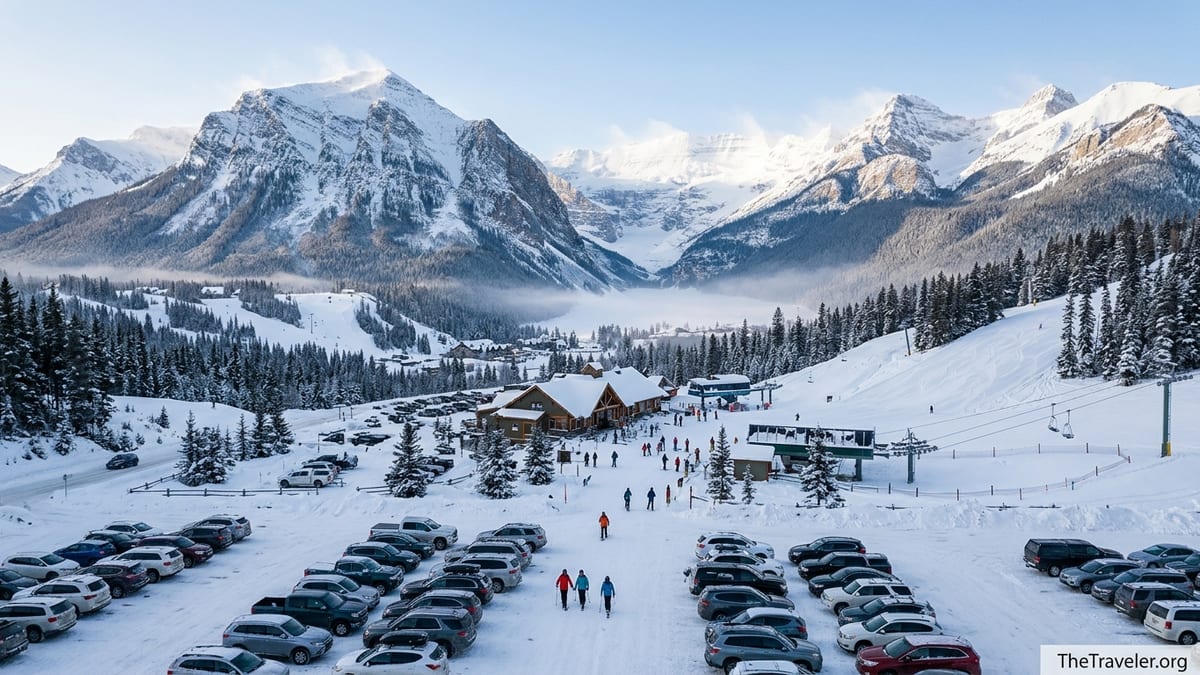
One of the biggest advantages of Lake Louise over many other large resorts is that parking at the ski area itself is free. The resort operates several large lots near the base area at 1 Whitehorn Road, just off the Trans Canada Highway, and they are designed to handle peak winter and summer traffic. You do not need to reserve a spot for general day skiing, and current resort guidance emphasises that there is “always plenty of parking” for day visitors in winter, with overnight parking prohibited.
In a typical real world example, a family driving from Calgary for a Saturday in January can leave the city by 6:30 a.m., reach the ski resort around 8:30 a.m., and pull straight into one of the main lots without any reservation. From there they either walk a few minutes to the day lodge or hop on a short internal shuttle if it is operating that day. This is a very different experience from some other big name North American resorts where paid parking or reservations are standard on weekends and holidays.
Parking at the Lake Louise Ski Resort is also a key part of the summer Park and Ride system for Lake Louise and Moraine Lake. Parks Canada uses the ski area as the main Park and Ride lot for shuttle buses to the lakes during the warm season, when the lakeshore lots fill extremely quickly. While that Park and Ride reservation system does not apply to winter ski visits, it matters if you plan a shoulder season trip in October or May when both skiing and lake visits may overlap, because you might be sharing some of the same parking infrastructure.
It is important to distinguish between the free parking at the ski resort and paid parking at the Lake Louise lakeshore itself. Around the lake, which many people visit for ice skating or winter walks, Parks Canada has implemented seasonal paid parking. Many skiers therefore leave their vehicle at the resort during the day for free, ski, then drive into the village or to the lakeshore later in the afternoon if they want to skate or sightsee, accepting that parking near the iconic hotel and lake will likely come with a fee in busy periods.
Shuttles, Day Lodging and Getting to the Slopes
Even if you prefer not to drive in winter conditions, reaching Lake Louise Ski Resort is straightforward. Several free ski shuttles operate between the resort and local accommodation in Lake Louise village, and seasonal ski shuttles connect many Banff hotels to the resort as part of SkiBig3 operations. A common real world pattern is for visitors to stay in Banff, leave their car parked at the hotel and rely on the scheduled ski bus that picks up near Banff Avenue in the morning and returns in the afternoon.
Within the Lake Louise area, hotel concierges often coordinate directly with the ski resort shuttles. For example, guests at a major lakeside hotel who rent equipment from the on site ski shop will typically be directed either to a dedicated hotel to ski hill shuttle or to a village pickup point for the free resort bus. Because winter parking at the ski resort is free and abundant, many independent travellers simply drive up each morning, but shuttles are attractive for those who are nervous about snow covered roads or want to avoid scraping ice off their car in subzero temperatures.
Once you arrive at the resort, the base area is compact and easy to navigate. The main day lodge sits a short walk from the primary lots, with ski school meeting areas, rental shops and ticket windows all clustered nearby. Families with small children often use a drop off zone to unload gear close to the lodge, then one adult parks the car and walks back. This simple arrangement is a practical advantage when compared with resorts where parking has been pushed far down valley and requires long shuttle transfers.
Shuttle logistics become particularly useful if you want to combine a ski day with lakeshore sightseeing in the peak of winter. Some visitors park at the ski resort for free, ski a half day, then use local shuttles or tours that pick up at the resort to visit the Lake Louise lakeshore in the afternoon for ice walking or photographs of the frozen lake. In practice that means you get the benefit of easy free parking while still accessing one of the most photographed spots in the Canadian Rockies without worrying about finding a paid space at the lakeshore during the midday rush.
Timing Your Visit for the Best Snow
Lake Louise is known more for its long season and consistent cold rather than huge single storm totals, which makes timing your visit less about chasing one massive dump and more about balancing early season coverage, midwinter cold and spring sunshine. Historical snow statistics compiled from recent seasons show that November and December often bring the highest powder probabilities, with frequent smaller storms that steadily build the base. By early December, many of the front side lifts are typically open with groomed runs skiing well, even if every extreme line is not yet filled in.
For travellers aiming at the best mix of snow quality and terrain coverage, a common strategy is to target mid to late January. By then, coverage on the upper mountain and in the famed back bowls is usually strong, and the very cold snaps of early winter often give way to a more stable pattern of clear nights and crisp sunny days. A real world example would be a group from Vancouver planning a four day trip around the third week of January: they book flights and accommodation several months ahead, then watch the 10 day snow forecast to fine tune whether they ski Lake Louise or Banff Sunshine on any particular day depending on where the most recent storm hit hardest.
Those who like softer conditions and patio lunches gravitate towards March and even April, when Lake Louise often still has plenty of snow at higher elevations but the days are longer and temperatures milder. The upper mountain, accessed by lifts such as Summit and Top of the World, tends to hold winter like snow while lower elevation runs begin to feel more springlike. A Calgary based family might plan a three day Easter weekend at the resort, knowing that even if the lower slopes are a bit slushy by mid afternoon, they can chase better snow higher up in the bowls during the morning.
Because snow and weather can vary significantly from year to year, it is smart to track real time information in the final weeks before your trip. Dedicated snow report sites update snowfall totals, base depths and the number of open lifts and runs throughout the season. Many seasoned visitors also watch social media posts and webcams from the resort in late October and early November to gauge how quickly the early season base is forming, then decide whether to target the first week of November for “bragging rights” turns or wait until later in the month for more extensive terrain.
Putting It Together: Sample Trip Itineraries
To see how lift tickets, parking and snow timing fit together, it helps to look at complete real world style itineraries. Imagine a three night midweek trip in late January for two adults flying in from Toronto. They arrive in Calgary on Monday morning, pick up a rental SUV with winter tires, and drive to a hotel in Banff. On Tuesday and Wednesday they take the free SkiBig3 shuttle from Banff to Lake Louise, using advance purchase two day SkiBig3 lift tickets. Each morning they board the shuttle near downtown Banff around 8 a.m., arrive at the resort with no parking worries, ski until mid afternoon and ride the bus back for dinner in town.
For a family of five from Edmonton planning a March break road trip, the plan might look different. They book a condominium style hotel in the village of Lake Louise for six nights and buy a five day SkiBig3 lift ticket for everyone. Each morning they drive ten minutes from the village to the Lake Louise Ski Resort, take advantage of the large free parking lots and walk their gear into the day lodge. They ski four full days at Lake Louise and one at Banff Sunshine, using a paid shuttle from the village on their Sunshine day so they can relax on the drive and not worry about mountain road conditions further east.
A more snow focused trip might be a flexible ten day visit in early February for a group of advanced skiers from Europe using Mountain Collective passes. They plan to stay in both Banff and Lake Louise village, watch storm tracks across the Rockies and decide whether to spend their included two Mountain Collective days at Lake Louise during the biggest storm cycle or save them for blue sky powder in the back bowls after the weather clears. Because parking is straightforward at the ski resort, they rent a vehicle in Calgary, drive themselves each day and choose their ski area based on snow reports without factoring in parking reservations or extra fees.
Even day trippers can benefit from planning. A couple living in Calgary might decide on a spur of the moment Sunday trip in April because a midweek storm has freshened up the upper mountain. They leave the city after breakfast, pull into the free lots just before 10 a.m., buy half day tickets at the resort, lap the summit chair through the late morning and early afternoon, and drive home in daylight. The simplicity of just arriving, parking and skiing without extra logistics is one of the reasons Lake Louise remains a favourite weekend destination for many Alberta locals.
The Takeaway
Planning a smooth Lake Louise ski trip comes down to three main decisions: which lift ticket or pass best matches your days on snow, how you want to get to the hill each morning, and which part of the season fits your snow and weather preferences. Lake Louise makes the second piece easy by offering large, free winter parking lots right at the base area, plus regular shuttles from nearby accommodation and from Banff. That leaves you free to focus on choosing between day tickets, multi day SkiBig3 products and broader multi resort passes such as Ikon or Mountain Collective based on how often and where you plan to ski.
On the snow side, Lake Louise’s long season and relatively cold climate mean you can find good conditions from early November straight into spring. Early winter is best for storm chasers and those who love cold, grippy corduroy, midwinter balances coverage and stability, and spring brings softer snow and long, sunny afternoons. Whatever window you choose, combining an appropriate ticket product with realistic travel times, smart use of free parking or shuttles, and a flexible daily plan will help you spend more of your Lake Louise holiday enjoying the views from the lifts and bowls instead of wrestling with logistics in the parking lot.
FAQ
Q1. Do I need to reserve a parking space at Lake Louise Ski Resort in winter?
In winter you do not need to reserve a parking space at the ski resort. The main lots at the base are free for day use and usually have ample capacity, even on busy weekends, although arriving earlier in the morning makes it easier to find a spot close to the lodge.
Q2. Is parking at Lake Louise Ski Resort always free?
For regular winter day skiing, parking at the Lake Louise Ski Resort base area is currently free, with no day use fee charged in the main lots. Overnight parking, camping and sleeping in vehicles are not allowed, and separate paid parking rules may apply at the Lake Louise lakeshore area managed by Parks Canada.
Q3. How early should I arrive to get good parking on weekends or holidays?
On busy Saturdays, holidays and during peak periods like Christmas and March break, many locals aim to arrive between 8:00 and 9:00 a.m. to secure a space in the closest lots. If you arrive later in the morning you will typically still find parking, but you may need to walk a bit farther to the day lodge.
Q4. What is the easiest lift ticket option for a short two or three day visit?
For a short visit most travellers use advance purchase day tickets or a short SkiBig3 multi day ticket that covers Lake Louise, Banff Sunshine and Mt. Norquay. Buying online ahead of time usually gives better pricing than paying full window rate, and you can still decide day by day which of the three areas you want to ski.
Q5. Are Ikon or Mountain Collective passes worthwhile for Lake Louise?
Multi resort passes can be good value if you plan to ski several destinations in one winter. Mountain Collective includes two days at Lake Louise with no blackout dates plus half price on additional days, while certain Ikon Pass tiers include access to SkiBig3 resorts. If you will ski in multiple regions, these passes can bring your effective daily cost down.
Q6. When is the best time of winter to visit Lake Louise for snow quality?
Historical patterns suggest that November and December bring frequent storms and growing coverage, mid to late January often offers a strong base with consistent cold snow, and March and April combine good upper mountain conditions with longer, sunnier days. For many visitors seeking reliable coverage and good skiing across most terrain, late January through February is a popular window.
Q7. Can I stay in Banff and ski Lake Louise without driving myself?
Yes. SkiBig3 and local partners run ski shuttles between many Banff hotels and Lake Louise Ski Resort throughout the winter. In practice many visitors leave their car at a Banff hotel, ride the scheduled shuttle to the resort in the morning, ski all day and return on an afternoon or early evening bus, avoiding winter highway driving altogether.
Q8. Is it practical to combine a ski day at Lake Louise with a visit to the lakeshore?
It is practical but you need to watch timing and parking rules. Many travellers park for free at the ski resort, ski a half or full day, then drive or take a shuttle to the Lake Louise lakeshore later for ice skating or sightseeing. Around the lake, parking is more limited and may be paid in peak seasons, so going early morning or later in the afternoon can help.
Q9. How far in advance should I buy lift tickets for peak periods?
For peak times such as Christmas and New Year, Alberta Family Day weekend in February and school spring breaks, it is wise to purchase lift tickets several weeks or even a few months in advance if possible. This not only helps with budgeting but also protects you from potential price increases or limited availability on specific products as dates approach.
Q10. Is Lake Louise a good choice for beginners who will drive themselves to the hill?
Lake Louise is well suited to beginners who arrive by car. The free base area parking, short walk to the day lodge, extensive rental and ski school facilities and a large selection of gentle green and easy blue runs from the main lifts make it straightforward for first time skiers to park, gear up and reach suitable terrain without complicated lift or shuttle connections.