


More news on this day
Passengers across Asia are facing another bout of air travel turmoil after four major airlines collectively canceled 23 flights and delayed 483 more, leaving thousands stranded at key hubs from Shanghai to Islamabad.
Get the latest news straight to your inbox!
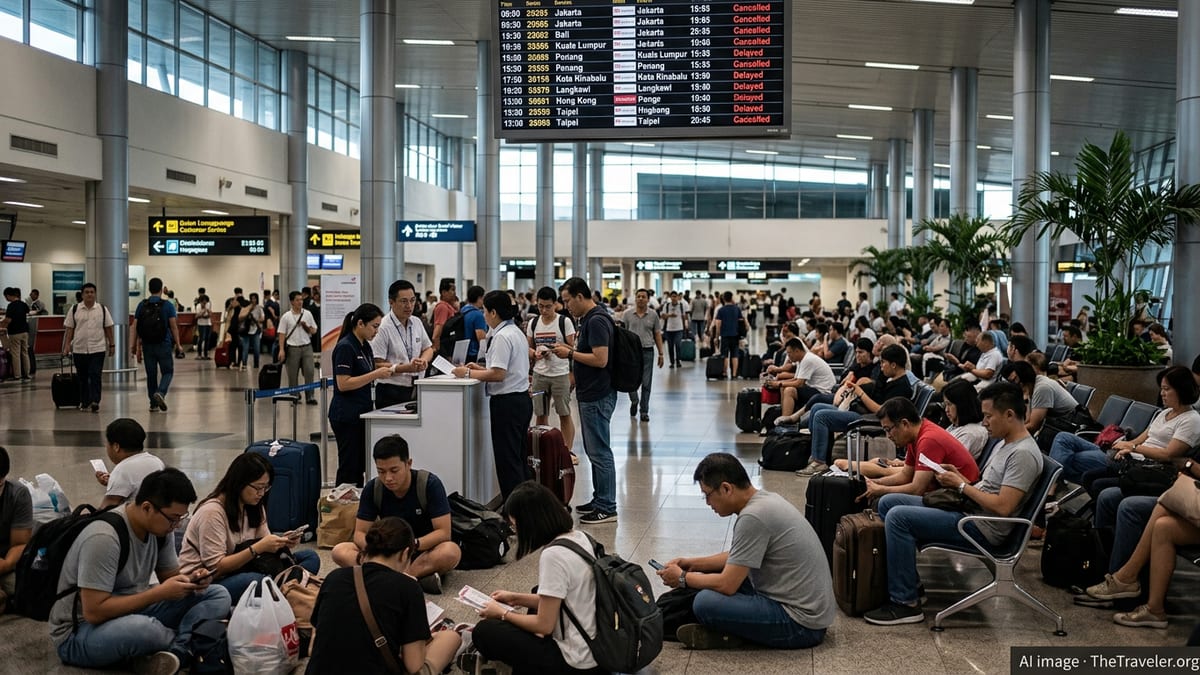
Major Asian Hubs Hit by Fresh Wave of Disruptions
Reports compiled from flight-tracking data and regional media indicate that the latest disruption has centered on large transit airports in East and South Asia, including Shanghai Pudong and Islamabad International. The four affected carriers, which operate a mix of regional and long-haul services, have together canceled 23 flights and delayed 483 more within a short operating window. While the absolute numbers may appear modest compared with global peaks, the concentration of problems at already congested hubs has magnified the impact on travelers.
Published coverage describes long queues at check-in, crowded boarding areas, and passengers attempting to rebook onward journeys after same-day connections became impossible. At some airports, travelers on late-night departures reported waiting through the early hours as airlines attempted to locate spare aircraft and crews. With many services running close to capacity during the spring travel period, alternative seats have been limited, particularly on routes linking Asia with the Middle East and Europe.
The knock-on effects have extended well beyond the airports where flights were initially disrupted. Because many itineraries in Asia rely on tight connections, even a short delay on a feeder flight can result in missed long-haul departures. Once a small wave of schedule changes emerges, it can quickly cascade across an airline’s network, generating new delays throughout the day as aircraft and crew end up in the wrong locations.
Operational Strains Exposed Across Airline Networks
Publicly available information from previous disruption episodes shows that the patterns seen this week are consistent with broader structural pressure in global aviation. Operations analysts note that carriers in the Asia Pacific region are still adjusting to full post-pandemic schedules while dealing with limited spare capacity in both aircraft and trained crew. When a disruption occurs, whether due to weather, air traffic constraints, or localized technical issues, airlines have fewer backup options than they did a decade ago.
Recent reporting on wider global flight chaos in March and April 2026 points to similar vulnerabilities, with monitoring services logging thousands of cancellations and tens of thousands of delays worldwide on peak days. In those cases, Asia Pacific airports accounted for a significant share of the disruption, underlining how quickly regional turbulence can feed into international networks. This week’s figures for Asia, involving 23 cancellations and 483 delays across only four carriers, illustrate how even a limited subset of flights can trigger visible congestion.
Industry assessments suggest that tight aircraft rotations, lean staffing models, and high load factors all contribute to the fragility of schedules. When a single aircraft suffers a technical fault, that aircraft’s subsequent flights are affected, and replacement capacity can be difficult to find. Once rotations slip, crews may reach legal duty-time limits, forcing further cancellations or extended delays while new crews are sourced. This system-wide sensitivity means that small operational shocks can have outsize consequences for passengers.
Stranded Passengers Face Costs, Uncertainty and Limited Options
For travelers on the ground, the numbers behind the disruption translate into missed holidays, broken business plans, and unexpected expenses. Accounts from recent Asian disruption events, including weather-related problems at hubs in the United Arab Emirates and typhoon-related issues in the Philippines, describe passengers sleeping in terminal buildings, struggling to secure hotel rooms in already busy cities, and spending hours in lines to reach customer service desks. The current wave of cancellations and delays appears to be generating similar scenes at affected airports.
Published guidance from consumer organizations notes that travelers are often left to manage their own food, transport, and alternative accommodation during the initial hours of a disruption, particularly when the cause is outside the airline’s direct control. Even when assistance is offered in the form of meal vouchers or hotel bookings, availability can be uneven between carriers and airports. Passengers with complex itineraries, such as multi-stop journeys between South Asia, the Gulf, and Europe, tend to face the greatest difficulties because a single missed leg can invalidate subsequent segments on separate tickets.
Beyond the immediate inconvenience, prolonged disruption can produce longer-term financial and emotional impacts. Missed conferences, lost workdays, and forfeited hotel reservations add to the burden for travelers who may already have spent significant sums on their trips. For those visiting family or returning to work on tight schedules, the uncertainty around rebooking and the lack of clear timelines for departure can be particularly stressful.
Passenger Rights Vary Widely by Route and Jurisdiction
The latest problems in Asia are also highlighting how uneven passenger protections remain across the global aviation system. Information from legal filings and regulatory proposals in major markets shows that obligations for airlines to provide compensation, accommodation, or rebooking support vary significantly depending on the route, the airline’s home country, and the cause of the disruption.
Routes touching the European Union, for example, may fall under well-established compensation rules for long delays and short-notice cancellations, while similar journeys within Asia can be governed by looser frameworks. Recent commentary from air passenger advocacy groups emphasizes that travelers often struggle to determine what they are entitled to receive when a flight is canceled or heavily delayed, particularly if multiple airlines share a single itinerary through codeshare or alliance agreements.
Regulators in several jurisdictions have been reviewing passenger rights standards after high-profile breakdowns in airline operations in recent years. Draft rules and consultation documents reference previous incidents in which mass cancellations stranded millions of travelers and prompted calls for automatic refunds, clearer communication standards, and stricter obligations to provide food and lodging. As the latest Asian disruptions unfold, consumer advocates are likely to use the event as another example in pushing for stronger protections and more consistent global norms.
What Travelers Can Do During Ongoing Asia Disruptions
With cancellations and delays still affecting flights in parts of Asia, travel experts and consumer groups are emphasizing steps passengers can take to reduce risk and respond more effectively if their plans are disrupted. Publicly available guidance recommends checking flight status repeatedly in the 24 hours before departure through both airline channels and independent flight-tracking tools. Building in longer connection times, especially when transferring between different airlines or tickets, can offer more flexibility if the first leg is delayed.
When delays or cancellations occur, the first priority for many travelers is securing an alternative booking. Commentators note that using airline mobile apps, websites, and call centers in parallel with airport desks can sometimes yield faster results, particularly when large numbers of passengers are queuing in person. Keeping digital copies of booking confirmations and receipts for meals, hotels, and ground transport can also be important if compensation or reimbursement is available later.
Analysts suggest that the current wave of disruptions is unlikely to be the last as airlines juggle strong demand with tight capacity and a complex operational environment. For now, passengers flying through major Asian hubs are being advised to remain alert to schedule changes, plan conservatively for important connections, and familiarize themselves with the specific rights and support mechanisms that apply on their chosen routes.