


More news on this day
A fast-moving wildfire in northeast Florida brought Amtrak’s busy Miami-to-New York corridor to a standstill this week, leaving hundreds of passengers stuck on board a halted train for more than 24 hours and rippling disruptions across the state’s rail network.
Get the latest news straight to your inbox!
Wildfire along key rail corridor halts train traffic
Publicly available information from state agencies and news outlets indicates that a large wildfire burning along the Clay and Putnam County line in northeast Florida forced rail operators to shut down a crucial stretch of track south of Jacksonville. The blaze, estimated at roughly 2,700 acres, produced heavy smoke and fire activity close to the right of way, making it unsafe for passenger trains to continue.
The affected corridor carries several of Amtrak’s most heavily used routes in Florida, including long-distance services connecting Miami with New York and Chicago. With conditions deteriorating near the tracks, dispatchers halted traffic and suspended movements through the area while wildfire crews worked to contain the flames and secure access for firefighting equipment.
Travel coverage from regional and national outlets describes a swift series of schedule changes, cancellations and partial route suspensions that unfolded on Monday and Tuesday, as the scale of the fire and its proximity to the tracks became clear. The disruption coincided with busy spring travel, amplifying the impact on passengers heading both in and out of Florida.
Hundreds stranded on northbound Amtrak for over a day
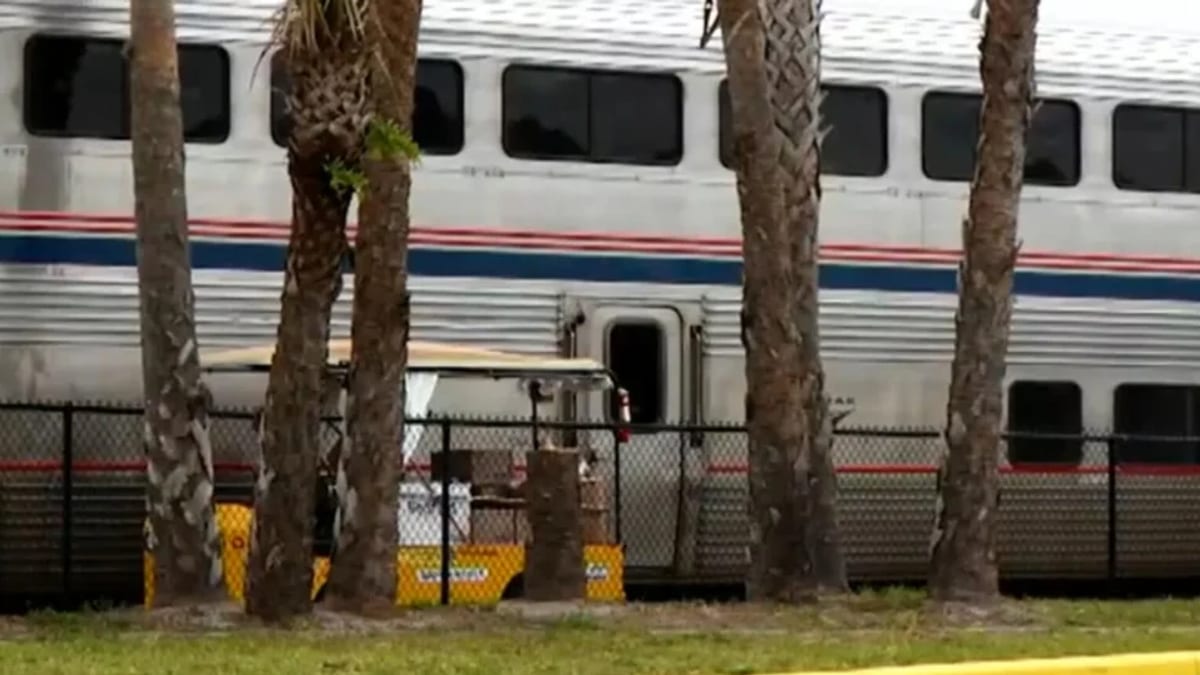
Among the hardest hit was a northbound Amtrak train traveling from Miami toward New York, identified in multiple reports as the Silver Meteor. The train came to a stop north of DeLand, Florida, late Sunday, when the brush fire forced the closure of the line ahead. Passengers reported remaining in place overnight and well into the following day as crews assessed whether the train could safely proceed.
Coverage from broadcast and online outlets indicates that more than 200 passengers were on board and ultimately remained on the immobilized train for roughly 24 hours or longer. Riders described extended periods without clear information and limited opportunities to disembark, while the crew awaited clearance to move or instructions on alternative arrangements.
Additional accounts gathered by local media in North Carolina and Florida point to similar delays for travelers booked on the same northbound route, which was scheduled to make intermediate stops including Orlando and Fayetteville, North Carolina. Timetables show that a journey expected to cover that distance in under a day instead stretched well past the 18-hour mark before any significant progress was made.
Separate reporting on passengers returning to Miami indicates that some travelers were eventually brought back south by rail or bus after attempts to advance north proved unworkable due to the persistent wildfire threat near the tracks.
Route cancellations and shortened services across Florida
The wildfire’s location on a critical junction of Florida’s rail system led Amtrak to implement wider schedule changes beyond the stranded Silver Meteor. Publicly available service advisories and subsequent news reports show that the company canceled its Auto Train service between Sanford, near Orlando, and Lorton, Virginia, for at least one day while conditions remained unstable.
Two other long-distance services, the Silver Meteor and the recently introduced Floridian, also saw their Florida segments curtailed. On Monday, the Silver Meteor operated only between Jacksonville and points north, with its usual south Florida stops suspended. The Floridian, which links Miami and Chicago via Washington, began and ended in Savannah, Georgia, instead of traveling all the way into Florida, and at least one departure was canceled for Tuesday.
Regional coverage from central Florida notes that Amtrak arranged limited bus transportation to bridge some of the disrupted segments, particularly between Jacksonville and Miami. However, the scale of the wildfire and the closure of the rail corridor meant that not all passengers could be accommodated immediately, leaving some to face lengthy delays, rebookings or overnight holds on trains that remained parked on sidings.
Wildfire highlights vulnerability of long-distance rail
Travel and transportation analysts observing the disruption point out that long-distance passenger rail in the United States often relies on a small number of freight-owned corridors, which can quickly become bottlenecks when extreme weather, infrastructure damage or natural disasters occur. In this case, the wildfire’s position alongside a shared freight and passenger route left Amtrak with limited routing alternatives into and out of Florida.
State forestry updates cited in news coverage describe challenging conditions for firefighters, with dry vegetation, shifting winds and smoke limiting visibility. Those same factors raised safety concerns for rail traffic, where line-of-sight and stable track conditions are essential for continued operations. Until fire crews could secure the perimeter and confirm that heat and smoke no longer threatened the right of way, trains remained stationary or were rerouted far from their original paths.
Passenger accounts collected by television and online outlets also draw renewed attention to the experience on board during prolonged disruptions. Reports describe crowded cars, dwindling food supplies and uncertainty about when movement would resume, issues that have surfaced in previous extended delays across the national network. Advocates for rail passengers argue that the Florida incident underscores the need for stronger contingency planning, clearer communication protocols and backup power or ventilation options when trains are stopped for many hours.
Next steps for travelers and ongoing wildfire response
As of Tuesday, publicly available information from transportation and emergency-management sources indicated that wildfire containment efforts were continuing along the Clay and Putnam County line, with crews working to strengthen firebreaks and monitor flare-ups near transportation corridors. Rail movements through the affected area were being restored gradually, with some schedules still adjusted or reduced as assessments continued.
Travel coverage encouraged passengers booked on upcoming Amtrak departures involving Florida to monitor the latest service advisories and to be prepared for schedule changes, alternate transportation or last-minute cancellations. Those whose trips were disrupted by the wildfire-related shutdown were directed through customer-service channels for information about rebooking and potential refunds or travel credits.
For communities along the route, the incident added transportation complications to an already tense wildfire response. Local reports described smoke affecting nearby highways and prompting evacuation notices in some areas, even as emergency managers sought to keep major travel arteries open where possible. The halted trains, and the hundreds of passengers forced to wait on board for more than a day, became one of the most visible signs of how quickly a single wildfire can ripple through regional mobility at the height of the travel season.