


More news on this day
Long queues at immigration checkpoints at a major French airport have left hundreds of passengers stranded after missing their flights, drawing renewed attention to mounting delays at European border controls as the peak summer travel season approaches.
Get the latest news straight to your inbox!
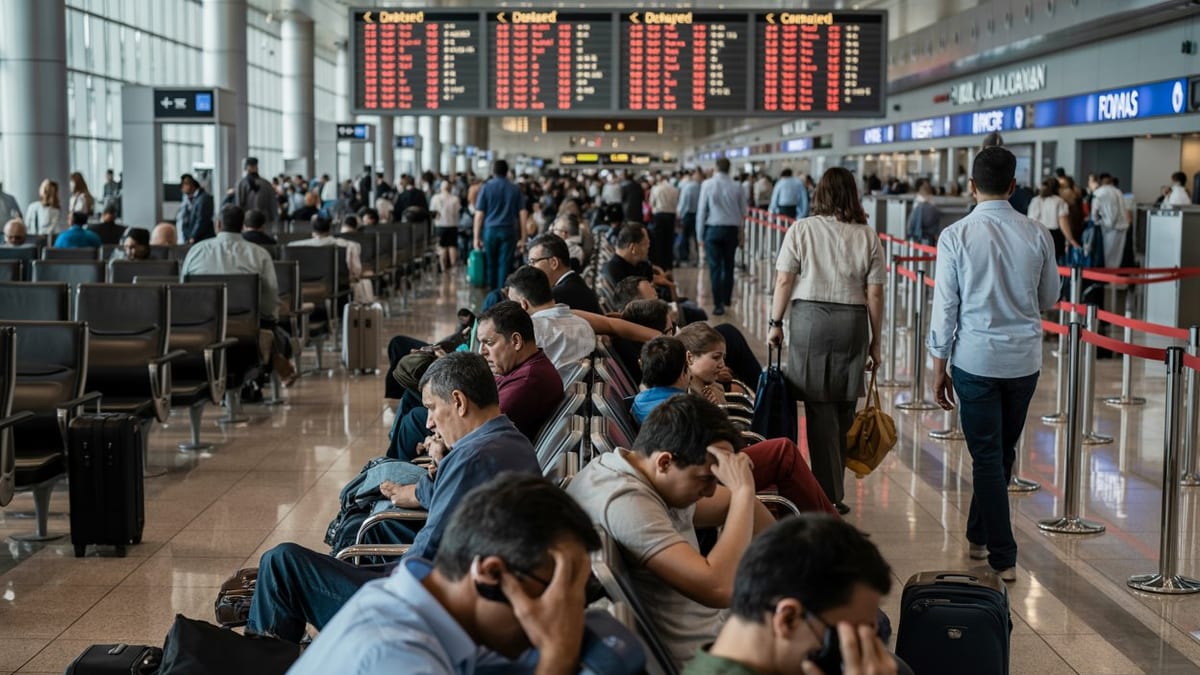
Queues at French hub tip passengers over the edge
Reports from recent days describe extensive lines forming at immigration at one of France’s busiest airports, with passengers unable to clear border checks in time to reach their departure gates. Travellers recount arriving more than two hours before departure and still watching boarding close while they remained trapped in queues that snaked through the terminal.
Publicly available accounts suggest several outbound services left with large numbers of empty seats after sizeable groups of passengers were unable to complete formalities. Social media posts and traveller forums describe scenes of confusion as airport loudspeakers called final boarding for multiple flights while crowds remained stuck at passport control.
Coverage in French and international outlets points to a combination of staffing shortages at border booths and the additional checks now required for some non EU nationals as key contributors to the gridlock. In at least one case, flight operators arranged rebooking for stranded travellers, while others were advised to seek assistance through standard customer service channels.
Airport management has acknowledged recent pressure on border control and indicated that contingency plans, including the redeployment of staff and the use of overflow queuing areas, are being put in place in an effort to stabilise operations.
New EU Entry/Exit rules amplify bottlenecks
The disruption in France is unfolding as Europe continues to roll out its new biometric Entry/Exit System, which records the faces and fingerprints of many non EU travellers at external borders. Industry groups have repeatedly warned that the extra time required for first time registration can significantly lengthen processing times at busy airports.
According to recent coverage from aviation and travel publications, the first full phase of the system has been marked by widespread reports of long queues, extended waiting times and missed departures at airports across the continent. Airport associations have urged regulators to allow more flexibility in applying the rules during the initial period while operators adapt staffing and infrastructure.
Low cost and network carriers serving France have already begun advising passengers to arrive at airports at least three hours before departure for flights that involve external Schengen borders, rather than the traditional two hours. Some airlines are also recommending that travellers complete check in formalities as early as possible and move directly to security and immigration instead of spending time in landside areas.
At French airports, the impact has been uneven, with some terminals processing flows relatively smoothly while others face sporadic surges when several long haul flights land or depart within a short window. The incident in which hundreds reportedly missed flights underlines how quickly the system can become overwhelmed when demand and staffing fall out of balance.
French airport capacity and staffing under scrutiny
The French gateway at the centre of the latest disruption is one of the country’s principal international hubs, handling tens of millions of passengers a year and serving as a key transfer point between Europe, Africa, the Middle East and the Americas. In recent years it has invested heavily in terminal upgrades and new piers to handle wide body aircraft, but border control facilities remain a pinch point during peak banks of flights.
Specialist aviation analyses note that while check in and security areas at large French airports have generally absorbed post pandemic traffic growth, the border control function has proven more difficult to scale quickly. Staffing levels at immigration desks are typically set in advance, and sudden spikes in arrivals or departures can leave long lines of passengers waiting to have passports stamped or biometric data captured.
Previous episodes in France have shown similar patterns. Local media reported earlier this spring that a separate French airport saw dozens of passengers stranded overnight when border queues delayed departure beyond crew duty time limits. In that case, the operator cited shortages of border police and the need to apply new external border procedures for certain routes.
Travel industry observers suggest that the latest incident will increase pressure on airport operators and national authorities to accelerate hiring and training of additional border staff, reconfigure queuing areas, and ensure that all available booths are opened during the busiest waves of traffic.
Knock on effects for airlines and connection hubs
Missed departures at French airports have consequences that ripple far beyond the terminal. When large groups of passengers fail to board, airlines may need to offload checked baggage, rebook travellers on later flights and adjust crew and aircraft rotations. This can create delays on subsequent services and complicate operations at downline airports.
For connecting hubs in particular, extended waiting times at immigration can undermine carefully planned transfer windows. Recent data from independent travel analyses has already ranked Paris Charles de Gaulle among Europe’s more challenging airports for making flight connections, citing long walking distances, complex terminal layouts and the need for additional security or border checks on some itineraries.
Travel management companies report that corporate clients are increasingly building longer buffers into itineraries that involve French gateways, especially when meetings or events are scheduled shortly after arrival. Some are steering itineraries through alternative hubs when tight connections cannot be avoided, in order to reduce the risk of employees arriving late or needing last minute rebooking.
Airline scheduling teams, meanwhile, are monitoring performance at key European gateways and adjusting minimum connection times, boarding cut off policies and customer communication strategies to reflect the current operating environment.
What travellers can do ahead of the busy summer period
Consumer organisations and travel commentators say the recent disruption in France illustrates the importance of allowing generous time for airport formalities during the coming peak season. Many now recommend arriving three hours early for flights involving non Schengen destinations from France, particularly at large hubs and during busy morning and evening departure waves.
Passengers are encouraged to complete online check in where possible, verify terminal and gate information in advance, and proceed to security and border control soon after arriving at the airport. Holding off on duty free shopping or meals until after clearing immigration can reduce the risk of unexpected delays at checkpoints causing a missed departure.
Travel insurance policies vary in how they treat missed flights due to airport queues, so specialists advise reviewing coverage terms carefully. Some policies focus on external transport disruptions on the way to the airport rather than delays within the terminal, leaving passengers reliant on airline goodwill or standard rebooking fees if they are held up at immigration.
With summer traffic building and new border technologies bedding in, the incident at the French airport serves as a warning that even well known hubs can experience sudden periods of severe congestion. Travellers planning trips through France in the coming weeks may wish to factor this elevated risk into their schedules and contingency planning.