


More news on this day
New figures for early 2025 indicate that the Asia-Pacific region is dominating global urban rail expansion, with China, India and Southeast Asian markets accounting for the bulk of new lines, stations and passenger growth worldwide.
Get the latest news straight to your inbox!
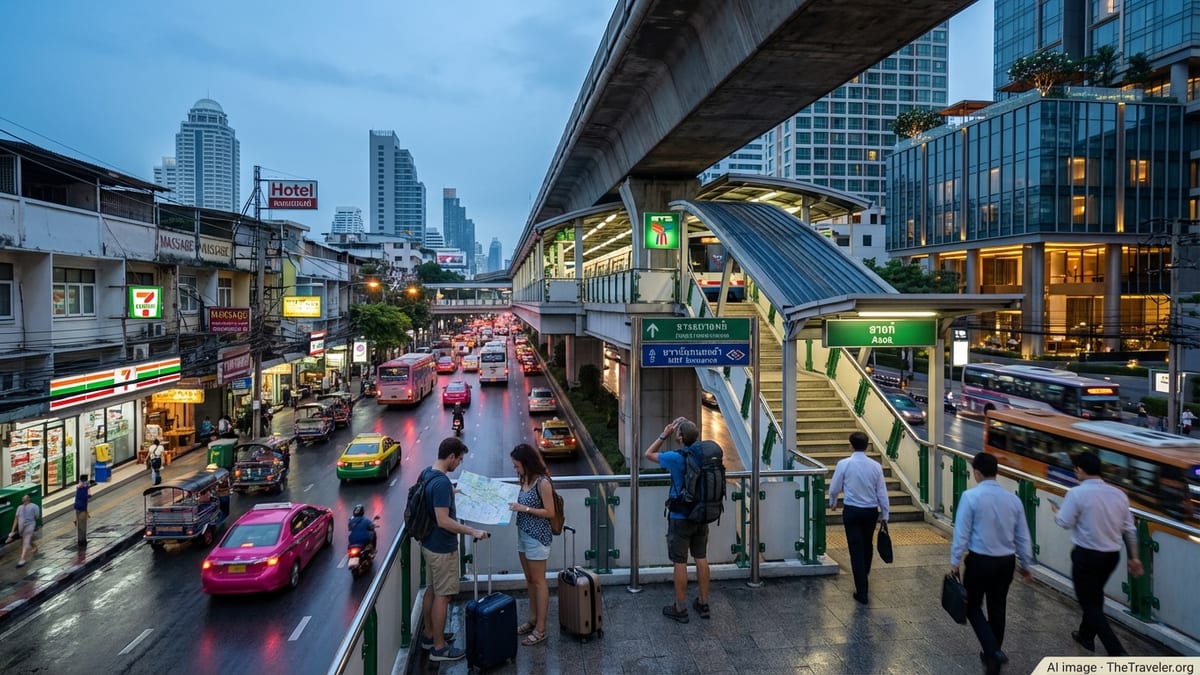
Asia-Pacific Outpaces Other Regions in Network Growth
Recent statistical briefs and sectoral reviews tracking metro and light rail projects show Asia-Pacific consolidating its position as the world’s most dynamic urban rail market. Data comparing regional network growth since the early 2010s indicates that Asia-Pacific, alongside parts of the Middle East and North Africa, has registered the largest percentage increase in metro kilometres opened, far exceeding that of Europe and North America.
By 2023, global metro networks had more than doubled in length compared with 2010, and the strongest contribution to this growth came from Asia-Pacific cities adding entirely new systems or large extensions. Analysts note that this momentum has carried into 2024 and the first months of 2025, with a clear geographic shift: most fresh track, new stations and first-time systems are appearing in Asian, rather than European or North American, cities.
Published coverage of rail investment trends suggests that this imbalance is widening. Commentaries reviewing 2025 rail openings point out that, while a handful of projects in Europe and the Americas entered service, the great majority of new urban rail projects either opened or broke ground in China, India and emerging Southeast Asian hubs, underlining a pronounced regional tilt in global transit development.
Specialist forums tracking annual station openings in Europe highlight how modest recent additions have been when compared with Asia-Pacific. Some European metropolitan areas recorded only a small number of new metro stations in 2025, following a far more active year in 2024, whereas Asian cities continued to launch full lines or multi-line expansion phases, underscoring the scale gap between regions.
China Extends Lead With Massive Urban Rail Investment
China remains the single largest driver of the Asia-Pacific urban rail surge. Official statistics for 2024 show that Chinese cities added hundreds of kilometres of new urban rail, with around 18 new metro or light rail lines entering operation in that year alone. Passenger trips on urban rail networks rose by nearly 10 percent year-on-year, reflecting not only new infrastructure but also continued recovery and growth in urban mobility demand.
Government releases summarising progress during the current Five-Year Plan period indicate that urban rail targets were reached ahead of schedule by the end of 2024, as more than 11,000 kilometres of metro lines came into operation across 54 cities. These networks now generate an average of more than 90 million passenger trips per day, underlining the central role of rail in the country’s urban transport mix.
Local reporting from cities such as Jinan illustrates how this national trend plays out at municipal level. In 2025, Jinan alone added over 150 kilometres of new rail transit lines, accounting for a significant share of China’s new urban rail mileage that year and reflecting the simultaneous opening of several major projects, including multiple metro lines and a dedicated SkyShuttle route.
Planning documents and reference lists of projects expected to start construction in 2025 point to a continued pipeline of new Chinese urban rail lines, with dozens of routes scheduled to move from planning to building. While some of these projects are still several years from opening, they reinforce the expectation that China will remain the backbone of Asia-Pacific urban rail expansion for the remainder of the decade.
India Emerges as a Global Metro Powerhouse
Alongside China, India is rapidly becoming one of the world’s most active urban rail markets. According to recent sectoral analyses and investment promotion materials, India’s operational metro network has expanded from under 250 kilometres in 2014 to more than 1,000 kilometres by 2025. Over the same period, the number of cities with metro services has grown from five to more than two dozen, transforming daily mobility patterns in several major urban regions.
Indian government briefings and infrastructure overviews indicate that metro corridors now carry tens of millions of passenger journeys each day, with daily ridership climbing sharply in the years leading up to 2025. Official targets anticipate a further increase in operational metro length to around 1,700 kilometres as projects under construction come online, placing India among the top three countries worldwide for total metro network length.
Financial institutions active in the region, including multilateral development banks, have documented a busy pipeline of Indian urban rail projects. Recent project approvals cover extensions in cities such as Chennai and Nagpur, where new elevated and underground sections, along with additional stations, are being financed to expand coverage into growing suburbs and employment corridors. These schemes are typically framed as both climate and development investments, aimed at cutting congestion, reducing emissions and supporting more compact urban growth.
National investment reviews for the 2025 to 2026 fiscal period describe accelerated commissioning of new lines and phases, citing multiple Indian cities where priority corridors have recently opened or are nearing completion. This positioning cements India’s status as a key contributor to Asia-Pacific’s overall dominance in early-2025 urban rail growth metrics.
Southeast Asian Cities Scale Up Mass Transit Networks
Beyond the two largest players, a wave of metro and light rail development in Southeast Asia is reinforcing Asia-Pacific’s lead. In Indonesia, the Jakarta Mass Rapid Transit network is progressing with a multi-stage second phase designed to push service further north from the city’s core. Project documentation for the Phase 2 works outlines an approximately 11.8 kilometre extension divided into segments, including fully underground sections with several new stations through the historic and government districts.
Regional infrastructure planning papers also highlight a healthy pipeline of new transit schemes in Indonesia and the Philippines, including an east-west MRT corridor in Jakarta and additional metro lines in Metro Manila. Early financing and design work for these projects is being supported by international lenders, reflecting their perceived importance for sustainable urbanisation in some of the world’s fastest-growing megacities.
In Thailand, Bangkok continues to refine and expand its complex multi-operator rail network. The city’s Pink Line, a monorail corridor serving rapidly developing suburbs, saw the launch of a branch shuttle segment in 2025, providing new connections to dense residential and event districts. This kind of incremental expansion, adding short but strategic links to existing systems, is becoming a common pattern across Southeast Asian capitals.
Taken together, these developments point to a gradual shift from isolated showcase lines to mature, citywide rail networks in key Southeast Asian hubs. That shift strengthens Asia-Pacific’s overall share of global urban rail growth and broadens the list of cities where residents can rely on high-capacity, grade-separated public transport for everyday travel.
Global Outlook: Growing Gap With Europe and North America
The concentration of new rail activity in Asia-Pacific has implications for urban mobility on other continents. Commentaries reviewing 2025 openings in North America and Europe describe a comparatively modest slate of projects, often focused on incremental extensions, infill stations or modernisation of existing corridors rather than entirely new systems. While these investments are significant for local riders, they add relatively little to global totals when set against the very large kilometre additions seen in China, India and parts of Southeast Asia.
Public discussion in specialist forums notes that European Union cities, for example, opened only a handful of new metro stations in 2025, following a much more substantial expansion the previous year tied to long-scheduled projects. In contrast, Asian cities collectively delivered multiple new lines and large extensions, despite facing similar cost pressures and supply-chain constraints.
At the same time, global infrastructure assessments suggest that a high proportion of planned urban rail projects to 2035 are concentrated in Asia-Pacific and a small group of upper-middle-income economies. One widely cited regional study estimates that a significant majority of upcoming metro and light rail expansion worldwide is expected to be built in Asia-Pacific urban areas, reflecting both rapid population growth and strong policy support for rail-based mass transit.
With major Chinese and Indian metropolitan areas still rolling out long-term metro masterplans, and Southeast Asian capitals committing to multi-line systems, the early-2025 data indicates that Asia-Pacific’s dominance in urban rail growth is unlikely to be a short-lived phenomenon. Instead, the region appears set to remain the main engine of global metro expansion well into the next decade.