


More news on this day
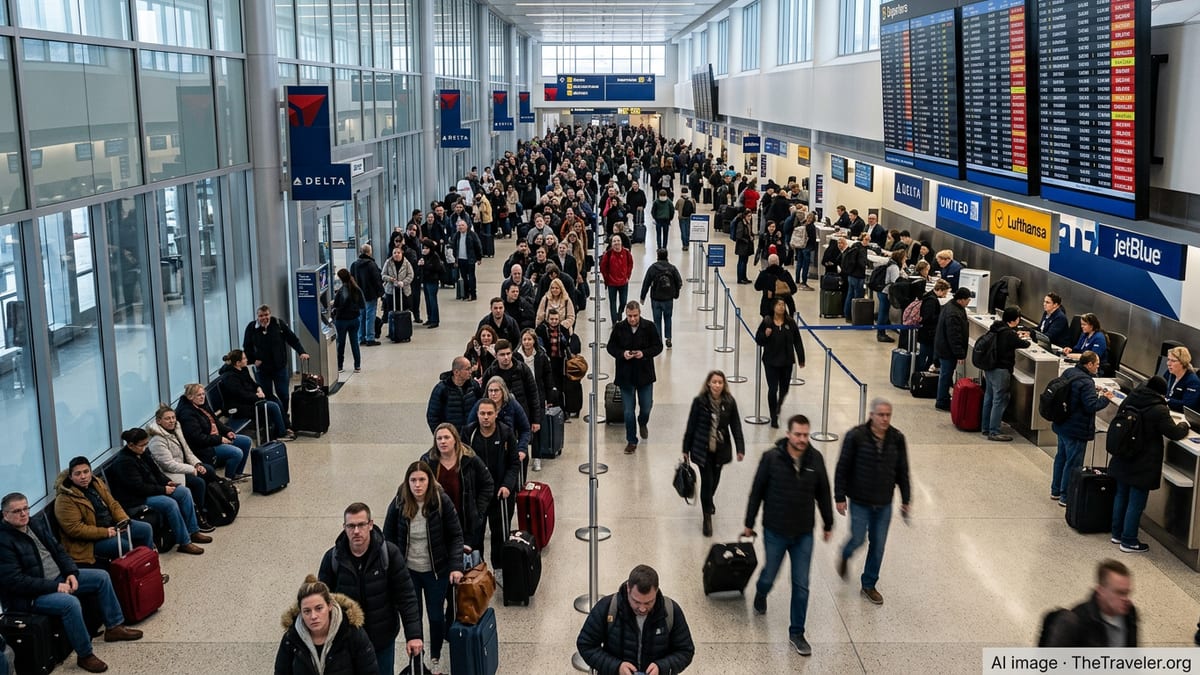
Flights at Newark Liberty International Airport (EWR) are returning to a more typical flow after a recent FAA ground stop tied to an air-traffic equipment outage that rippled across the New York and Philadelphia region, but delays and cancellations can linger as airlines reposition aircraft and crews.
Get the latest news straight to your inbox!
What triggered the Newark FAA ground stop
Published coverage indicates the disruption stemmed from technical problems affecting air-traffic operations in the Northeast, prompting the FAA to temporarily stop flights headed to Newark from departing other airports. The impact extended beyond Newark, affecting other major airports in the region and creating a wider network slowdown.
In practical terms, a ground stop generally means flights destined for Newark are held at their origin airports until the restriction is lifted. Even after the stop ends, schedules may remain uneven for hours as delayed inbound aircraft arrive late and outbound flights wait for gates, crews, or air-traffic slots.
Recent reporting also points to infrastructure issues in the region’s air-traffic system as a contributing factor, with repairs completed later in the day and operations resuming afterward. Even when the immediate technical problem is addressed, airline schedules often take additional time to stabilize.
Current Newark flight status: delays and cancellations
As of the latest FAA airport-status posting available for Newark, the airport has been showing relatively modest systemwide delays, with general gate-hold and taxi delays reported at around 15 minutes or less for departures and arrivals. That FAA snapshot is not flight-specific, but it can help travelers understand whether Newark is facing broad air-traffic constraints.
Flight-tracking data can look different from the FAA’s airport-status summary because it reflects individual airline and route decisions. The most recent FlightAware airport statistics for Newark showed a low number of delays and cancellations on its “today” page at the time it was captured, a sign that the most severe impacts from the earlier ground stop were easing.
Travelers should still expect uneven conditions: a day that begins with a ground stop often ends with aircraft and crews out of position. That can lead to rolling cancellations, late gate changes, and missed connections well after air-traffic restrictions have been lifted.
What to watch in FAA advisories and why updates can change fast
The FAA’s Air Traffic Control System Command Center issues advisories that can include ground stops, ground delay programs, and diversion-recovery procedures. These notices can be posted, extended, revised, or canceled quickly as conditions evolve, so a headline about a “ground stop” may no longer be accurate an hour later.
For Newark, advisories commonly reference the New York Center and New York-area constraints. In recent examples, FAA advisories have shown Newark ground stops that later moved into recovery phases once restrictions were canceled and aircraft were released under controlled departure times.
It is also possible for a regional event to shift from an outright ground stop to a ground delay program, where flights can depart but with assigned takeoff times designed to meter arrivals into Newark. For travelers, that distinction matters: a delay program may keep flights moving, while a ground stop can freeze departures to Newark entirely.
Airline rebooking and traveler tips for today at EWR
Because Newark is a major hub, disruptions tend to cascade across morning and afternoon banks of flights. If your flight is delayed, the most useful immediate step is to confirm whether your aircraft is already at Newark and whether your inbound leg is running late, since many EWR departures depend on planes arriving from earlier routes.
When rebooking, travelers often have better odds by choosing a later same-day departure rather than the next immediate option, because recovery operations can take hours. Consider nearby alternatives only if your airline can protect the change; published coverage shows regional events often affect multiple airports at once.
For airport access, keep local conditions in mind. Newark’s AirTrain has had a partial shutdown tied to construction, with service to or from the Airport Train Station unavailable on weekdays during daytime hours, which can complicate last-minute terminal changes or tight check-in windows if you planned to arrive by rail.
Why Newark disruptions can ripple longer than expected
Newark’s recent operational environment has also been shaped by broader traffic-management limits and staffing-related constraints. Publicly available FAA material has described ongoing efforts to manage hourly operations and maintain stability while controller staffing and training continue to improve over multiple scheduling seasons.
That backdrop can make Newark less forgiving during irregular operations: when a technical issue or weather event hits, there may be fewer immediate “buffers” in runway acceptance rates or staffing flexibility to absorb the surge once flights start moving again.
For passengers, the takeaway is that “ground stop lifted” does not automatically mean normal service. Monitoring your airline’s app for aircraft assignment changes, keeping connection plans flexible, and allowing extra time to reach the terminal remain the most practical steps until the schedule fully resets.