


More news on this day
With the Asian Games in Aichi and Nagoya entering their opening stretch, published coverage has highlighted rising frustration among athletes and team staff over accommodation allocations, long commutes, and accreditation bottlenecks that have disrupted preparations.
Get the latest news straight to your inbox!
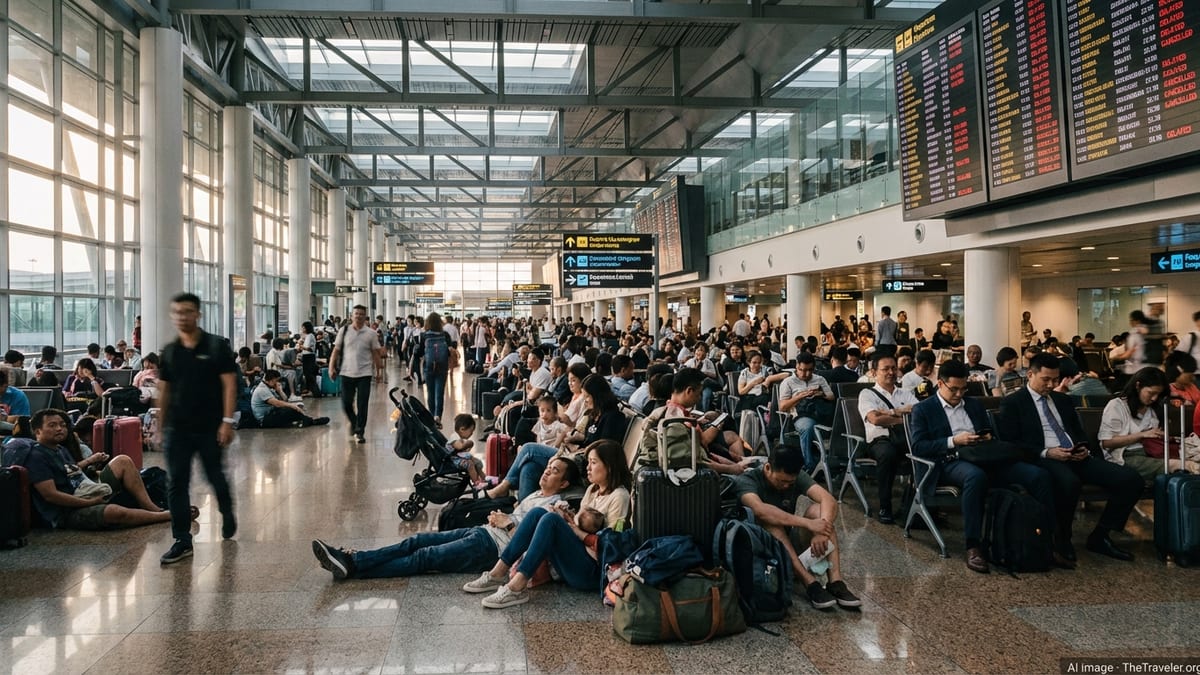
A cost-cutting “no village” plan faces a real-world stress test
The 2026 Asian Games in Japan are being staged without a single, purpose-built athletes’ village, a choice that has drawn renewed scrutiny as teams arrive and attempt to settle into routines. Coverage has described a dispersed housing plan that uses a mix of hotels, a docked cruise ship, and container-style units, rather than the consolidated residential campus typical of many multi-sport events.
Recent reporting has focused on two main sites: Garden Pier, where converted container units are being used as accommodation, and Kinjo Pier, where the Costa Serena cruise ship is serving as a floating lodging hub. Other delegations are housed in existing hotels, reflecting a model organizers have presented as more flexible and less costly than building and later repurposing a large village complex.
But the approach appears to have left little margin for error once tens of thousands of athletes, officials, and support staff began arriving in a short window. Accounts in multiple outlets suggest that even short-term glitches in allocation systems or shuttle coordination can cascade into long waits, missed meals, and delayed access to training, magnifying stress right before competition.
Arrival-day disruptions: accreditation checks, missing allocations, and long waits
Several of the most acute complaints center on arrival-day processing: credential validation, matching arrivals to accommodation assignments, and directing teams to the correct transport queues. Published reports describe hours-long waits at or near the airport staging area, with some delegations delayed deep into the day while attempting to resolve where they were supposed to go and how to get there.
Coverage in Indian outlets has described athletes and staff waiting for extended periods to receive room allocations and move onward to lodging, including delays that left some without timely meals beyond water and snacks after travel. Other reports have described instances where names could not be located in the accommodation or transport system, temporarily preventing athletes from boarding designated shuttles.
Transport delays have also been described after teams reached Nagoya, including lengthy waits for buses returning to hotels and confusion over pick-up points. For athletes arriving close to their first events, the lost time can reduce opportunities for sleep, acclimatization, and consistent nutrition, all of which are central to performance and recovery.
Living arrangements under the spotlight: cruise ship cabins and container units
Accommodation has become a flashpoint not only because of delays, but because of what athletes are being asked to live in once they arrive. Published coverage has described cabins aboard the Costa Serena being used as rooms for athletes and officials, and container-sized units at Garden Pier configured into “villas” or small lodging modules.
Reports indicate the model is partly driven by Japan’s tight urban hotel market and the high cost of new construction. Some coverage has also noted concerns that hotel rooms in Japan can be smaller than what many delegations expect for shared occupancy by athletes traveling with significant gear and structured recovery needs.
The Olympic Council of Asia and local organizers have faced questions about whether the mixed accommodation plan meets the practical demands of high-performance sport, including quiet hours, nutrition access, and efficient commuting. Publicly available material related to the Games has outlined that athletes and team officials may be housed across the cruise ship, container-style facilities, and hotels, with services to be provided across the network.
Commute times and venue geography add another layer of pressure
Beyond the beds themselves, reports have pointed to travel time as a major stressor. The Aichi-Nagoya Games use a spread of venues across the region, and coverage has described cases where training or competition-related travel can take significant time each way, particularly when shuttle schedules are disrupted or when teams are lodged far from their sport sites.
For sports that require fine motor control and stable routines, published accounts have framed long commutes and uncertain transport as more than an inconvenience, potentially affecting warm-up, nutrition timing, and rest cycles. In some reports, athletes have described waiting hours for buses, suggesting that the issue is not only distance, but also fleet capacity, dispatch coordination, and real-time information for teams.
Separate coverage has also raised questions about how specific sports are being accommodated relative to their venues, including the practicality of hotel-based plans for competitions held outside central Nagoya. For travelers and local spectators, the same geography can translate into crowded public transport corridors and higher pressure on hotel supply in and around key clusters.
What this means for visitors: hotel availability, pricing anxiety, and getting around
While athlete frustration is the headline, the underlying pressures are familiar to travelers: limited lodging supply, constrained urban space, and demand spikes that can ripple through local pricing. Earlier coverage in Japanese media has highlighted concerns that hotel rates in the Nagoya area could rise sharply around major Games dates, a dynamic that can affect not only fans but also business travelers and residents.
For visitors heading to Aichi during the Games window, published information indicates that transport planning will be essential. With athletes reliant on shuttle networks and multiple accommodation nodes, congestion points can develop around airports, port areas, and large event facilities, especially when weather or system disruptions occur.
The unfolding issues are also a reminder that mega-events can strain the same systems tourists depend on: airport processing, last-mile transport, and hotel inventory. Travelers with fixed itineraries may benefit from allowing extra time for transfers between Nagoya and outlying venues, and from monitoring public updates on transport operations and weather conditions as the competition schedule ramps up.